Wood slat walls have recently emerged as a design staple that merges functionality with natural aesthetics. Homeowners seeking architectural interest are turning to these textured elements for good reason. The interplay of light and shadow across wooden slats creates depth that flat walls simply can’t match. Perhaps it’s the warmth of wood that makes these features so appealing, or maybe it’s their versatility. Interior designers note they work equally well in minimalist spaces and more traditional homes. What makes them truly special, though?
Some of the links in this article may be affiliate links. If you make a purchase through these links, we may earn a small commission at no extra cost to you. Thank you.
The Enduring Appeal of Wooden Slat Wall Design
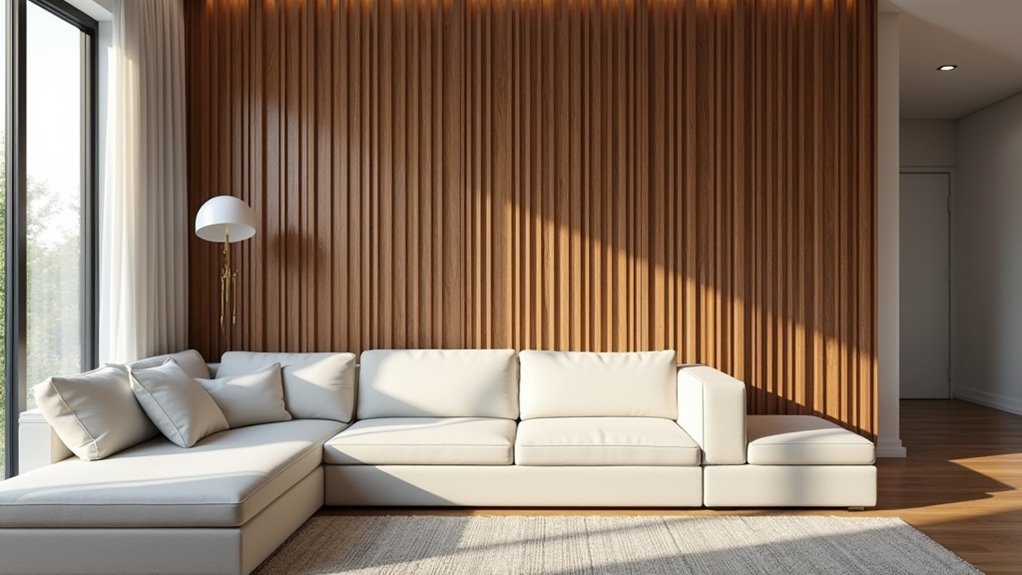
While trends in interior design constantly evolve, wooden slat walls have maintained their appeal across decades, perhaps due to their unique ability to blend natural warmth with contemporary aesthetics.
There’s something about their timeless elegance that resonates with homeowners seeking both character and clean lines.
The versatility of wood slat designs perhaps explains their enduring popularity. They can evoke rustic charm in a country home or add sophisticated texture to minimalist urban spaces.
The natural variations in wood grain guarantee that no two installations look identical, giving each space its own personality while maintaining a connection to organic materials that simply never goes out of style.
Spotlight on Vertical Gardens: Merging Nature With Wood Textures
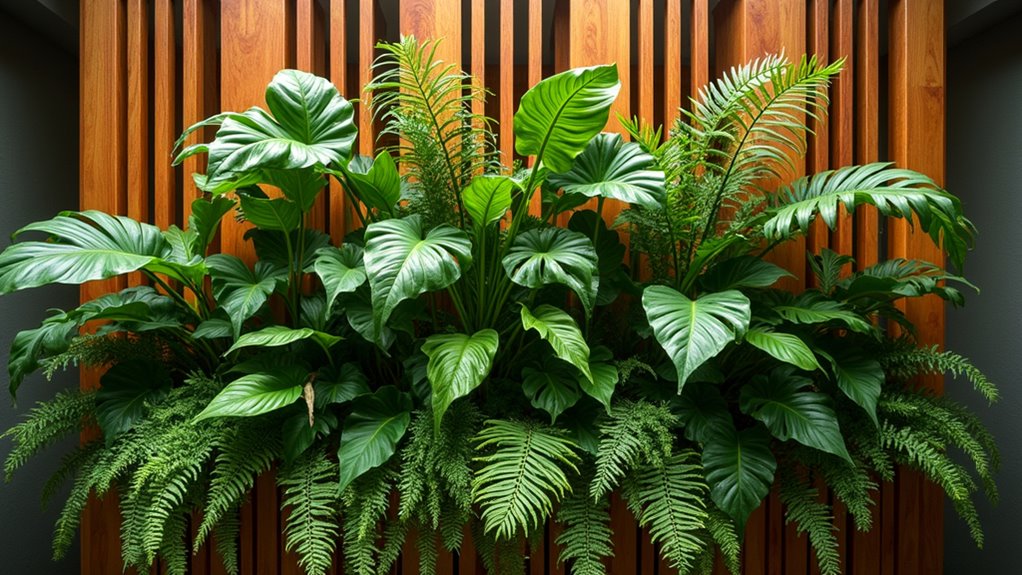
The fusion of vertical gardens with wooden slat walls creates perhaps one of the most striking design statements in modern interiors. The contrast between natural wood textures and vibrant foliage offers a sensory richness that few other design elements can match.
| Benefits | Wood + Plants |
|---|---|
| Improved air quality | Warm tones meet cool greens |
| Sound absorption | Texture contrast creates depth |
| Temperature regulation | Natural elements complement each other |
| Stress reduction | Creates visual rhythm and movement |
The vertical garden benefits extend beyond aesthetics—they’re practical too. Many designers find that the wood texture contrasts beautifully with the softness of plants, creating a balance that feels both grounding and innovative. Perhaps this explains why these living walls have become such popular features in forward-thinking spaces.
Illumination Magic: How Lighting Transforms Wood Slat Features

Several strategic lighting elements can completely transform a wooden slat wall from merely decorative to breathtakingly dynamic. The interplay between light and shadow creates depth that simply doesn’t exist during daylight hours.
Perhaps the most dramatic lighting technique involves positioning LED strips behind the slats, as seen in the Illuminated Wood Slat Wall Accent. This backlighting emphasizes the natural grain while creating an almost ethereal ambiance.
We think the warm glow feels particularly inviting in living areas.
Alternatively, directional spotlights can cast interesting shadow patterns across the textured surface, adding another dimension to your space.
The ambiance creation possibilities are endless, really.
Beyond Walls: Creative Applications for Wood Slat Elements
Many creative applications extend wood slat elements far beyond traditional wall treatments, transforming ordinary spaces into personalized sanctuaries.
Consider functional furniture pieces like room dividers, headboards, or even sliding doors that bring warmth and texture while serving practical purposes.
We think outdoor applications deserve special attention too.
Wood slat pergolas, privacy screens, and garden features create stunning visual rhythm in exterior spaces.
Perhaps the most striking aspect is how these elements blur the line between architecture and furniture.
The versatility of wood slats makes them perfect for those seeking something unique – they’re adaptable to virtually any aesthetic, from minimalist to rustic, depending on spacing, finish, and installation method.
Material Matters: Selecting the Right Wood for Your Slat Project
Selecting appropriate wood for slat projects ultimately determines their visual impact, durability, and maintenance requirements. The choice between hardwoods like oak or maple versus softer options such as pine or cedar depends largely on both function and aesthetic preference.
Different wood types bring distinct personalities to your space. Perhaps walnut’s rich, dark tones might create drama, while blonde ash offers a more airy, Scandinavian feel.
We think finish options matter too—natural oils enhance grain patterns, while colored stains can complement existing décor.
Consider sustainability as well. Reclaimed timber adds character and environmental value, though it’s sometimes less uniform than fresh-cut lumber.
DIY Vs Professional Installation: Making the Right Choice
When deciding between tackling a wood slat wall project alone or hiring professionals, homeowners often face a challenging crossroads.
DIY techniques can be incredibly rewarding, offering customization and considerable cost savings. Many find that simple, straightforward designs are quite manageable for weekend warriors with basic carpentry skills.
Taking on a wood slat project yourself unlocks personal satisfaction while keeping more money in your wallet.
Yet Professional Expertise shouldn’t be overlooked, especially for complex applications or curved designs. Professionals bring precision tools, experience with material selection, and often, time efficiency.
Perhaps the best approach is a hybrid – having professionals handle the framework while homeowners apply finishing touches and stain.
Styling Your Space: Complementary Décor for Wood Slat Features
The perfect wood slat wall deserves thoughtful companions to truly shine in any space.
When styling around these architectural features, color coordination becomes essential – perhaps choosing accents that either complement or thoughtfully contrast with the wood’s natural tones.
Texture layering creates depth that enhances the slat wall’s dimensional quality.
We think the most innovative designers consider these elements:
- Minimalist lighting fixtures that cast interesting shadows across the slats
- Textural contrasts like smooth ceramics or rough-hewn stone pieces
- Strategically placed greenery to soften the geometric lines
- Textile elements in complementary hues
Frequently Asked Questions
How Do Wood Slat Walls Handle Humidity and Temperature Fluctuations?
Wood slat walls offer moderate humidity absorption and temperature stability, though performance varies by wood type. Proper sealing enhances durability against environmental fluctuations while maintaining aesthetic appeal in modern applications.
Can Wood Slat Installations Be Safely Removed Without Damaging Walls?
Wondering about preserving walls during renovations? Wood slat installations can be safely dismantled using proper removal techniques including careful detachment of mounting hardware, which minimizes wall damage when executed methodically by experienced installers.
Are Wood Slat Walls Suitable for Bathrooms and Wet Areas?
Wood slat walls can be suitable for bathrooms when properly treated for moisture resistance. Select water-resistant woods like teak or cedar and apply sealants to enhance durability while maintaining sophisticated design aesthetics.
How Do You Clean and Maintain Wood Slat Walls Effectively?
While homeowners polish slats religiously, nature’s dust mocks their efforts. Effective cleaning techniques include gentle dusting, occasional damp-wiping, and yearly refinishing. Maintenance tips: avoid harsh chemicals and excessive moisture.
Do Wood Slat Walls Provide Any Acoustic or Insulation Benefits?
Wood slat walls offer significant acoustic absorption benefits, reducing echo and noise. The air gaps between slats trap sound waves, while the wood itself provides modest insulation properties for temperature regulation and energy efficiency.
Conclusion
Wood slat walls transform ordinary spaces into extraordinary design statements that will quite literally take your breath away. Their versatility extends beyond mere aesthetics, offering practical solutions for privacy, acoustics, and spatial definition. Whether professionally installed or tackled as a weekend project, these natural elements bring warmth and character to any environment. Perhaps the greatest appeal lies in their timeless nature—a design choice that feels both contemporary and enduringly classic.
Related guides: Top Black Paints That Transform Wood Furniture · Transform Your Wood With Rich Dark Stains · Beautiful Farmhouse Tables to Transform Your Space