We’ve battle-tested dozens of polyurethane finishes, and General Finishes High Performance dominates for bulletproof durability on high-use tables, while Varathane Ultimate Oil-Based delivers fortress-level protection for daily abuse. For budget-conscious projects, Minwax Fast Drying works perfectly—multiple coats in one day. Oil-based excels for heavy use and dark woods, water-based suits light woods and quick applications. Surface prep matters: sand to 220-grit minimum, apply thin coats, respect drying times. The details below reveal why your choice determines long-term success.
Some of the links in this article may be affiliate links. If you make a purchase through these links, we may earn a small commission at no extra cost to you. Thank you.
Top-Rated Polyurethane Products for Table Protection
Five standout polyurethane products dominate the table protection game, each engineered for specific demands you’ll face.
General Finishes High Performance leads our pack—it’s the complete package for indoor tables, delivering bulletproof toughness while keeping colors true.
Need maximum armor? Varathane Ultimate Oil-Based creates fortress-level protection that laughs at heavy use.
Budget tight? Minwax Fast Drying won’t break the bank and speeds through multiple coats daily—just crack windows for that intense smell.
Working with light woods? Minwax Polycrylic Crystal Clear stays crystal clear forever, perfect for beginners tackling different types of finishes.
Got outdoor tables? Helmsman Spar Urethane battles UV rays and moisture like a champion.
Understanding these durability factors guarantees you’ll match the right product to your exact needs.
Oil-Based Vs Water-Based Polyurethane Comparison
Now that we’ve covered the heavy hitters, let’s settle the ultimate polyurethane showdown—oil-based versus water-based formulas.
Oil-based wins the durability comparison hands down. It delivers superior heat and chemical resistance while creating that rich amber glow that makes dark woods absolutely stunning.
But here’s the catch—you’ll wait hours between coats.
Water-based counters with lightning-fast application techniques. We’re talking one to two hours between coats versus oil’s marathon drying times.
It keeps light woods true to color and cleans up with soap and water. Less toxic, lower odor.
Both demand 2-3 thin coats for maximum protection.
Choose oil for high-traffic tables needing bulletproof durability. Pick water-based when speed matters and you’re finishing light woods.
Key Factors for Selecting the Right Table Top Finish
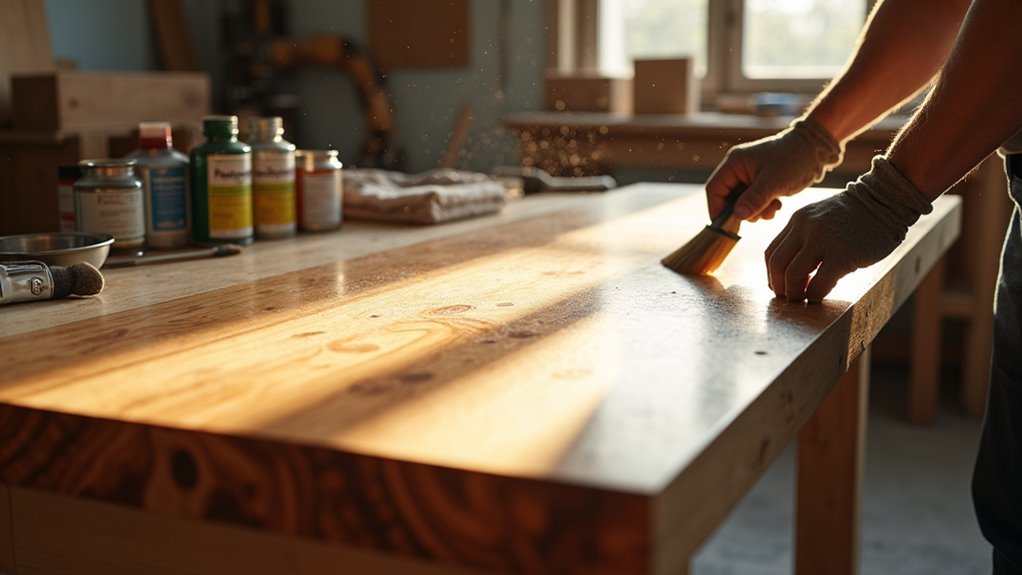
When choosing your table top finish, four critical factors will make or break your project’s success.
Master these fundamentals, and you’ll avoid the heartbreak of failed finishes and wasted effort.
Your finishing techniques mean nothing without proper surface preparation—sand to 220-grit minimum, period.
- Wood Type Match: Light woods need water-based formulas to prevent amber tinting; dark woods enhance beautifully with oil-based options that add warmth.
- Usage Intensity: Heavy-use tables demand oil-based durability; occasional-use pieces can handle water-based convenience.
- Environment Reality: Indoor projects benefit from fast-drying, low-odor water-based finishes; outdoor tables require spar urethane’s UV protection.
- Sheen Strategy: Satin hides scratches better than semi-gloss—your dining table will thank you.
Get these wrong, start over.
Best Budget and Premium Polyurethane Options
Although premium polyurethane costs three times more than budget options, we’ll show you exactly when that investment pays off—and when it doesn’t.
For budget polyurethane, Minwax Fast Drying Polyurethane dominates. Multiple coats in one day? Done. Brush-on or spray? Your choice. It’s the workshop workhorse that won’t break your wallet.
Premium polyurethane delivers where it counts. General Finishes High Performance crushes both indoor and outdoor abuse while preserving wood color—worth every penny for heirloom pieces.
Varathane Ultimate Oil-Based provides unmatched durability for dining tables that see daily punishment.
Here’s the reality: budget works for occasional-use surfaces. Premium pays for high-traffic zones and outdoor exposure.
Choose based on actual use, not wishful thinking about “investment pieces.”
Application Tips and Maintenance Guidelines
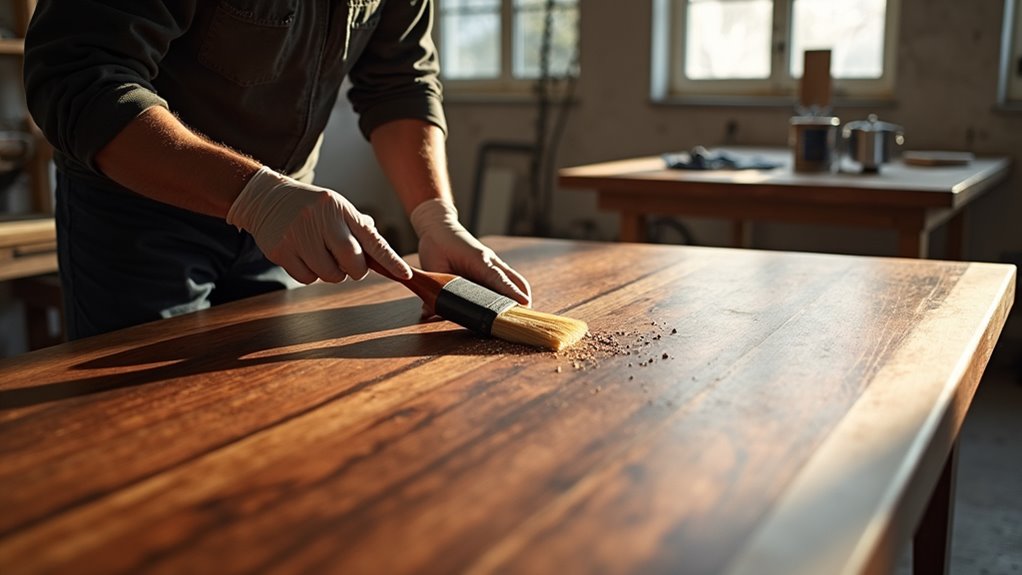
Perfect polyurethane application separates amateur weekend warriors from professionals who actually know what they’re doing.
We’ll cut through the nonsense and give you real application techniques that actually work.
Essential Application Steps:
- Surface prep matters – Clean, dry, dust-free surfaces aren’t optional. They’re mandatory for proper adhesion.
- Thin coats win – Use quality brushes, apply thin layers, sand lightly between coats. No shortcuts.
- Respect drying times – Oil-based needs 24 hours minimum; water-based dries faster but still requires patience.
- Ventilation saves lungs – VOCs aren’t your friend. Work smart, breathe easy.
Maintenance? Simple. Damp cloth, mild detergent, avoid abrasives.
Your finish will thank you later.
Frequently Asked Questions
What Kind of Polyurethane to Use on a Table Top?
We’d recommend oil based options for heavy-use tables since they’re incredibly durable, while water based finishes work perfectly for lighter use since they dry faster and won’t yellow your wood.
What Is the Most Durable Finish for a Table Top?
Oil-based polyurethane offers the most durable finish for table tops. When comparing durability among finish types, we’d recommend oil-based over water-based options since it provides superior heat, chemical, and scratch resistance for high-traffic surfaces.
Is Satin or Semi Gloss Polyurethane Better for Kitchen Table?
When it comes to kitchen tables, we’d choose satin as your golden ticket. Satin finish benefits include hiding daily scratches and fingerprints better than semi gloss sheen, which highlights every imperfection and requires constant maintenance.
Is Polyurethane or Polycrylic Better for Dining Table?
We’d recommend polyurethane for dining tables because it offers superior finish longevity under heavy use. While polycrylic has easier application techniques, polyurethane’s durability and scratch resistance make it ideal for high-traffic surfaces.
Related guides: Spraying Polyurethane · Is Polyurethane Waterproof On Wood · Can You Polyurethane Over Varnish