We’ll tell you straight: spraying polyurethane demands an HVLP gun with 1.4mm tip, proper ventilation, and zero shortcuts. Thin your first coat 50/50 with mineral spirits, strain everything, and maintain 10-12 inches distance with 50% overlap passes. Sand lightly between coats with 220-grit, vacuum religiously, and clean equipment immediately with dish soap. Skip these fundamentals and you’ll join the ranks of streaky-finish casualties we see weekly. Master our complete system below for mirror-like results.
Some of the links in this article may be affiliate links. If you make a purchase through these links, we may earn a small commission at no extra cost to you. Thank you.
Equipment and Setup for Spraying Polyurethane
When you’re ready to ditch the brush and get serious about polyurethane application, your equipment choice will make or break the entire project.
Start with proper spray gun selection—grab an HVLP gun equipped with a 1.4mm tip. This setup delivers the fine atomization polyurethane demands without drowning your workpiece in overspray.
Next, nail your ventilation setup. We’re not messing around with toxic fumes here. Work outdoors on windless days whenever possible.
If you’re stuck indoors, install cross-ventilation that actually moves air—not some pathetic desktop fan.
Consider paint sprayers like the HomeRight Super Finish Max or Wagner Flexio 3500 for speed and consistency.
Thin your oil-based polyurethane with 10% mineral spirits to improve flow. Your lungs and finish quality depend on getting this foundation right.
Preparing Your Polyurethane for Spray Application
Before we load that sprayer, let’s get our polyurethane dialed in perfectly—because nothing ruins a project faster than chunky, poorly mixed finish hitting your masterpiece.
First things first: straining polyurethane isn’t optional. Every drop goes through a fine mesh to catch dried bits and debris that’ll clog your sprayer faster than you can curse.
Now for thinning ratios—they’re everything. Start your first coat with 50/50 polyurethane and mineral spirits.
Subsequent coats? Drop to 75/25. This isn’t guesswork; it’s proven chemistry.
Test spray on scrap wood every single time. No exceptions.
Adjust your sprayer’s tip and volume control until you’re getting smooth, even coverage. Your finish quality depends entirely on this prep work, so don’t rush it.
Proper Spraying Techniques and Application Methods
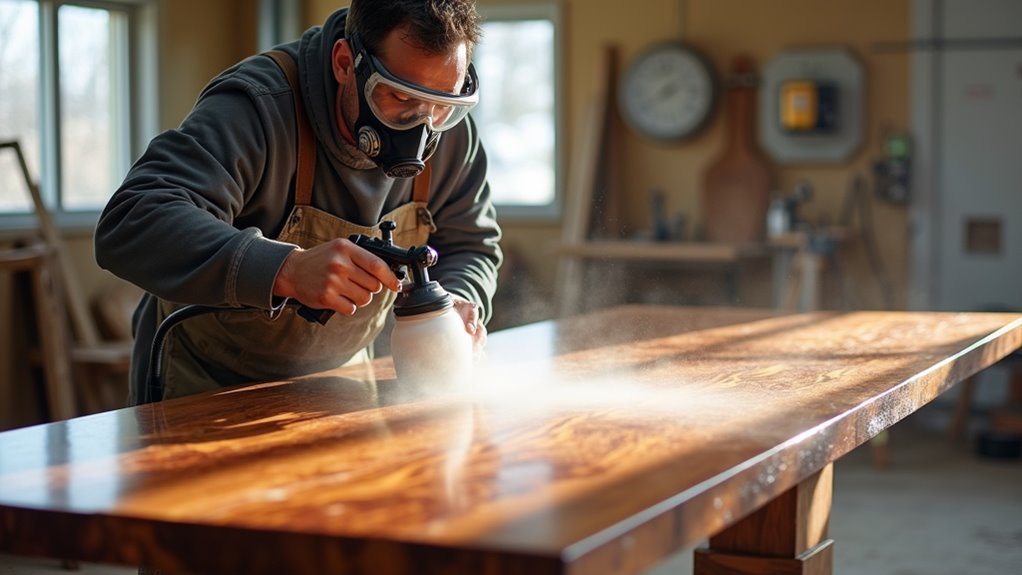
Now that we’ve got our polyurethane perfectly prepped, it’s time to master the spray technique that separates weekend warriors from true craftsmen. Your HVLP sprayer isn’t a paintbrush—it demands respect and precision.
Essential Application Steps:
- Distance Control – Maintain 10-12 inches from the surface. Closer creates drips; farther wastes material.
- Overlapping Spray Patterns – Use 50% overlap on each pass. Consistency beats speed every time.
- Multiple Coat Strategy – Apply one base coat plus 2-3 additional layers. More thin coats trump fewer thick ones.
- Between-Coat Prep – Light sand with 220-grit, then vacuum dust completely. Skip this step, ruin your finish quality.
Perfect spray patterns come from steady hands and unwavering technique.
Sanding Between Coats for Professional Results
While most sprayers obsess over application technique, they completely botch the finish by skipping proper inter-coat sanding—the difference between amateur work and showroom quality.
We’ll use 220-grit sandpaper exclusively. Light passes only. You’re creating adhesion, not refinishing furniture. Proper sanding techniques guarantee coat adhesion without destroying your base layer.
| Grit | Purpose | Mistake |
|---|---|---|
| 220 | Perfect adhesion | Using coarser grits |
| 320 | Too fine | Poor bonding |
| 150 | Too aggressive | Breakthrough damage |
After sanding, vacuum everything. Twice. Tack cloth removes remaining particles—missed dust equals ruined finish.
Sand between base and first topcoats only. Never sand your final coat unless you enjoy destroying hours of work. Each properly sanded layer builds durability and creates that mirror-like professional appearance that separates craftsmen from weekend warriors.
Cleaning and Maintaining Your Spray Equipment
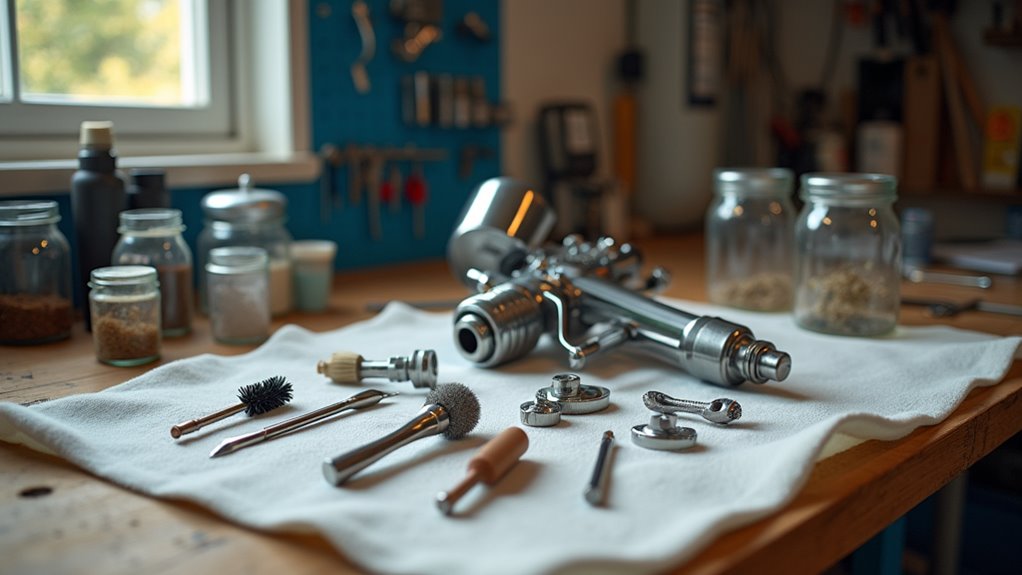
Perfect sanding means nothing if your sprayer dies mid-project because you didn’t clean it properly.
We’ve seen too many pros learn this lesson the hard way. Here’s your survival guide for keeping equipment functional:
Essential cleaning techniques and maintenance tips:
1. Clean immediately – Hit that sprayer with mild dish soap and water the second you’re done.
Polyurethane hardens fast and turns your nozzle into expensive scrap metal.
2. Strain before you spray – Use a paint strainer to catch debris.
Clogs kill finishes and patience equally.
3. Dry everything completely – Nozzle, cup, air hose.
Moisture breeds problems.
4. Replace worn parts religiously – Seals and filters aren’t suggestions.
They’re requirements for consistent performance.
Frequently Asked Questions
Can Polyurethane Be Sprayed On?
Yes, we can spray polyurethane using HVLP guns or air sprayers. Proper application techniques include thinning with mineral spirits and maintaining 10-12 inch distance. Surface preparation involves light sanding between coats for ideal adhesion.
Is It Better to Spray or Brush Polyurethane?
Like painting a car versus hand-painting details, we’d recommend spraying for superior application techniques and finish durability. Spraying eliminates brush marks, reduces contamination, and creates that glass-smooth professional finish you’re seeking.
What Tip Should I Use to Spray Polyurethane?
We recommend using a 1.4mm nozzle size for your spray technique when applying polyurethane. This tip provides ideal material flow and atomization balance, ensuring smooth coverage without excessive overspray or clogging issues.
How to Get a Smooth Finish When Applying Polyurethane?
We achieve smooth finishes through proper preparation techniques like sanding between coats with 220-grit paper, and effective application methods including maintaining 10-12 inch spraying distance with overlapping strokes using quality HVLP equipment.
Related guides: Is Polyurethane Waterproof On Wood · Can You Polyurethane Over Varnish · Polyurethane Over Paint