Yes, we can paint teak wood, but it’s stubborn as hell due to natural oils that repel paint like water off a duck’s back. You’ll need aggressive surface prep—TSP cleaning, strategic sanding, and shellac primer designed for oily woods. Skip these steps, and your paint will flake off faster than sunburn. Dark colors hide oil bleed-through better than light ones. Success demands proper technique and realistic expectations about ongoing maintenance challenges ahead.
Some of the links in this article may be affiliate links. If you make a purchase through these links, we may earn a small commission at no extra cost to you. Thank you.
Is Painting Teak Wood a Good Idea?
While teak’s natural oils make it one of the most durable woods on the planet, they’re also what makes painting it such a risky proposition.
Let’s examine the pros and cons honestly.
The reality? You’re fighting biology. Those protective oils that make teak legendary will actively repel your paint. Period.
When it makes sense: Lower-grade teak or pieces already weathered beyond redemption. You’re not destroying anything valuable.
When it’s criminal: High-quality teak furniture. You’re literally painting over gold.
Aesthetic considerations matter here. Dark colors hide oil bleed-through better than light ones.
But here’s the truth—once you paint teak, there’s no going back. The natural grain disappears forever. Choose wisely.
Preparing Teak Wood for Paint Application
Because teak’s natural oils are your enemy, preparation becomes warfare. This isn’t optional—it’s survival.
Start with aggressive surface preparation. Wash everything using TSP or acetone. No shortcuts here.
| Step | Action |
|---|---|
| Clean | TSP/acetone wash |
| Sand | 120-grit (painted) / 180-grit (raw) |
| Fill | Epoxy wood filler |
| Prime | Shellac/lacquer primer |
Sand mercilessly—120-grit for previously painted surfaces, 180-grit for virgin wood. Fill holes with epoxy wood filler, then sand again.
The game-changer? Stain-blocking shellac or lacquer-based primer designed for oily woods. This creates your barrier against oil bleed-through.
Proper teak wood treatment demands this sequence. Skip steps, and you’ll watch your paint fail spectacularly.
Step-by-Step Process for Painting Teak

Seven precise steps separate you from teak painting success.
We’re cutting through the noise here – teak wood demands respect, not shortcuts. Skip steps, and you’ll watch your paint peel faster than sunburned skin.
Here’s your battle plan:
- Clean ruthlessly – TSP or acetone eliminates every trace of oil and grime that’ll sabotage adhesion.
- Sand strategically – 120-grit for painted surfaces, 180-grit for virgin wood creates the perfect primer grip.
- Prime properly – Shellac or lacquer-based primers designed for oily woods aren’t suggestions, they’re requirements.
Next comes paint selection. High-quality latex or oil-based paint types work best – we’re talking 2-3 thin coats with patience between applications.
Finish with polyurethane topcoat protection.
No corners cut. No excuses accepted.
How to Stain Teak Wood Instead of Painting
Staining teak delivers the wood’s natural beauty without the maintenance headaches that paint creates.
Start by cleaning with mild dish soap or trisodium phosphate—dirt kills absorption. Sand previously finished surfaces with 120-grit paper. No shortcuts here.
Apply sanding sealer for smoothness, wiping excess immediately. Uneven drying screams amateur work.
Choose teak-specific stains only. Test first on hidden areas—surprises aren’t fun after full application.
These staining techniques preserve wood’s character while providing essential wood preservation.
Expect reapplication every 2-5 years. Darker pigments last longer; solid colors demand frequent touch-ups.
We’re not promising forever, but we’re delivering results that outperform paint’s constant peeling nightmare. Staining respects teak’s nature instead of fighting it.
Long-Term Results and Maintenance of Painted Teak
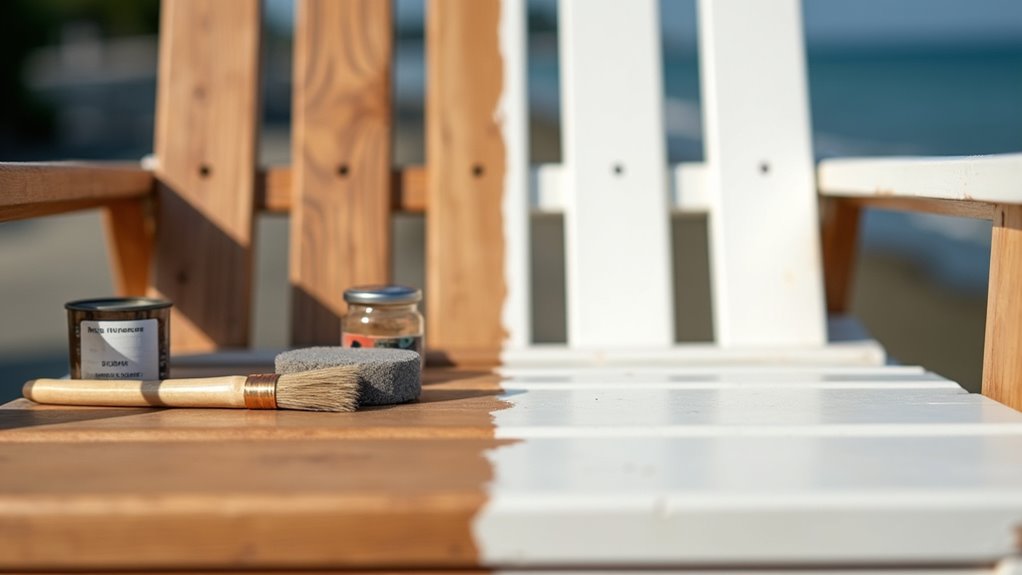
While painted teak delivers immediate visual transformation, you’re signing up for a maintenance contract that demands attention every single year.
Here’s what long term durability actually looks like:
- Annual cleaning sessions – Algae and dirt accumulate relentlessly on painted surfaces, demanding thorough cleaning to prevent damage and maintain that fresh appearance you worked so hard to achieve.
- Touch-up painting every 2-3 years – Chipping and flaking around joints becomes inevitable as the wood moves, requiring strategic repairs to maintain visual appeal.
- Oil bleed-through management – Teak’s natural oils will yellow your paint over time, making clear topcoat sealing non-negotiable for aesthetic longevity.
The maintenance frequency isn’t optional.
Choose darker colors—they hide oil penetration better than lighter shades that showcase every imperfection.
Common Challenges When Painting Teak Furniture
Painting teak isn’t just about maintenance headaches—it’s about conquering specific obstacles that’ll make or break your project before you even pick up a brush.
Oil bleed through issues top our challenge list. Teak’s natural oils fight paint like water repels oil. They’ll seep through inadequate primer, creating yellow stains that mock your color choice. Light colors suffer worst—dark shades hide the carnage better.
Surface preparation techniques become your lifeline. Skip proper cleaning and sanding? You’re painting over a slick barrier that guarantees failure. We’re talking thorough degreasing, aggressive sanding, and patience you didn’t know you had.
Expansion joints spell trouble. Temperature swings make teak move, cracking paint at stress points. Touch-ups become routine, not optional. Accept this reality or choose different wood.
Frequently Asked Questions
What Paint to Use on Teak Wood?
We recommend high-quality 100% acrylic latex exterior paint for teak wood. Proper wood preparation with stain-blocking primer designed for oily woods is essential. Dark paint types work best to prevent teak’s natural oils from bleeding through.
Can You Change the Color of Teak Wood?
Want a dramatic transformation? Yes, we can change teak wood’s color through painting or staining, though it requires proper preparation and ongoing teak wood maintenance to preserve the new teak wood appearance.
Can Teak Be Stained or Painted?
We can stain or paint teak wood, though it requires thorough preparation including cleaning and sanding. Proper teak maintenance with stain-blocking primers guarantees better adhesion, while ongoing wood preservation prevents chipping and maintains the finish’s longevity.
Can Teak Wood Be Spray Painted?
Yes, we can spray paint teak wood successfully with proper teak preparation. We’ll need to clean thoroughly, sand the surface, and apply a stain-blocking primer before spray painting to guarantee excellent adhesion.
Related guides: Wood Stain Vs Paint · Discover the Best Waterproof Wood Paint · Is Polyurethane Waterproof On Wood