Many DIYers find creating a wooden nightstand an approachable yet satisfying project. The combination of functionality and personal expression makes it worth the effort. While some might hesitate due to perceived complexity, starting with simple designs often yields surprising results. Perhaps the most rewarding aspect is selecting wood that complements existing décor—oak offers timeless appeal, though pine works well for beginners. The project typically requires basic tools, but the possibilities for customization are nearly endless.
Some of the links in this article may be affiliate links. If you make a purchase through these links, we may earn a small commission at no extra cost to you. Thank you.
Essential Tools and Materials for Your DIY Nightstand
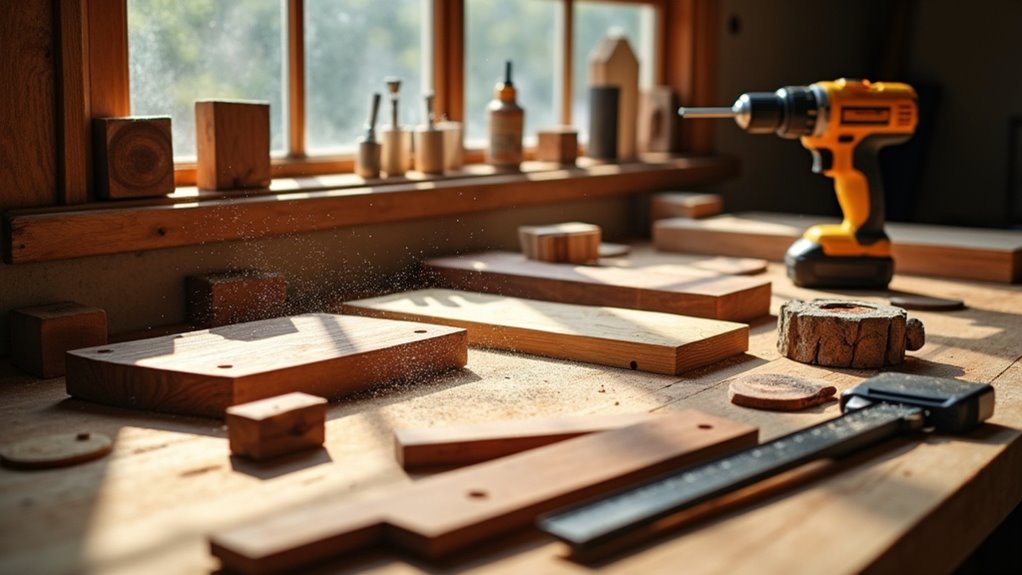
Every successful DIY nightstand project begins with gathering the right tools and materials.
Quality hardwoods like oak or walnut provide durability, while plywood offers a budget-friendly alternative. Essential tools include a circular saw, drill, measuring tape, and sanding equipment—perhaps a random orbital sander for efficiency.
Don’t overlook safety precautions—safety glasses and hearing protection are non-negotiable. I think dust masks are equally important when sanding.
Regular tool maintenance extends lifespan and guarantees precise cuts; clean saw blades after use and keep drill bits sharp.
For hardware, consider soft-close hinges and quality pulls that complement your design aesthetic while enhancing functionality.
Choosing the Perfect Wooden Style for Your Bedroom

When selecting a wooden nightstand, style should harmonize with the bedroom’s existing aesthetic while reflecting personal taste.
The design trends of 2023 favor both minimalist floating boxes and rustic reclaimed pieces, giving homeowners plenty of options to evaluate.
For modern spaces, perhaps a sleek plywood design with clean lines would complement the room best.
Those with farmhouse décor might prefer the character-rich texture of barrel or crate styles, where the natural wood grain becomes a focal point.
Remember that your nightstand isn’t just functional—it’s also an expression of your personality within your most personal space.
Step-by-Step Building Process for Beginners

Building your own wooden nightstand may seem intimidating at first, but breaking down the process into manageable steps makes it accessible even for woodworking newcomers.
Begin with thoughtful material selection—pine offers affordability while oak provides durability.
Your choice of wood sets the foundation for your project—pine welcomes beginners with its forgiving nature, while oak promises lasting craftsmanship.
Draft a simple sketch before measuring and cutting your wood. Perhaps start with a basic box design, which can evolve with design adjustments as your confidence grows.
Assembly typically requires wood glue and screws, though I think pocket holes create cleaner joints.
Sanding thoroughly between coats of finish is often overlooked but makes all the difference in achieving that professional look beginners rarely expect from their first project.
Adding Functional Features to Your Nightstand Design
The functional aspects of a wooden nightstand often determine its true value in everyday use. Beyond simple aesthetics, the most practical designs incorporate features that enhance daily routines.
A multifunctional drawer with soft-close mechanisms or perhaps specialized compartments creates organized storage for bedtime essentials. Some craftspeople are integrating charging stations—either as simple cord pass-throughs or, for those feeling ambitious, built-in wireless charging pads beneath thin veneer surfaces.
Other thoughtful additions might include adjustable reading lights, hidden compartments, or even fold-out surfaces.
I think the best nightstands balance form with function, creating pieces that aren’t just beautiful but genuinely useful in our tech-heavy lives.
Finishing Techniques to Enhance Wood’s Natural Beauty
Proper finishing transforms ordinary wooden nightstands into extraordinary pieces that capture the eye and withstand daily use. The difference between amateur and professional-looking results often lies in the finishing touches.
When exploring staining techniques, consider testing different approaches on scrap wood first. Perhaps a combination of pre-stain conditioner followed by light applications works best for your specific wood type.
I think the layering method creates depth that single applications can’t match.
Sealing methods vary widely, from wipe-on poly to traditional shellac. Some craftspeople prefer natural oils that enhance grain while providing modest protection—not perfect for every situation, but offering a warm, touchable surface that synthetic finishes sometimes lack.
Space-Saving Options for Small Bedrooms
When maximizing small bedroom spaces, thoughtfully designed wooden nightstands can transform cramped quarters into functional, stylish retreats.
Wall-mounted shelf nightstands perhaps offer the most dramatic space-saving benefits, creating that floating effect while keeping floor areas clear.
Multipurpose pieces, like hinged-top storage nightstands, provide hidden compartments for essentials without sacrificing style.
I think the narrow floating wooden box design works particularly well in tight corners.
For truly compact furniture solutions, consider scaled-down versions of traditional designs—maybe 12-14 inches in width rather than standard sizes.
Space efficient designs don’t require compromising on craftsmanship or aesthetic appeal.
Upcycling Ideas: Transforming Old Wood Into Stunning Nightstands
Salvaging forgotten wooden treasures from garages, barns, or curbside discards offers endless possibilities for creating one-of-a-kind nightstands with character and history.
Old wooden pallets, perhaps the most accessible reclaimed material, transform beautifully into rustic nightstands with minimal effort.
Vintage ladder sections mounted to the wall create unique tiered storage solutions, while weathered barrel segments introduce warmth and unexpected curves to bedside furniture makeover projects.
For those seeking more distinctive reclaimed designs, consider repurposing antique drawers, wooden crates from farmers’ markets, or even retired musical instruments.
The imperfections and patina of these materials tell stories that mass-produced furniture simply cannot match.
Frequently Asked Questions
How Long Will a DIY Wooden Nightstand Typically Last?
A wooden nightstand typically lasts 15-20+ years, with durability factors including wood type, construction quality, and environmental conditions. Regular maintenance tips include dusting, periodic refinishing, and avoiding moisture exposure.
Can Untreated Wood Nightstands Cause Allergic Reactions?
Untreated wood nightstands may trigger allergic reactions through dust, mold, or natural compounds. Various wood treatment options effectively seal surfaces, minimizing potential allergy symptoms while preserving the material’s organic appeal.
How Much Weight Can Different Wooden Nightstand Styles Support?
Weight capacity varies by style, with solid designs supporting 75-200+ pounds. Box and plywood nightstands offer moderate material strength, while industrial pipe designs maximize load capacity through strategic design considerations.
Should I Match My Nightstand Wood to Existing Bedroom Furniture?
Matching colors creates cohesion, but contrasting wood tones can generate visual interest. Consider furniture style consistency while embracing intentional juxtaposition. Modern design embraces both coordination and thoughtful divergence in bedroom aesthetics.
How Can I Prevent Wooden Nightstands From Wobbling on Carpet?
Wooden nightstands wobbling on carpet require Helpful Adjustments. Users can insert furniture levelers, place hardwood boards underneath, or deploy strategic Carpeting Techniques like using carpet grippers or low-pile area rugs beneath.
Conclusion
With a bit of patience and creativity, DIY nightstands offer both functionality and personal expression. Sarah, a first-time woodworker from Portland, transformed scrap oak boards into a stunning bedside table with an integrated wireless charger—all for under $60. Her friends now commission similar pieces from her small workshop. Whether simple or elaborate, handcrafted nightstands bring satisfaction that store-bought furniture simply can’t match.