Yes, wood glue works exceptionally well on MDF—in fact, it creates bonds stronger than the material itself. We recommend PVA glue as your go-to choice since it penetrates MDF’s porous fiber structure perfectly. The compressed wood fibers and resin composition make MDF ideal for adhesive bonding, especially at cut edges where penetration is deepest. Proper surface prep and clamping are non-negotiable. Master these fundamentals and you’ll achieve professional-grade results.
Some of the links in this article may be affiliate links. If you make a purchase through these links, we may earn a small commission at no extra cost to you. Thank you.
Understanding MDF and Its Adhesion Properties
MDF isn’t your grandfather’s plywood—it’s a precision-engineered beast that demands respect and understanding.
We’re dealing with compressed wood fibers bound by resin, creating a dense, uniform surface that’s both blessing and curse.
MDF characteristics matter here. Those tightly packed fibers create consistent density throughout—no grain patterns to fight, no knots to dodge.
That’s why cabinetmakers love it for detailed work. But here’s the kicker: this same density affects how adhesives penetrate.
Adhesion factors revolve around MDF’s porous nature. The surface drinks up glue like a thirsty sponge, especially at cut edges where fiber ends are exposed.
This porosity is your secret weapon—if you understand it. Mess this up, and you’ll get weak joints that’ll haunt you later.
Types of Wood Glue That Work Best on MDF
PVA glue remains our go-to choice—that familiar yellow bottle delivers reliable bonds with zero drama.
It penetrates MDF’s porous surface effectively, creating joints stronger than the material itself.
Epoxy glue steps up when projects demand bulletproof connections.
This two-part system fills gaps while delivering industrial-strength adhesion that laughs at stress tests.
Gorilla Glue brings PVA’s reliability with industrial-grade muscle.
Titebond products offer quick-dry convenience without toxic fumes—perfect for indoor work.
Skip Liquid Nails for joinery.
It’s wall-mounting territory only, thanks to excessive flexibility that undermines structural integrity.
Recommended Adhesive Products for MDF Projects

Success hinges on choosing battle-tested products that won’t let you down mid-project. We’ve tested dozens of adhesives, and these consistently deliver.
PVA glue options dominate the landscape. Titebond’s wood formulations dry fast, emit zero harmful fumes, and create rock-solid bonds perfect for indoor work.
Yellow glue remains the go-to choice for most MDF applications.
Gorilla Glue benefits include industrial-grade adhesion that handles serious stress. We recommend it for structural joints where failure isn’t an option.
Contact cement rules laminate applications—solvent-based varieties outperform water-based alternatives every time.
For maximum strength, epoxy creates bonds stronger than the MDF itself. Cure times vary wildly, so plan accordingly.
Choose based on your specific application, not marketing hype.
Proper Techniques for Gluing MDF Pieces Together
While technique separates weekend warriors from craftsmen, most people butcher MDF joints with sloppy prep work and impatient shortcuts. We’ll fix that right now.
Surface preparation isn’t optional—it’s everything. Sand those edges lightly with 220-grit paper. Remove every speck of dust with a tack cloth. Skip this, and you’re building failure into your project.
Apply PVA glue evenly across both surfaces using a brush or scraper knife. Don’t flood the edges—MDF swells when wet.
| Critical Step | Time Investment |
|---|---|
| Edge sanding | 2 minutes per joint |
| Dust removal | 30 seconds |
| Glue application | 1 minute |
| Proper clamping | 24 hours minimum |
Clamping techniques matter. Apply firm, even pressure across the entire joint. We’re talking serious clamps here, not those flimsy hardware store jokes.
Attaching MDF Panels to Walls and Surfaces
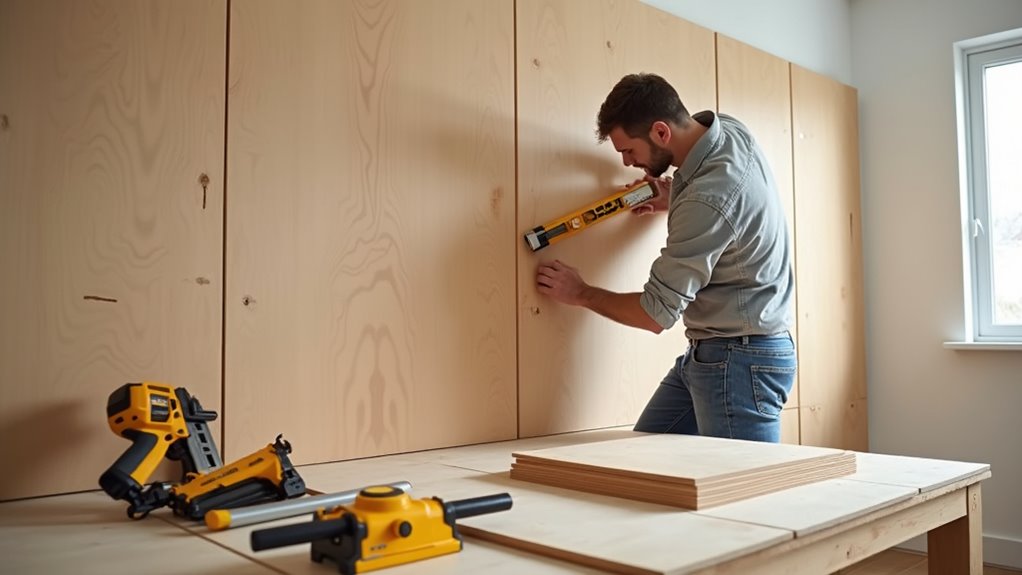
Although wall attachment seems straightforward, most DIYers turn this simple task into a disaster zone of bubbled panels and failed bonds. We’re here to fix that nightmare with proper MDF panel installation techniques.
Wall surface preparation isn’t optional—it’s mandatory. Clean surfaces create lasting bonds. Skip this step, and you’ll watch panels peel off like cheap wallpaper.
Here’s your survival guide:
- Select MDF-specific adhesive – Generic glue fails spectacularly on MDF’s unique fiber composition.
- Apply adhesive in zigzag patterns – Maximum surface contact prevents hollow spots and future failures.
- Clean excess adhesive immediately – Dried residue becomes permanent eyesores that’ll haunt your project forever.
Press panels firmly, then walk away. Let chemistry work its magic during the full cure time. Rush this process, and you’ll rebuild everything from scratch.
Tips for Achieving Strong and Durable MDF Bonds
Creating bulletproof MDF bonds isn’t rocket science, but it demands respect for the fundamentals that separate weekend warriors from craftsmen who build furniture that outlasts their grandchildren.
Surface preparation trumps everything. Clean those panels until they’re spotless—dust particles are bond killers. We’re talking hospital-grade clean here.
PVA glue wins the MDF game because it penetrates those wood fibers like they’re best friends. Skip the fancy stuff; yellow glue works.
Clamp like your reputation depends on it. Gaps equal failure, period. These bonding techniques require pressure during the entire cure cycle.
Pre-drill before screwing into glued joints. MDF splits faster than gossip spreads.
Wait the full 24 hours. Patience separates pros from amateurs who wonder why their joints fail.
Frequently Asked Questions
Does Wood Glue Stick to MDF?
Yes, wood glue sticks effectively to MDF. We recommend PVA glue because MDF properties include porous fibers that bond well with this adhesive type. Different glue types work, but PVA creates the strongest connection.
What Is the Best Glue for MDF?
When we built kitchen cabinets last month, PVA wood glue proved best for standard MDF applications. However, we’d recommend exploring adhesive alternatives like Gorilla Glue or epoxy for heavy-duty projects requiring maximum strength.
Will Wood Glue Seal MDF?
Wood glue provides limited sealing for MDF but isn’t waterproof. While wood glue effectiveness helps with basic protection, we recommend dedicated MDF sealing techniques like primers or sealants for moisture-prone areas.
Does Titebond Wood Glue Work on MDF?
Why settle for weak joints when building with MDF? Yes, we’ve found Titebond works excellently for MDF bonding. Its proven formula handles various Titebond applications perfectly, creating durable bonds that’ll last through countless projects.