We’re looking at two heavyweight contenders: Douglas fir delivers serious structural strength with its 660 lbf Janka hardness rating, making it perfect for framing and load-bearing applications at budget-friendly prices. Cedar counters with natural rot resistance, stunning grain patterns, and zero maintenance requirements—but you’ll pay 10-25% more upfront. Fir needs treatment for outdoor use; cedar laughs at weather naturally. Your project’s demands will determine which champion takes the crown.
Some of the links in this article may be affiliate links. If you make a purchase through these links, we may earn a small commission at no extra cost to you. Thank you.
Appearance and Natural Beauty
Beauty matters—and these two titans couldn’t look more different. We’re talking dramatic contrasts here.
Cedar delivers the visual punch. Rich amber to deep honey brown tones showcase stunning grain patterns that’ll make you forget cheaper alternatives exist. Those natural oils? They’re working overtime, preserving that gorgeous appearance even when Mother Nature throws her worst tantrums.
Douglas fir takes the understated approach. Light brown and soft yellow with red-orange hints create consistent, space-brightening appeal. Clean lines, reliable aesthetics—but let’s be honest, it lacks cedar’s wow factor.
Here’s reality: both woods surrender to silvery-grey after outdoor exposure. UV and moisture don’t discriminate. Cedar holds its warmth longer, though.
Those color variations and distinctive grain patterns? Cedar wins this round decisively.
Durability and Weather Resistance
Gorgeous looks mean nothing if your wood can’t handle what’s coming. When it comes to durability comparison, cedar destroys Douglas fir in the ring. Cedar’s Class 2 rating versus fir’s Class 3 tells the whole story.
Here’s the weather performance breakdown:
- Cedar’s natural oils create a fortress against decay and insects—no treatment required.
- Douglas fir needs backup—pressure treatment becomes mandatory for outdoor survival.
- Both woods handle humidity changes equally well, maintaining dimensional stability.
- Cedar ages gracefully while fir demands constant sealing and maintenance babysitting.
Bottom line? Cedar’s built-in armor makes it the heavyweight champion for harsh environments.
Fences, decks, anything facing Mother Nature’s fury—cedar wins. Douglas fir? It’ll work, but you’ll be its personal maintenance crew.
Strength and Structural Properties
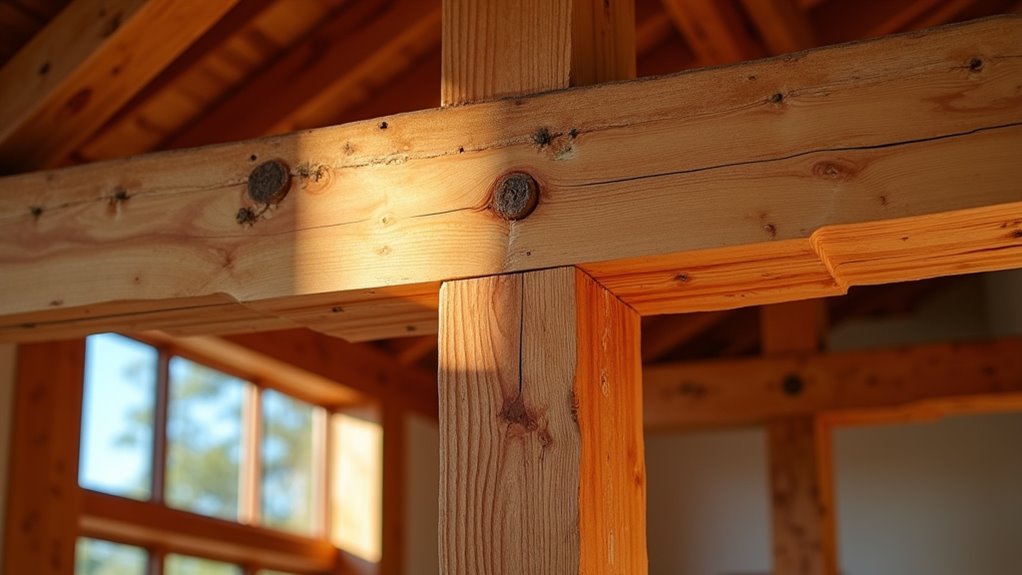
When structural muscle matters, Douglas fir flexes hard with a Janka hardness rating of 660 lbf—nearly double cedar’s wimpy 350 lbf. That’s not just bragging rights—it’s pure engineering advantage.
The density comparison tells the whole story: Douglas fir packs serious strength into every cubic foot while cedar plays it light and airy. For load bearing capacity, there’s no contest. Douglas fir’s exceptional strength-to-weight ratio means we’re talking serious structural support without unnecessary bulk.
Both woods handle humidity changes like champs, keeping dimensional stability locked down tight.
But when you need something that won’t buckle under pressure—framing, beams, anything carrying real weight—Douglas fir delivers the backbone. Cedar? Save it for the deck furniture.
Cost Analysis and Budget Considerations
While structural strength matters, your wallet’s got the final vote—and cedar’s demanding a premium that’ll make your budget wince.
This price comparison reveals cedar’s 10-25% markup over Douglas fir across applications.
Here’s your budget planning breakdown:
- Cladding costs: Cedar hits £1,250 + VAT for 24m², while Douglas fir delivers at £1,080 + VAT
- Fencing expenses: Cedar commands £2.25 + VAT per linear metre versus fir’s £1.75 + VAT
- Market dynamics: Cedar’s desirable properties drive higher demand and inflated pricing
- Cost-cutting strategy: Treat or stain Douglas fir to mimic cedar’s appearance without the premium
Douglas fir’s treatability offers budget-conscious builders an escape route.
You’ll capture cedar’s visual appeal while keeping project costs grounded.
Smart money chooses strategically.
Workability and Installation

Budget battles won’t matter if your timber turns installation into a nightmare—but here’s relief: both Douglas fir and cedar play nice with standard tools.
We’re talking smooth cuts, clean shapes, and zero fighting with fasteners.
Douglas fir brings serious muscle with its 660 lbf Janka rating—double cedar’s 350 lbf. Translation? Less denting during installation, fewer touch-ups later.
Both woods handle machining techniques beautifully, from routing to drilling.
Cedar wins the prep game. Its natural oils resist warping and cracking, especially outdoors. You’ll spend less time babying it through installation.
Finishing options? Cedar’s natural decay resistance means minimal treatment requirements. Douglas fir demands extra sealing for outdoor projects—non-negotiable for longevity.
Both deliver professional results without professional headaches.
Best Applications for Each Wood Type
Since project success hinges on matching wood to purpose, let’s cut through the confusion with surgical precision.
Douglas Fir’s Best Uses:
- Structural framing – Exceptional strength-to-weight ratio makes it construction’s workhorse.
- Interior applications – Kitchens and bathrooms when properly sealed against moisture.
- Heavy-duty beams – Dimensional stability handles serious loads without complaint.
- Budget outdoor projects – Cost-effective pergolas with regular maintenance schedules.
Cedar’s Project Suitability:
- Exterior installations – Fencing, decking, siding where rot resistance matters most.
- Aesthetic applications – Interior paneling showcasing those gorgeous grain patterns.
- Premium furniture – Rich color and natural beauty justify higher costs.
- Low-maintenance outdoor structures – Pergolas lasting decades thanks to protective natural oils.
Choose Douglas fir for strength and economy. Pick cedar for longevity and looks.
Sustainability and Environmental Impact

Environmental responsibility isn’t optional anymore—it’s the price of admission for modern woodworking.
Both Douglas Fir and Western Red Cedar score “Least Concern” on the IUCN Red List. Translation? You’re not decimating endangered species.
These softwoods grow fast—critical for sustainable forest management. Quick regeneration means responsible harvesting won’t strip forests bare.
Both species excel at carbon sequestration, literally pulling CO2 from the atmosphere while they grow.
Here’s the catch: sustainability hinges on your sourcing decisions. Buy from merchants who practice responsible forestry, or you’re part of the problem.
Proper woodland management maintains ecological balance and guarantees these resources stay renewable.
The environmental impact? Minimal when done right. Choose wisely.
Frequently Asked Questions
What Is Better, Douglas Fir or Cedar?
We’d choose cedar for outdoor projects due to superior natural durability, while Douglas fir works better for structural applications. Our cost analysis shows cedar’s 10-25% premium often pays off through reduced maintenance requirements.
What Are the Disadvantages of Douglas Fir Wood?
We’d argue Douglas fir’s practically defenseless against decay and insects compared to cedar. Beyond cost comparison favoring fir, its weight differences make handling trickier, plus it demands constant sealing to prevent warping.
Is Douglas Fir Good for Outdoor Use?
Douglas fir can work for outdoor projects, but we’d recommend treatment first. Its weather resistance isn’t naturally strong, so you’ll need regular sealing and maintenance to prevent rot and moisture damage.
Does Fir or Cedar Last Longer?
Cedar lasts considerably longer than fir outdoors. In our durability comparison, cedar’s natural oils provide superior rot resistance, lasting 40+ years versus fir’s 5-15 years untreated. Lifespan factors include moisture exposure and maintenance frequency.