White heat marks happen when moisture gets trapped in your wood’s finish—but we can fix this. Try the iron method: place a cotton towel over the stain and apply a hot, dry iron for 10-15 seconds. Alternatively, mix white toothpaste with baking soda (1:2 ratio), apply for 1-2 minutes, then wipe clean. For stubborn marks, slather mayonnaise over the area and let it sit for hours before wiping away. These techniques tackle the root cause effectively.
Some of the links in this article may be affiliate links. If you make a purchase through these links, we may earn a small commission at no extra cost to you. Thank you.
What Causes White Heat Marks on Wood Tables?
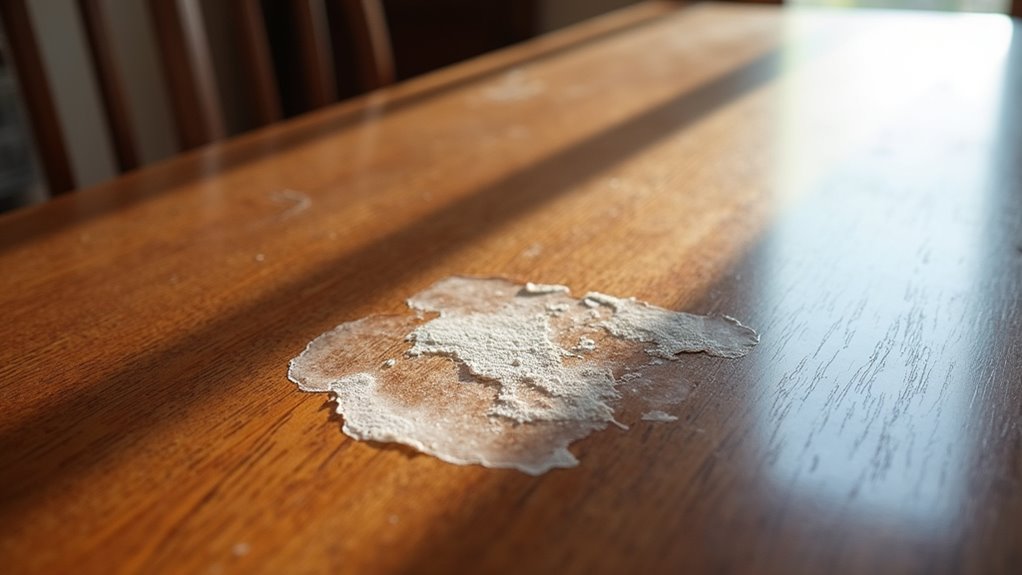
Physics betrays us when hot objects meet wood surfaces. Heat expands wood pores instantly, creating microscopic doorways for moisture invasion. Your coffee mug becomes a destructive force, even with that flimsy tablecloth acting as false protection.
Here’s the brutal truth: sealed wood isn’t immune. Heat penetrates wood finishes like they’re tissue paper, reaching the vulnerable wood beneath. The moisture damage starts immediately—water vapor seeps into those expanded pores, creating those telltale white marks we’ve all cursed at.
Time determines everything. Fresh stains? We’ve got fighting chances. Year-old disasters? Prepare for war.
Different wood finishes create different battlefield conditions, influencing which removal tactics will actually work versus which ones will waste your weekend.
Using Heat and Steam to Remove White Marks
When all else fails, we’re fighting fire with fire—literally using controlled heat to reverse the damage that heat originally caused.
Set your iron to high dry heat. Place a cotton towel over the stain—this protects the surface during heat application. The iron softens the finish, allowing trapped moisture to escape and white blemishes to disappear.
| Step | Action |
|---|---|
| 1 | Set iron to high dry heat |
| 2 | Place cotton towel over stain |
| 3 | Apply iron for 10-15 seconds |
| 4 | Check progress, adjust temperature |
| 5 | Apply olive oil to restore luster |
Steam technique enhances heat transfer—but don’t overdo it. Excessive moisture worsens stains. Keep the iron moving. Check frequently. Adjust temperature as needed. Finish with olive oil to nourish the wood and restore that original shine.
The Toothpaste and Baking Soda Method
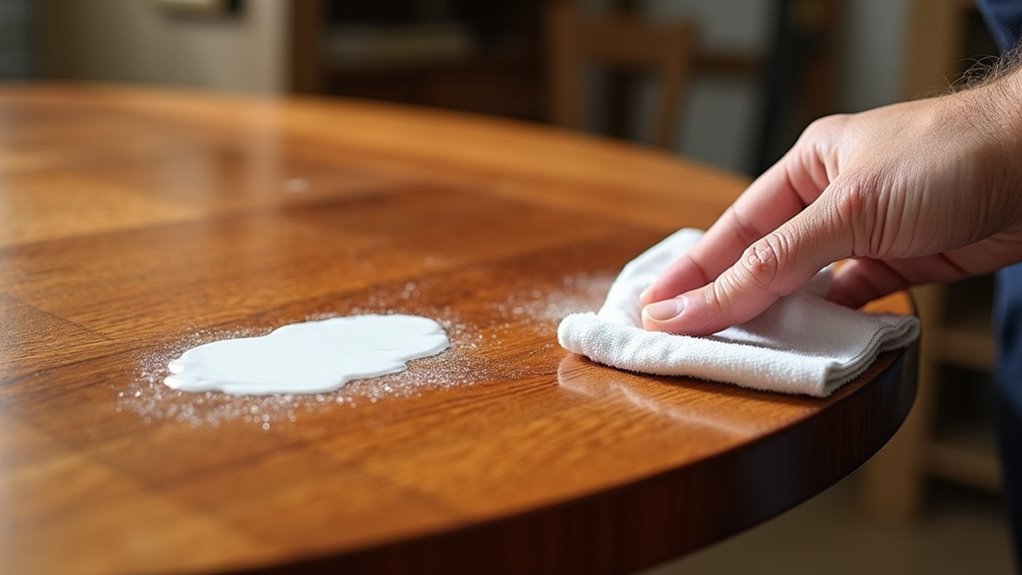
Sometimes the simplest solutions hide in your bathroom cabinet. White toothpaste and baking soda create a powerhouse combination that’ll tackle fresh heat marks with surprising toothpaste effectiveness.
Mix one part white toothpaste with two parts baking soda—this specific baking soda ratio maximizes alkaline penetration without oversaturating the wood.
Apply the paste directly onto the stain. Let it sit for one to two minutes while the alkaline properties work their magic on the compromised finish.
Wipe clean with a soft cloth. Check your progress. Repeat if necessary.
Critical warning: Keep this paste only on stained areas. It’ll damage untouched finish faster than you can say “oops.”
This method excels on fresh stains. Older, embedded marks need heavier artillery.
Oil-Based Treatments: Mayonnaise and Petroleum Jelly
Three kitchen staples transform into wood restoration powerhouses—mayonnaise, petroleum jelly, and olive oil.
These oil-based treatments penetrate wood fibers, liberating trapped moisture that creates those unsightly white marks.
Mayonnaise application requires zero finesse. Slather it generously over the stain with a clean rag. Let it marinate for several hours—patience pays dividends here. The oils work their magic while you wait.
Wipe clean with a fresh cloth, buffing out the discoloration. Stubborn marks? Repeat mercilessly.
Petroleum jelly delivers identical results through the same process. Apply, wait several hours, wipe clean. Simple.
Olive oil offers a third option—same technique, same waiting game, same results.
These treatments work because oil-based solutions understand wood’s molecular structure better than water-based alternatives.
Preventing Future Heat Damage to Your Wood Table

While celebrating our victory over existing heat marks feels satisfying, we’re missing the bigger picture—prevention beats restoration every single time.
Here’s your heat protection arsenal: Always use trivets or heat-resistant mats under hot dishes and mugs. Non-negotiable. Period.
Apply high-quality protective finishes to create an impenetrable barrier against heat and moisture. Your table will thank you later.
Ditch thin tablecloths—they’re worthless against hot items. Opt for thick materials or silicone mats instead.
Regular oil or wax treatments enhance your table’s natural defenses. Think of it as armor maintenance.
Educate everyone in your household about proper heat protection protocols. Knowledge prevents expensive mistakes.
These simple steps transform your table from vulnerable victim to heat-resistant fortress.
Frequently Asked Questions
How Do You Get White Heat Marks off Wood?
Like erasing ghostly fingerprints from the past, we’ll banish those white marks using gentle heat from a hairdryer or toothpaste mixed with baking soda for effective wood care and stain removal success.
Are Heat Stains on Wood Permanent?
Heat damage on wood isn’t permanent if we act quickly. Fresh stains remove easier than old ones. Proper wood care and prompt treatment greatly increase our chances of completely restoring the surface’s original appearance.
How to Get White Marks off a Wood Table?
Time’s of the essence! We’ll tackle white mark removal through proper wood table care using heat from a hairdryer, toothpaste-baking soda paste, or mayonnaise applications that penetrate and release trapped moisture effectively.
How to Remove Heat Transfer From Wood?
We’ll remove heat transfer from wood using gentle heat application with a hairdryer or iron, plus toothpaste-baking soda paste treatments. Proper wood care and furniture maintenance requires prompt action for successful stain elimination.
Related guides: Erase Tape Marks From Wood Effortlessly · Wood Stain Vs Paint · Is Polyurethane Waterproof On Wood