We’ll strip that polyurethane using heat guns, eco-friendly biosolvents, or natural mixtures that dissolve the coating without creating toxic dust. Heat softens the finish for easy scraping—keep your gun 6-8 inches away to prevent scorching. Alternatively, mix boiling water with baking soda and vinegar for a chemical-free stripper, or use denatured alcohol for stubborn spots. Always wear protective gear and test hidden areas first. These methods preserve your wood’s integrity while keeping you safe—and there’s more precision waiting ahead.
Some of the links in this article may be affiliate links. If you make a purchase through these links, we may earn a small commission at no extra cost to you. Thank you.
Understanding Polyurethane and Why Chemical-Free Removal Matters
While polyurethane’s reputation as wood’s ultimate protector is well-deserved, it’s also your biggest nightmare when refinishing time arrives. This durable polymer creates an almost impenetrable barrier through organic units linked by urethane bonds. Understanding polyurethane properties becomes essential when you’re staring down a removal project.
Chemical interactions with traditional solvents work, but they’re toxic nightmares. We’re talking harsh fumes, skin irritation, and environmental damage. That’s why chemical-free removal matters more than ever.
Sanding destroys wood fibers and creates dust clouds that’ll haunt your lungs. Smart refinishers choose eco-friendly biosolvents instead. These alternatives break down polyurethane’s molecular structure without poisoning your workspace or damaging delicate wood surfaces underneath.
Essential Safety Precautions for Natural Removal Methods
Natural doesn’t mean risk-free – let’s shut down that dangerous misconception right now.
We’re still dealing with solvents and chemical reactions that demand respect.
First priority: protective gear. Gloves, goggles, and masks aren’t suggestions – they’re mandatory. Skin contact burns. Vapor inhalation causes headaches, dizziness, and worse. Don’t test your luck.
Workspace ventilation is non-negotiable. Open windows, run fans, work outdoors when possible. Trapped vapors concentrate fast and hit hard.
Test everything on hidden wood sections first. That “natural” mixture might discolor your precious oak.
Eco-friendly biosolvents exist – use them. Less toxic, renewable-sourced, same results.
Disposal matters. Used materials and residual chemicals don’t belong in regular trash. Follow local hazmat protocols or face consequences.
Natural Baking Soda and Cornstarch Mixture Method
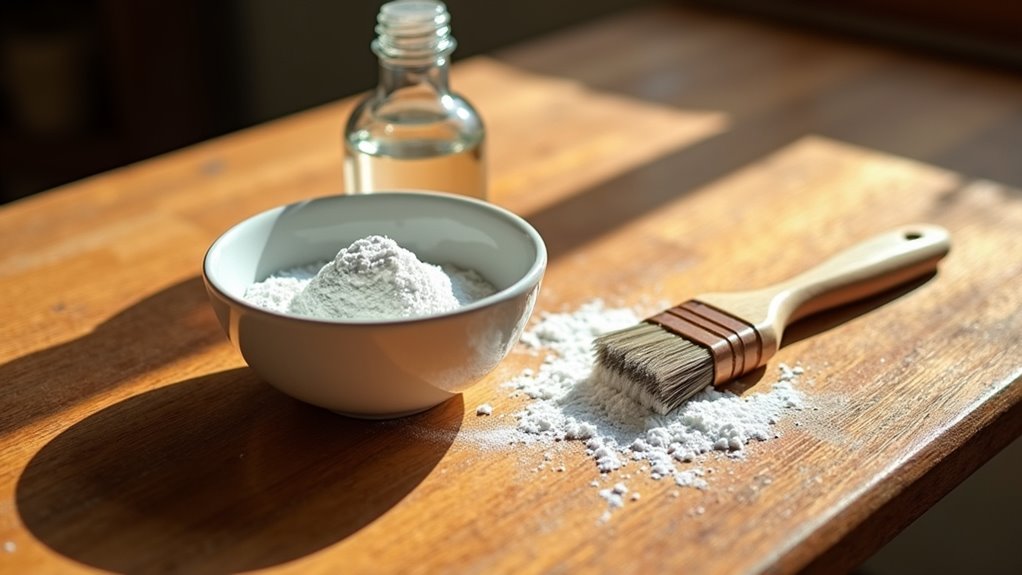
With safety protocols locked down, we’re ready to mix up the gentlest polyurethane stripper you’ll ever use. This natural powerhouse exploits baking soda benefits for alkaline cutting action while leveraging cornstarch properties as a thickening agent that keeps everything where you need it.
| Step | Ingredient | Amount |
|---|---|---|
| 1 | Boiling water + baking soda + vinegar | 4 cups + 3/4 cup + 1 tbsp |
| 2 | Cold water + cornstarch paste | 1 cup + 1/2 cup |
| 3 | Application time | Few minutes |
Apply with cloth or brush. Let it penetrate. Attack with 3M Heavy Duty Stripping Pads—pressure matters here. Skip scrubbing? You’ll pay with extra sanding later. Wipe clean afterward. Done right, this mixture strips without destroying your wood’s soul.
Using Heat and Steam Techniques for Gentle Removal
Since chemical strippers can turn your workspace into a toxic nightmare, heat and steam methods offer a cleaner path to polyurethane freedom.
Heat application works by softening the finish for effortless scraping—no wood damage required. Keep your heat gun 6-8 inches from the surface. Closer? You’ll scorch the wood. Further? Waste time waiting.
The steam method introduces moisture and heat simultaneously, lifting stubborn polyurethane without the harsh chemicals. Work in small sections—softened finish waits for no one. Remove it immediately or watch it harden again like concrete.
Essential gear: gloves, goggles, and common sense. Burns hurt. Steam scalds. Don’t learn this lesson the hard way.
Both techniques demand respect but deliver results.
Acetone-Free Solvent Alternatives That Work
Heat and steam work great, but sometimes you need liquid muscle without the acetone headache.
Enter the eco-warrior solvents that’ll strip polyurethane without poisoning your lungs.
Denatured alcohol hits hardwood like a precision strike—no sanding required. Pour it on, let it work, scrape it off. Done.
Soy-based gel strippers crawl slower but penetrate deeper. They’re the marathon runners of removal—patient, thorough, and odor-free. Perfect for detail work.
Citrus effectiveness shines indoors. These orange-scented warriors dissolve polyurethane while making your workspace smell like vacation. Zero harsh fumes, maximum results.
Commercial biodegradable strippers combine biosolvent benefits with professional-grade power. They’re engineered for safety without sacrificing performance. Your wood gets clean, your conscience stays clear.
Eco-Friendly Bio-Based Solutions for Polyurethane Stripping
When environmental responsibility meets stripping power, bio-based solvents deliver the knockout punch polyurethane never saw coming.
We’re talking citrus and soy-derived formulas that dissolve stubborn finishes without poisoning your lungs or the planet.
The bio based benefits stack up fast: renewable resources, minimal toxicity, and virtually zero harsh chemical exposure. Your workspace stays breathable while the solvent does its dirty work.
Solvent application mirrors traditional methods—brush it on, let it penetrate, watch polyurethane surrender.
The key difference? You won’t need a hazmat suit or worry about toxic fumes lingering for days.
These green warriors leave minimal residue behind, creating cleaner surfaces ready for refinishing.
It’s effective stripping with a conscience—proof that environmental responsibility doesn’t require sacrificing results.
Post-Removal Cleaning and Surface Preparation

After the polyurethane surrenders, we’ve got a battlefield to clean up—and this stage determines whether your refinishing project becomes a masterpiece or a mess.
Start with surface inspection. Hunt down every trace of old finish, damage, and imperfections. Miss something now? You’ll see it magnified under your new topcoat.
Deploy proper cleaning techniques: vacuum first, then sweep meticulously. Chemical stripper residue demands neutralization—hit it with a damp cloth or light mopping. Let everything dry completely. Moisture kills finishes faster than bad technique.
Light sanding with 120-220 grit smooths rough patches and creates adhesion points for your new finish. This isn’t about perfection—it’s about preparation that actually works when the stakes matter.
Frequently Asked Questions
What Is the Best Way to Remove Polyurethane From Wood?
Like peeling away old memories, we’ll use chemical strippers or heat guns to dissolve stubborn polyurethane. These methods break down the finish effectively, allowing us to scrape it away without damaging the wood underneath.
Does Mineral Spirit Remove Polyurethane?
Yes, mineral spirits effectively remove polyurethane by dissolving and softening the finish. We recommend applying it with a cloth, letting it penetrate for several minutes for ideal polyurethane removal results.
What Dissolves Cured Polyurethane?
We can dissolve cured polyurethane using chemical solvents like acetone or specialized strippers. For safe alternatives, we’d recommend denatured alcohol or eco-friendly biosolvents that effectively break down the finish without harsh toxicity.
How to Remove Clear Coat From Wood Without Sanding?
Need gentler options? We’ll use chemical alternatives like baking soda mixtures or biosolvents to soften the clear coat, then scrape it away. A heat gun also works effectively to warm and lift the finish without harsh sanding.
Related guides: Is Polyurethane Waterproof On Wood · How To Remove Permanent Marker From Wood · How To Apply Polyurethane Without Bubbles