Wooden chandeliers bring an undeniable warmth to homes that standard fixtures simply can’t match. They transform ordinary spaces into conversation pieces with their natural textures and organic forms. Some homeowners find themselves drawn to the rustic appeal of reclaimed barn wood designs, while others prefer the delicate simplicity of Scandinavian-inspired creations. Perhaps it’s the way light filters through wooden elements that creates such a comforting ambiance. The beauty lies in their imperfections—each knot and grain telling its own story while casting gentle shadows across walls and ceilings.
Some of the links in this article may be affiliate links. If you make a purchase through these links, we may earn a small commission at no extra cost to you. Thank you.
The Rustic Charm of Wooden Chandeliers in Modern Homes
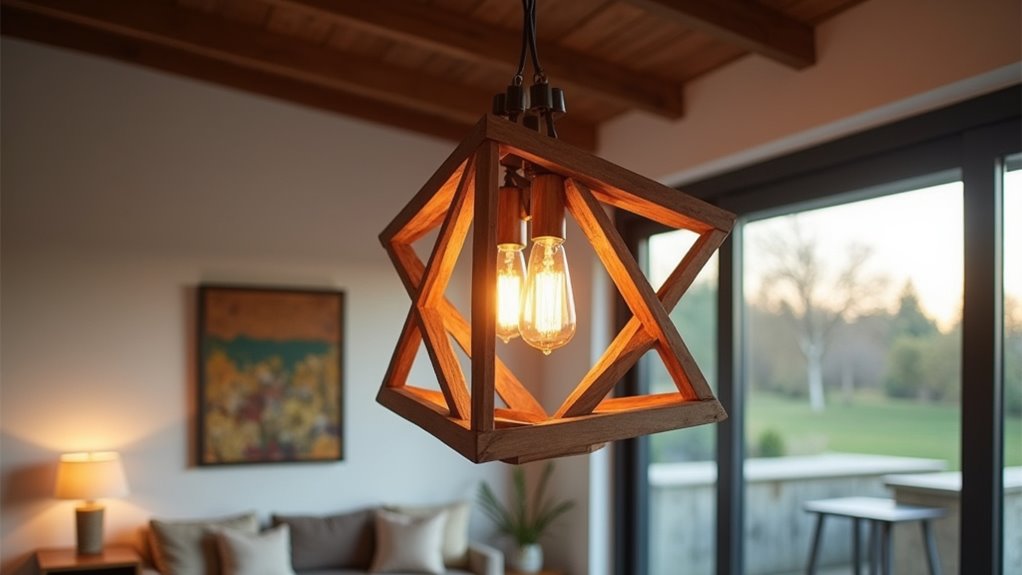
While traditional chandeliers often evoke images of crystal and metal, wooden chandeliers have steadily carved their niche in modern interior design. The warmth and texture of wood creates a striking contrast against contemporary minimalist spaces, perhaps making them more inviting.
Wooden chandeliers bring natural warmth to sleek modern spaces, softening minimalism with organic texture.
Homeowners embracing rustic aesthetics find these fixtures particularly compelling—they add character without overwhelming a space. From reclaimed barn beams to precision-cut geometric frames, wooden chandeliers span diverse styles.
Farmhouse decor enthusiasts especially appreciate how these lighting elements anchor a room while maintaining an unpretentious feel.
I think what’s most interesting is how something so fundamentally simple—wood—can transform into such a compelling focal point.
From Reclaimed to Refined: DIY Wooden Chandelier Projects
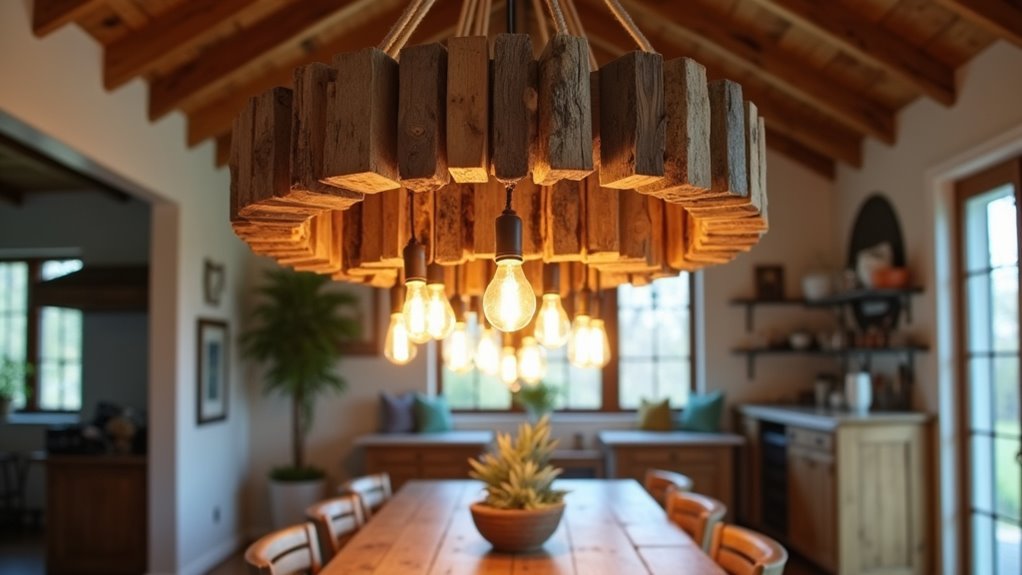
Frequently, the most rewarding wooden chandelier projects begin not with new materials, but with reclaimed treasures waiting for a second life.
Mason jars paired with weathered beams or converted ladder fixtures might seem deceptively simple, yet they’re design techniques that transform ordinary objects into extraordinary lighting.
Perhaps the most innovative approach involves repurposing driftwood or pallet pieces – materials that carry stories within their grain.
These reclaimed materials offer not just sustainability but character that new wood simply can’t match.
The beauty lies in imperfection, I think.
From rustic farmhouse looks to minimalist Scandinavian hoops, each project illuminates both space and creativity.
Natural Elements: Incorporating Driftwood and Branch Designs
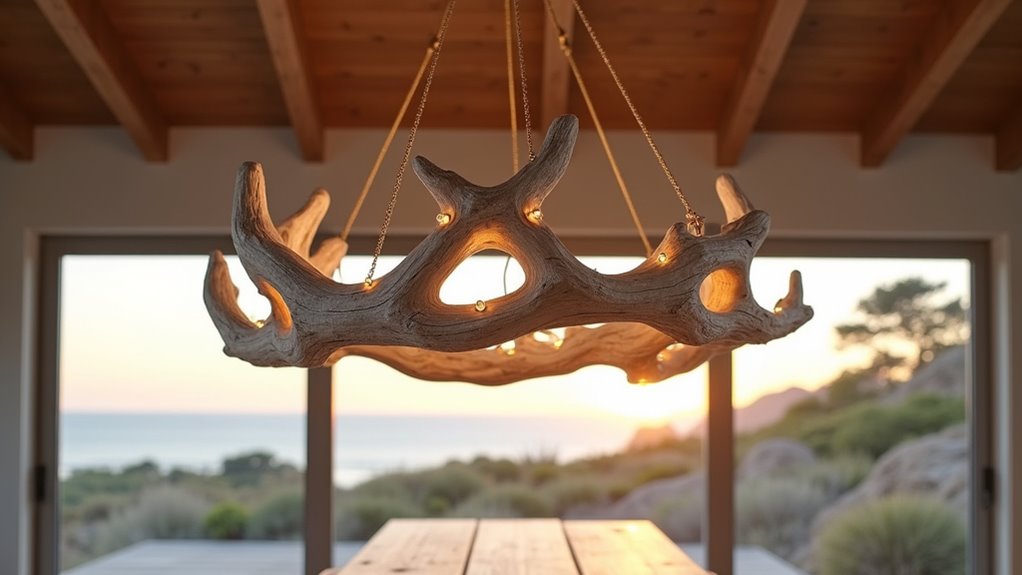
Among the most enchanting wooden chandelier designs, those incorporating natural driftwood and branches stand apart for their organic beauty and connection to the natural world.
These raw, unrefined elements bring a piece of nature indoors, creating statement lighting that transforms spaces with their sculptural quality and warm, ambient glow.
- Driftwood designs capture coastal charm with weathered textures that tell stories of ocean journeys
- Branch aesthetics showcase nature’s perfect imperfection through unique curves and growth patterns
- Clear finishes preserve authentic character while adding necessary protection
- Thoughtful arrangement transforms what might be considered debris into museum-worthy illumination
Perhaps most compelling about these fixtures is their uniqueness – no two branch or driftwood chandeliers can ever be identical.
Scandinavian Inspiration: Minimalist Wooden Lighting Fixtures
In contrast to the raw, untamed aesthetics of driftwood and branch designs, Scandinavian-inspired wooden lighting fixtures embrace the philosophy of “less is more” with their clean lines and functional simplicity.
These minimalist designs feature carefully bent wooden hoops or precise geometric forms that seem to float effortlessly in space.
Perhaps the most distinctive aspect of Scandinavian aesthetics is the celebration of light wood tones—birch, ash, and pine—that create an airy, bright atmosphere even when unlit.
The beauty lies in their unassuming presence; they illuminate without overwhelming, making them perfect for those who appreciate thoughtful design that quietly transforms a space.
Choosing the Perfect Wooden Chandelier for Your Space
Selecting the right wooden chandelier involves more than just finding a beautiful design—it requires careful consideration of your space’s proportions, style, and functionality.
When evaluating room compatibility, perhaps consider the ceiling height and overall dimensions to guarantee proper scaling. Style preferences naturally influence your choice, whether you’re drawn to rustic farmhouse elements or sleek Scandinavian minimalism.
- Match wood tones with existing furniture for cohesive integration
- Consider the chandelier’s light output for functional needs
- Factor in maintenance requirements based on your lifestyle
- Think about future adaptability as your style preferences evolve
The perfect wooden fixture should feel like it was meant for your space—not forced into it.
Maintenance and Care for Wooden Light Fixtures
The beauty of your wooden chandelier will endure for years with proper maintenance, which is just as important as the initial selection process.
Regular dusting with a soft microfiber cloth prevents buildup that can dull finishes over time. For deeper cleaning, perhaps a slightly damp cloth with mild soap works well—just avoid excessive moisture.
Preventive measures are essential too. I think keeping wooden fixtures away from direct sunlight helps prevent fading and warping.
Consider applying a fresh coat of clear finish every few years, especially for fixtures in kitchens where grease particles might settle on surfaces.
Your chandelier might need slightly different care depending on its specific wood type.
Pairing Wooden Chandeliers With Complementary Design Elements
Wooden chandeliers serve as stunning focal points that demand thoughtful consideration of surrounding design elements to create a cohesive interior aesthetic.
When pairing these fixtures with complementary design elements, consider the color palettes that enhance the wood’s natural warmth. Perhaps the most impactful pairings involve texture contrasts—smooth linens against rough-hewn wood, for instance.
- Natural materials like stone, leather, and textiles that echo the organic quality of wood
- Strategic wall colors that either complement or thoughtfully contrast with the fixture’s finish
- Metallic accents that highlight without overwhelming the wooden elements
- Carefully selected furniture styles that maintain period consistency with the chandelier’s design
Frequently Asked Questions
Can Wooden Chandeliers Support Smart Home Lighting Systems?
Wooden chandeliers can readily support smart integration through compatible fixtures and wiring adaptations. Their design versatility offers extensive lighting flexibility when paired with modern smart bulbs or integrated control systems.
How Much Does a Handcrafted Wooden Chandelier Typically Weigh?
Verily, handcrafted wooden chandeliers typically weigh between 15-50 pounds depending on size and materials used. Weight considerations vary considerably, with larger designs requiring proper ceiling support—a worthwhile tradeoff for handcrafted benefits and distinctive character.
Are Wooden Chandeliers Fire-Safe When Using High-Wattage Bulbs?
Wooden chandeliers require proper fire safety considerations. Lower-wattage LED or Edison bulbs are recommended instead of high-wattage options. Clearance between wood and bulbs prevents heat buildup and potential hazards.
Can Wooden Chandeliers Be Installed in Bathrooms or Humid Environments?
Wooden chandeliers in bathrooms face a moisture battlefield! With proper sealing techniques and bathroom humidity considerations, these fixtures can thrive if properly installed with ventilation and moisture-resistant finishes for innovative design solutions.
How Do Different Wood Species Affect the Light Quality and Ambiance?
Different wood species create distinct ambiances. Light oak imparts natural warmth, while maple produces a softer, diffused glow. Darker woods absorb light, creating intimate settings with focused illumination patterns.
Conclusion
Like a tree’s roots spreading strength throughout a forest, wooden chandeliers ground our homes in natural beauty while reaching skyward with illumination. Their versatility transcends trends, perhaps making them the perfect investment for design-conscious homeowners. Whether crafted from reclaimed beams or delicate branches, these fixtures breathe life into spaces that might otherwise feel incomplete. In the dance between light and shadow, wooden chandeliers perform their most magnificent work.