Your polyurethane’s definitely past its prime if it’s developed a chunky, clumpy texture that won’t smooth out when stirred, gives off a sour or unpleasant odor, or stays sticky after 24 hours of drying time. I think the chunky consistency is perhaps the most obvious giveaway—though sometimes it looks worse than it actually is. You can try filtering it through cheesecloth, but if these warning signs persist, exploring proper disposal methods and storage techniques could save you future headaches.
Some of the links in this article may be affiliate links. If you make a purchase through these links, we may earn a small commission at no extra cost to you. Thank you.
Understanding Polyurethane Shelf Life and Expiration

How long does polyurethane actually last before it becomes unusable?
Well, an unopened can typically stays good for about three years, though I’ve seen some sources claim up to ten years under perfect conditions.
Once you crack it open, you’re looking at roughly a year before things start going downhill.
Both oil-based and water-based varieties follow similar timelines, which is perhaps surprising to some.
The real enemy here is air exposure – it triggers that curing process you definitely don’t want happening inside your container.
Air exposure is polyurethane’s worst nightmare – it kickstarts curing reactions that will ruin your stored finish.
Proper storage can extend these timeframes, but honestly, polyurethane will eventually go bad regardless.
Proper Storage Techniques to Maximize Longevity
Since proper storage can literally make or break your polyurethane’s lifespan, it’s worth getting this right from the start. You’ll want to think of your polyurethane as perhaps a bit temperamental – it doesn’t like temperature swings or exposure to air.
| Storage Factor | Best Practice | Avoid |
|---|---|---|
| Temperature | Stable, cool conditions | Garages with fluctuations |
| Light | Dark spaces like basements | Direct sunlight |
| Air Exposure | Airtight containers | Loose lids |
I think the key here is consistency. Your basement or a closet works better than most garages. Keep that lid tight – air triggers curing, which isn’t what you want during storage.
Recognizing Warning Signs of Deteriorated Polyurethane
Even with perfect storage, polyurethane won’t last forever, and I’ve learned that catching the warning signs early can save you from a ruined project.
First thing you’ll notice is texture changes. If there’s a film forming on top or the finish has separated into chunks, that’s trouble. A sour smell is another dead giveaway – trust your nose on this one.
When polyurethane starts forming a skin or develops chunks with that telltale sour odor, it’s time to toss it.
Here’s a test I always do: stir it up and see if it blends smoothly. Clumpy consistency means it’s done for.
Perhaps most telling is the drying time test on scrap wood. If it’s still sticky after 24 hours, you’ve got expired polyurethane.
Testing and Salvaging Questionable Products
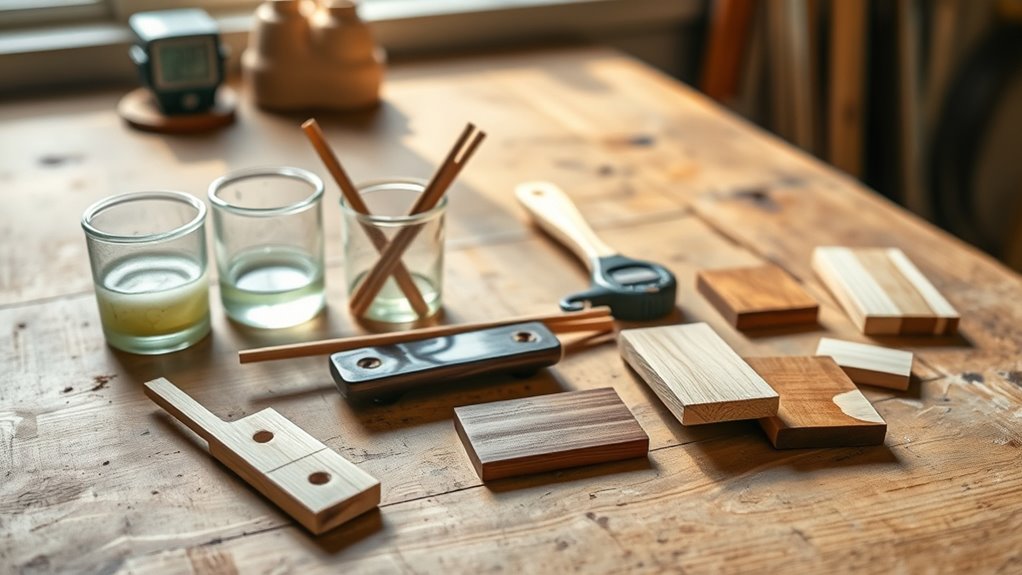
What should you do when your polyurethane shows some warning signs but isn’t completely ruined? Don’t panic just yet – you might be able to save it with some testing.
First, try stirring thoroughly. Sometimes separation looks worse than it actually is. If you can blend it back to a smooth consistency, you’re probably okay. Filter any clumps through cheesecloth into a clean container.
| Test Method | What to Check |
|---|---|
| Scrap wood test | Apply and wait 24 hours |
| Smell test | No sour odors |
| Texture check | Smooth after stirring |
| Drying assessment | Non-sticky finish |
The bottom portion often remains usable even when the top has formed that telltale film.
Safe Disposal Methods for Expired Materials
When you’ve determined that your polyurethane is truly beyond saving, disposing of it properly becomes your responsibility – and honestly, it’s more important than most people realize.
You can’t just toss liquid polyurethane in the trash. Instead, leave the can open outside until it cures completely, or perhaps brush it onto cardboard and let it dry first.
I think mixing it with kitty litter works too – it’ll solidify the whole mess.
Your local hazardous waste facility probably accepts it, though calling ahead saves a trip. Some areas offer scheduled pickups for this stuff, which is honestly pretty convenient if you’re dealing with multiple cans.
Special Considerations for Polycrylic and Spar Urethane
While polyurethane gets most of the attention, polycrylic and spar urethane have their own quirks when it comes to shelf life – and honestly, I think people often overlook these differences until it’s too late.
Here’s what you should know about these alternatives:
- Polycrylic transforms into something unusable when it “goes bad” – roughly three years if stored properly.
- Spar urethane actually lasts longer, about five years after opening.
- Oil-based spar urethane can last 10-15 years when applied correctly.
- Water-based spar urethane typically gives you 3-5 years of service life.
Perhaps the storage conditions matter more than we realize.
Frequently Asked Questions
Can I Mix Different Brands of Polyurethane Together?
You shouldn’t mix different polyurethane brands together. They may have incompatible formulations that can cause adhesion problems, uneven finishes, or chemical reactions. Stick with one brand throughout your project for consistent results.
Does Polyurethane Expire Faster in Partially Used Containers?
Yes, you’ll find polyurethane expires faster in partially used containers because air exposure triggers the curing process. Once opened, your polyurethane lasts about one year compared to three years unopened.
Will Freezing Temperatures Permanently Damage Stored Polyurethane?
Winter’s icy grip can crack your polyurethane’s molecular structure like brittle glass. You’ll likely face permanent separation, texture changes, and reduced performance. Store it in temperature-controlled spaces to prevent freezing damage that can’t be reversed.
Can Expired Polyurethane Cause Health Problems During Application?
You’ll face increased health risks using expired polyurethane because it releases stronger fumes and toxic compounds during deterioration. Always test expired products in well-ventilated areas and consider disposal instead.
Is It Safe to Use Polyurethane on Children’s Furniture?
Like a protective shield, polyurethane becomes safe for children’s furniture once it’s fully cured. You’ll need to wait at least 30 days after application before letting kids use the furniture regularly.