You can spot pressure treated wood by checking for that telltale greenish, brown, or tan tint that looks, well, unnatural compared to regular lumber. There’s usually a distinct chemical smell too – perhaps a bit oily or sharp to your nose. Look for stamps on the end grain showing treatment codes like UC1-UC5C, though older wood might’ve lost these markings over time. The texture often feels slightly waxy when you run your hand across it. Understanding these signs helps you handle the wood safely and choose appropriate applications.
Some of the links in this article may be affiliate links. If you make a purchase through these links, we may earn a small commission at no extra cost to you. Thank you.
How to Identify Pressure Treated Wood Through Visual and Physical Clues
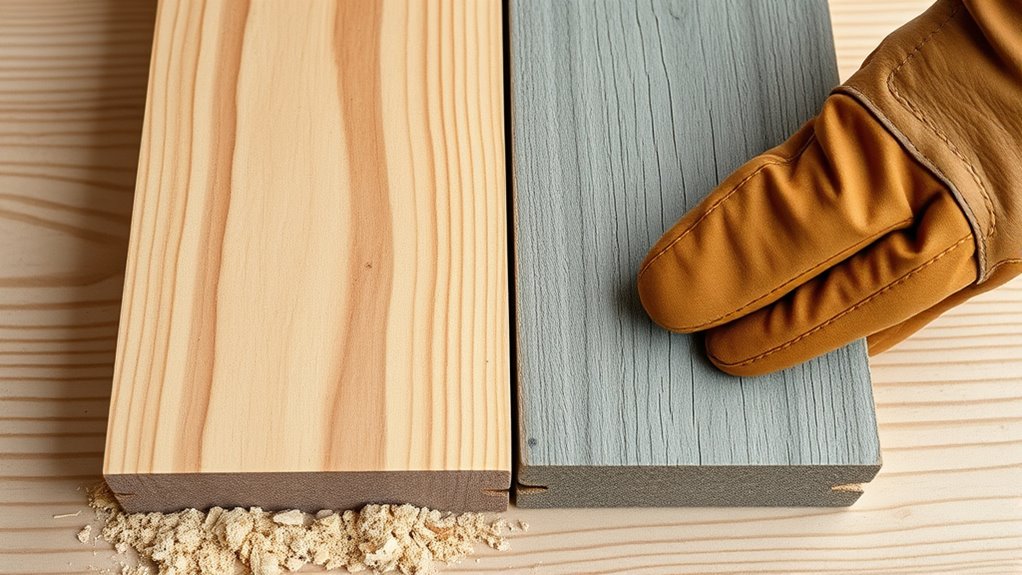
How can you tell if that piece of lumber sitting in your garage is pressure treated?
Start with a quick visual inspection. You’ll often notice a greenish, brown, or tan tint that looks unnatural compared to regular wood’s pale color. The wood might appear slightly thicker too.
Give it a smell test—treated lumber has this distinct oily, chemical scent that’s hard to miss. We think it’s perhaps the most reliable method, honestly.
Look for stamps or tags indicating treatment type, though these aren’t always present on older pieces.
The texture feels different as well, almost slightly waxy sometimes.
Common Chemical Treatments and Their Distinctive Characteristics
Understanding the specific chemicals used in pressure treatment helps you identify what type of lumber you’re dealing with—and more importantly, whether it’s safe for your intended use.
Knowing your lumber’s chemical treatment isn’t just helpful—it’s essential for ensuring your project is both effective and safe.
Each treatment creates distinctive visual and physical characteristics. Perhaps the most recognizable is CCA-treated wood with its greenish tint, though it’s been banned for residential use since 2003. We think many people still encounter this in older structures.
- Chromated Copper Arsenate (CCA): Greenish color, contains arsenic—avoid for home projects
- Copper Azole (CA): Brown shade with low odor, effective against pests
- Alkaline Copper Quat (ACQ): Tan or olive appearance, recommended for structural work
- Borate-Treated: Safe indoors, marked with “Bor” or “Tim Bor”
- Ground Contact: Extra-thick, designed for soil exposure
Understanding Labels, Markings, and Safety Standards on Treated Lumber
Where exactly should you look to decode all those stamps and markings scattered across your lumber? Start with the end grain – that’s where manufacturers typically place their most important labels.
You’ll spot UC codes ranging from UC1 to UC5C, which tell you what environments the wood can handle.
Perhaps the most critical thing to watch for are those L P2 and L P22 markings. We think these are honestly the ones that should make you pause – they indicate potential toxicity issues for home projects.
Look for “FDN” tags too, since they specify safe foundational applications.
Health Risks and Proper Handling Procedures for Treated Wood

The chemicals that make this lumber so effective can pose health risks if you’re not careful. We think most people don’t realize how important proper handling really is.
The protective chemicals in treated lumber can be dangerous to your health if proper safety precautions aren’t followed during handling.
Here’s what you should do to stay safe:
- Always wear gloves when handling treated lumber
- Use a dust mask when cutting or sanding
- Never burn treated wood – the smoke releases toxic chemicals
- Wash hands thoroughly after any contact
- Store treated wood in well-ventilated areas
Performance Issues: Warping, Corrosion, and Environmental Concerns
Although treated wood solves many problems, it honestly creates a few of its own that we think catch people off guard.
First, there’s warping. If your treated lumber wasn’t properly dried after treatment, moisture makes it expand and twist in ways that’ll frustrate you. Many woodworkers notice boards that looked perfect at the store turn into pretzels.
Then there’s corrosion—ACQ and CA preservatives contain copper that’ll eat away at aluminum hardware, leaving unsightly stains where they touch.
Perhaps most concerning is the environmental impact.
That old CCA wood with arsenic? It’s still out there in older structures, creating disposal headaches.
Best Practices for Indoor Vs Outdoor Applications and Storage
When deciding how to use treated lumber, Location truly determines everything.
You’ll want to think carefully about whether your project sits indoors or outdoors, since this affects both safety and performance. We think the storage aspect often gets overlooked too, which can lead to problems later.
Here’s what Many woodworkers find works best:
- Use only borate-treated wood indoors – other types contain chemicals you shouldn’t breathe regularly.
- Store treated lumber flat and elevated to prevent moisture damage before installation.
- Keep outdoor projects away from aluminum fixtures to avoid corrosion issues.
- Check UC ratings on labels to match wood with your specific environment.
- Let treated wood dry completely before sealing or staining.
Frequently Asked Questions
Can I Use Pressure Treated Wood for Vegetable Gardens and Food Preparation?
You’ll absolutely poison your garden if you use most pressure-treated wood! Avoid CCA, ACQ, and CA treatments near food. Only borate-treated lumber’s safe for vegetable gardens since it doesn’t contain toxic copper or arsenic.
How Long Does Pressure Treated Wood Last Compared to Untreated Lumber?
Pressure treated wood typically lasts 15-40 years depending on treatment type and exposure conditions, while untreated lumber only survives 2-5 years outdoors before decay and insect damage occur.
Is Pressure Treated Wood More Expensive Than Regular Untreated Wood?
You’d think paying extra for chemicals would be crazy, but yes, pressure treated wood costs more than untreated lumber. You’re investing in longevity and pest resistance, making it worthwhile for outdoor projects.
Can Pressure Treated Wood Be Painted or Stained Like Regular Wood?
You can paint or stain pressure treated wood, but you’ll need to wait until it’s fully dried after treatment. The chemicals and moisture content affect how well paint and stain adhere initially.
Where Can I Legally Dispose of Old Pressure Treated Lumber?
You can’t burn treated lumber since it releases toxic chemicals. Check with your local landfill for proper disposal methods, as many accept treated wood with specific guidelines you’ll need to follow.
Related guides: Wood Stain Vs Paint · Is Polyurethane Waterproof On Wood · Best Wood For Exterior Shutters