You’ll want to start with Birchwood Casey’s Complete Gun Finish Kit—it’s perhaps the most thorough option that covers everything from staining to final protection. Tru-Oil remains the gold standard for bringing out walnut’s natural character, though it’s admittedly finicky to work with. For quick touch-ups, Lin-Speed dries fast and requires minimal product. I think vintage firearms deserve something special like Minwax Antique Oil. There’s more to take into account when matching your specific needs.
Some of the links in this article may be affiliate links. If you make a purchase through these links, we may earn a small commission at no extra cost to you. Thank you.
Top-Rated Complete Gun Care Solutions for Every Firearm Owner
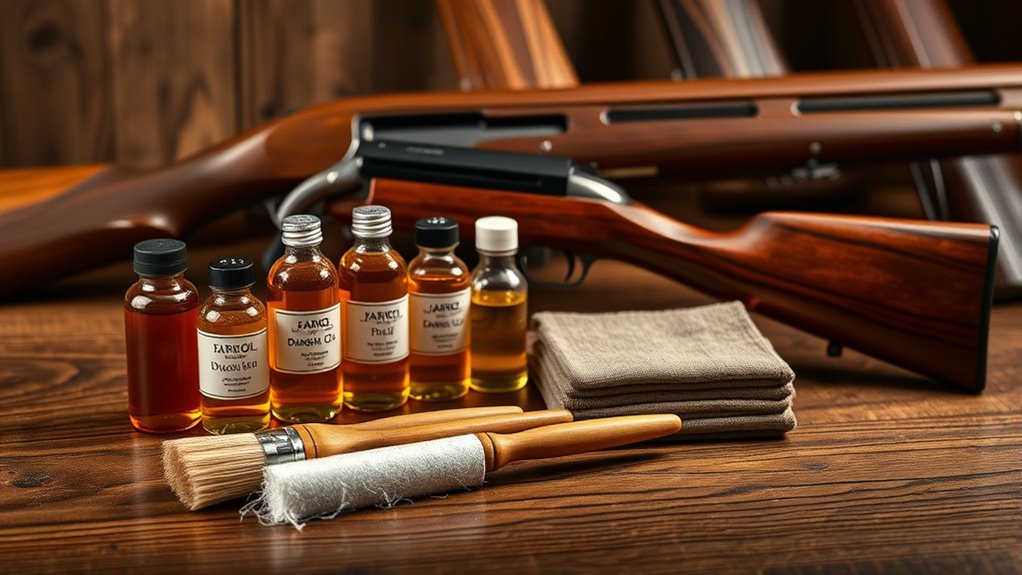
When you’re investing in quality firearms, you’ll want a thorough care solution that handles everything from routine maintenance to complete refinishing projects.
The Birchwood Casey Complete Gun Finish Kit stands out here – it’s perhaps the most extensive option available, though I think it covers nearly every base you’d need.
You’ll get walnut stain, tru-oil finish, and Perma blue liquid gun blue all in one package.
What’s particularly impressive is how these specialized products excel in their specific areas rather than being mediocre at everything.
The kit provides solid water resistance and UV protection without that yellowish tinge some finishes develop over time.
Essential Oil-Based Finishes That Protect and Enhance Wood Grain
While there’s something appealing about modern synthetic finishes, I keep coming back to oil-based options when I’m working on gun stocks – they just seem to bring out the wood’s natural character in ways that feel more authentic.
Tru-Oil remains my go-to choice, though I’ll admit the linseed oil base can be finicky. It penetrates deep into walnut grain, creating that rich depth you can’t fake. The water resistance is solid too, which matters if you’re actually using these rifles outdoors.
For touch-ups, perhaps Lin-Speed works faster – dries quickly enough for small repairs. I think the key is matching your patience level with the product’s characteristics.
Specialized Walnut Stock Treatments for Professional Results
Since you’re dealing with walnut specifically, the game changes entirely – this wood demands treatments that work with its dense grain structure rather than against it.
Birchwood Casey’s Walnut Wood Stain stands out here, offering that rich, even color without the grain bleeding you’d get with cheaper alternatives.
I think the real winner though is their Tru-Oil finish. It penetrates walnut’s tight grain better than most, perhaps because of those natural linseed oils.
You’ll need multiple coats – maybe three or four – but the result feels authentic rather than plastic-like. The water resistance is solid too.
Quick-Application Products Perfect for Touch-Ups and Small Projects
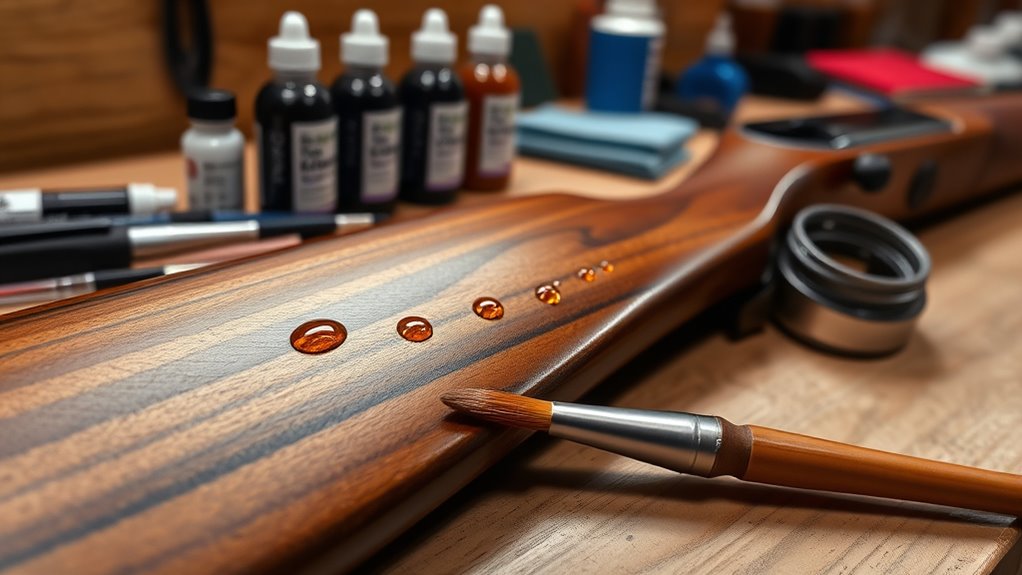
Now, what happens when you’re not refinishing an entire stock but dealing with minor scuffs or worn spots? You’ll want something that works fast without requiring extensive prep work.
Lin-Speed Gun Stock Finish stands out here – it’s designed specifically for quick touch-ups and dries remarkably fast. I think what makes it appealing is how little product you actually need for small repairs.
Lin-Speed Gun Stock Finish excels at quick touch-ups with minimal product needed and impressively fast drying times.
The glossy finish enhances wood’s natural beauty without looking artificial.
Perhaps the best part is its versatility beyond gun stocks. You can use it on other wooden surfaces, which makes the purchase feel more practical, even if that wasn’t your original intention.
Premium Finishes Designed for Vintage and Antique Firearms
When you’re working with antique or vintage firearms, you can’t just grab any finish off the shelf – these pieces deserve something that respects their history and character.
Minwax Antique Oil stands out here, perhaps because it actually enhances those grain patterns without overwhelming the wood’s natural beauty.
I think what makes it special is how it provides that warm, rich finish that complements vintage aesthetics perfectly.
You can apply it to both finished and unfinished wood, which is convenient.
The finish dries surprisingly fast – maybe 5-10 minutes – and creates a durable surface that doesn’t feel plastic-like.
Choosing the Right Finish Type for Your Specific Needs
Selecting the right finish type really comes down to understanding what you actually need from your gun stock – and honestly, this is where a lot of people get overwhelmed by all the options.
Oil finishes give you that natural wood feel most shooters prefer, though they require more maintenance.
Polyurethane offers excellent waterproofing but can feel somewhat plastic-like.
Wax provides decent weather resistance and easy application.
I think your shooting environment matters most here.
If you’re mostly indoors at ranges, perhaps a basic oil finish works fine.
Hunters dealing with harsh weather might want polyurethane‘s protection, despite the artificial feel.
Frequently Asked Questions
How Long Should I Wait Between Coats When Applying Gun Stock Finish?
You should wait 5-10 minutes between coats when applying most gun stock finishes. However, you’ll want to check your specific product’s instructions since drying times can vary between different oil-based finishes.
Can I Mix Different Brands of Gun Stock Finishes Together?
You shouldn’t mix different gun stock finish brands together. Each manufacturer uses unique formulations that can react unpredictably when combined, potentially causing bubbling, poor adhesion, or uneven curing that’ll ruin your stock’s appearance.
What Temperature and Humidity Conditions Are Best for Applying Stock Finishes?
You’ll get best results applying gun stock finishes at 70-75°F with 40-50% humidity. Avoid high humidity that slows drying and cold temperatures that prevent proper penetration and curing of the finish.
How Do I Remove Old Finish Without Damaging the Underlying Wood?
Don’t worry about harming precious wood—you’ll safely strip old finish using fine-grit sandpaper, chemical strippers, or heat guns. Work gently with the grain, test inconspicuous areas first, and stop once you’ve reached bare wood.
Should I Sand Between Coats and What Grit Sandpaper Is Recommended?
You should lightly sand between coats using 220-320 grit sandpaper to guarantee proper adhesion. This removes any raised grain or imperfections, creating a smooth surface for the next coat to bond effectively.