You’ll want semi-gloss or high-gloss paint for trim and baseboards since they’re durable and easy to clean, though we think semi-gloss strikes the best balance. Top performers include Majic 8-15000 High Gloss Enamel for quick coverage and INSL-X Cabin Coat for that smooth, factory-like finish. Oil-based paints create exceptional durability, but water-based options have improved notably and they’re much easier to work with. Proper surface prep remains essential regardless of your choice, and there’s more to evaluate about application techniques.
Some of the links in this article may be affiliate links. If you make a purchase through these links, we may earn a small commission at no extra cost to you. Thank you.
Best Paint Sheens for Trim and Baseboards
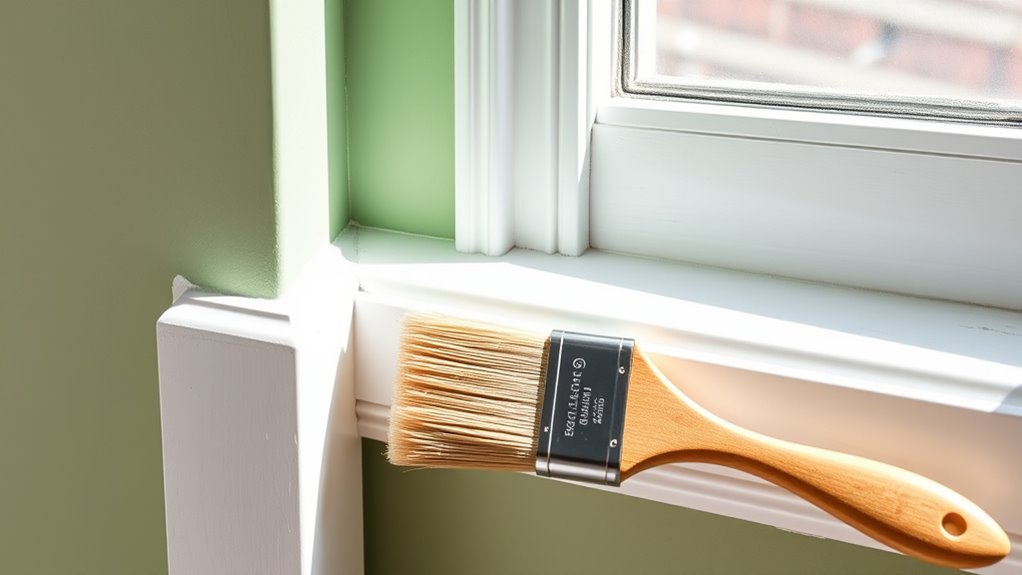
When choosing paint for your trim and baseboards, the sheen level matters more than you might initially think.
We think flat or matte paint works well in bedrooms since it absorbs light, though it’s honestly hard to clean.
Semi-gloss is what most professionals prefer – it’s shiny, durable, and handles kitchen and bathroom moisture incredibly well.
Semi-gloss paint delivers the perfect combination of durability and moisture resistance that professionals rely on for challenging spaces.
High gloss paint offers over 70% glossiness, which looks stunning but perhaps requires more skill to apply smoothly.
Satin provides that subtle glow for high-traffic areas.
Top-Rated Paint Products for Interior Trim
After testing several products over the years, Many woodworkers find that certain paint brands consistently deliver exceptional results for interior trim work. You’ll want something that flows smoothly yet provides excellent coverage.
| Product | Coverage | Dry Time |
|---|---|---|
| Majic 8-15000 High Gloss Enamel | Excellent | Quick-drying |
| INSL-X Cabin Coat | Factory-like finish | Standard |
| Rust-Oleum Oil-Based Enamel | 22 sq ft | 2-4 hours |
Though we think the INSL-X creates the smoothest finish, it’s pricier. Rust-Oleum offers solid durability, especially for high-traffic areas.
Water-Based Vs Oil-Based Formulations
While those products perform well, the choice between water-based and oil-based formulations makes a bigger difference than most homeowners realize.
Water-based paints dry faster—usually within hours—and cleanup’s straightforward with soap and water. They’re low-odor too, which we think matters more than people admit.
Oil-based paints, though, create that incredibly smooth, durable finish that’s hard to beat on trim work.
Here’s where it gets tricky: oil-based takes forever to dry and smells terrible, but perhaps that trade-off’s worth it for high-traffic areas.
Water-based technology’s improved dramatically, yet experienced painters still swear by oil for cabinets and baseboards.
Application Temperature and Environmental Factors

Three factors determine whether your paint job succeeds or fails completely—temperature, humidity, and air circulation.
Most paints work best between 50-90°F, though we think the sweet spot is around 70°F. You’ll want humidity below 75% for proper adhesion.
For best results, aim for 70°F with humidity under 75%—these conditions give you the professional finish you’re after.
Cold temperatures slow drying times dramatically. Hot weather, perhaps surprisingly, can cause brush marks and uneven coverage. High humidity creates problems too—the paint won’t cure properly and you might see bubbling.
Air circulation helps, but avoid direct drafts on wet paint. Open windows strategically.
Some painters ignore these factors completely, then wonder why their finish looks terrible.
Surface Preparation and Priming Requirements
Four preparation steps separate amateur results from professional-looking trim work—cleaning, sanding, filling, and priming.
You’ll want to wipe down surfaces first, removing dust and grime that prevents proper adhesion.
Fill nail holes and gaps with wood filler, then sand smooth once dry.
Priming becomes essential on bare wood, despite what some manufacturers suggest. The Rust-Oleum oil-based formula definitely requires primer on raw surfaces.
Perhaps the most overlooked aspect is patience between coats—rushing here shows.
Durability and Maintenance Considerations
Once you’ve invested time and money into painting trim and baseboards, you’ll want that finish to last—though Not all paints deliver on their durability promises.
Semi-gloss and high-gloss finishes typically handle daily wear better than matte options, but they’re less forgiving of surface imperfections.
You’ll find oil-based enamels resist scuffs and moisture exceptionally well, though cleanup’s more involved.
Water-based alternatives have improved markedly—some now rival oil paints for durability while offering easier maintenance.
We think proper surface prep matters more than paint choice, perhaps, but quality products like Rust-Oleum’s enamel formulations definitely show better long-term performance.
Frequently Asked Questions
How Much Paint Do I Need for an Average-Sized Room’s Trim?
For an average-sized room, you’ll need about one quart of paint for trim work. This covers approximately 100-150 square feet, depending on your trim’s width and the room’s layout.
Can I Use the Same Paint on Both Baseboards and Crown Molding?
Like matching accessories to an outfit, you’ll want consistent paint throughout your trim work. Yes, you can absolutely use the same paint on both baseboards and crown molding for a cohesive, professional look.
What’s the Average Cost Difference Between Premium and Budget Trim Paints?
You’ll typically pay $15-25 more per gallon for premium trim paints compared to budget options. Premium paints like INSL-X or Prestige cost $40-60, while budget alternatives run $20-35 per gallon.
How Long Should I Wait Between Applying Multiple Coats?
You’ll absolutely wait forever if you don’t follow timing guidelines! Most trim paints require 2-4 hours between coats, but check your specific product’s label since water-based formulas typically dry faster than oil-based ones.
Which Brush Type Works Best for Achieving Smooth Trim Finishes?
You’ll want high-quality angled brushes with fine synthetic bristles for water-based paints or natural bristles for oil-based. They provide better control and create smoother finishes on trim surfaces.
Related guides: Best Nailer For Baseboards Trim · Top Paints for Your Porch and Patio · Top Caulks to Perfect Your Trim