You’ll want to focus on maple as your top choice—it’s got that perfect 1,450 Janka hardness rating that balances durability with being gentle on your knives. Walnut looks gorgeous with its dark grain that hides dirt well, but it’s softer at 1,010 hardness. Teak has natural oils for longevity, though it can dull blades faster. Each option has trade-offs worth exploring further.
Some of the links in this article may be affiliate links. If you make a purchase through these links, we may earn a small commission at no extra cost to you. Thank you.
Essential Characteristics to Consider When Selecting Wood
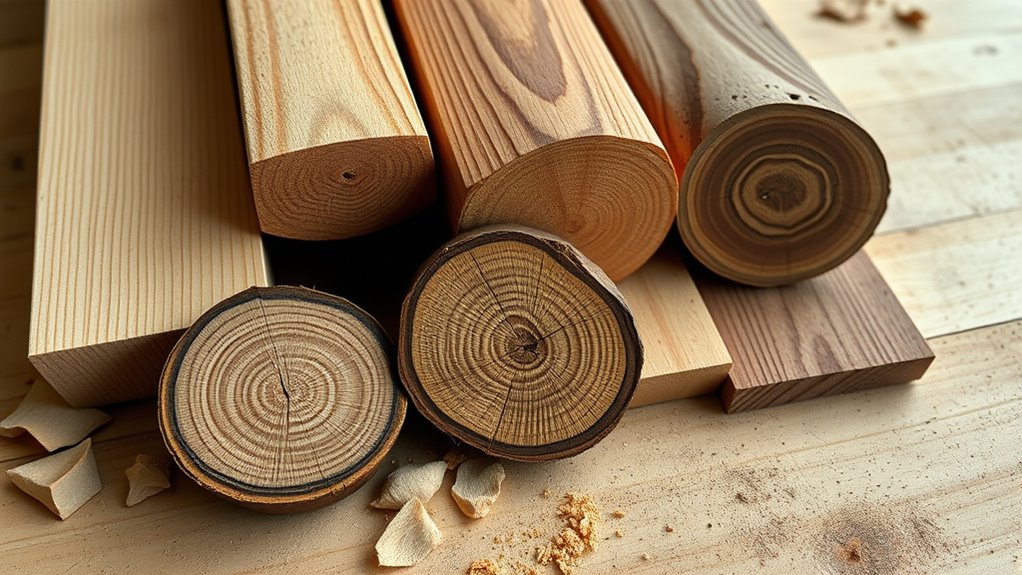
When you’re standing in the lumber yard or browsing online for cutting board wood, the sheer number of options can feel overwhelming—but honestly, focusing on a few key characteristics will make your decision much clearer.
Start with hardness ratings. You’ll want something between 900-1,500 on the Janka scale—hard enough to resist scratches but not so hard it destroys your knives.
We think food safety matters more than people realize, though. Stick with woods that produce edible fruits or nuts, and perhaps avoid those exotic varieties with questionable toxin levels.
Porosity’s another biggie for hygiene reasons.
Maple: The Gold Standard for Cutting Boards
Maple’s reputation as the cutting board champion isn’t just marketing hype—there’s solid science behind why professional chefs and home cooks consistently reach for it.
With a Janka hardness rating of 1450, maple strikes that sweet spot between durability and knife-friendliness. It’s tough enough to resist scratches but won’t dull your blades like harder woods might.
Maple’s 1450 Janka rating delivers the perfect balance—durable enough to last, gentle enough to keep your knives sharp.
The tight grain structure resists moisture beautifully, and perhaps most importantly, it’s consistently food-safe across different maple varieties.
Beech, Teak, and Walnut: Premium Alternatives Worth Considering
While maple might be the poster child for cutting boards, other premium woods offer compelling advantages that might make you reconsider your next purchase.
Beech stands out as perhaps the most budget-friendly option at around $15, though we think its light color shows every stain.
Teak’s natural oils create incredible decay resistance, but it’ll dull your knives faster than you’d expect.
Walnut hits a sweet spot with its gorgeous dark appearance—dirt practically disappears against it.
Sure, walnut dents more easily with its 1010 Janka rating, but that rich color makes maintenance issues less obvious.
Each has trade-offs worth considering.
Understanding Wood Grain Patterns and Their Impact
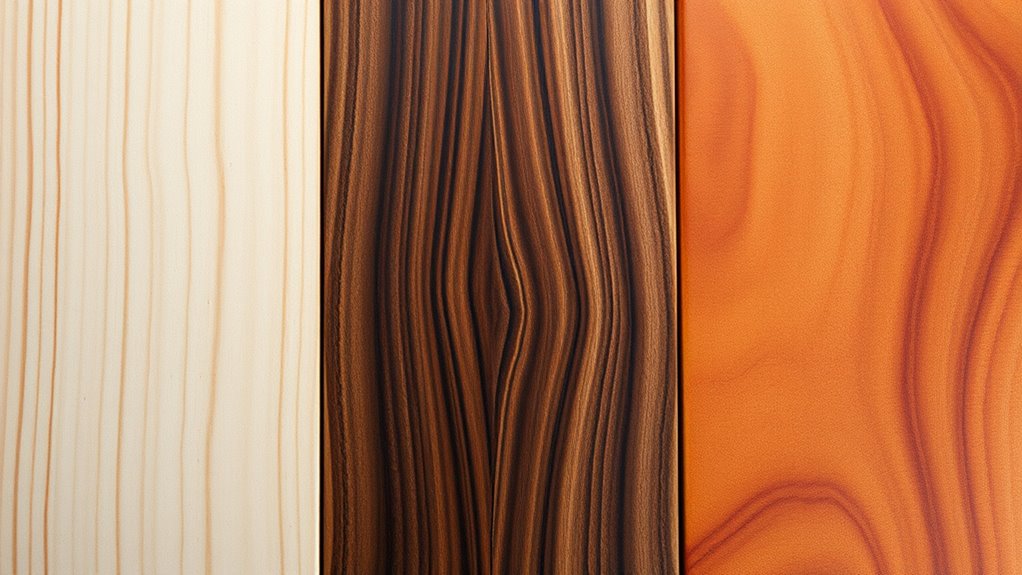
Beyond the wood species you choose, the grain pattern fundamentally changes how your cutting board performs and ages.
You’ll encounter two main types: end grain and edge grain.
End grain boards show the wood’s circular growth rings, creating a surface that’s gentler on knife edges. The fibers actually separate and close back up when cut, which is pretty remarkable.
End grain’s self-healing properties make it remarkably knife-friendly as wood fibers naturally separate and close during cutting.
However, they’re typically more expensive and require careful maintenance.
Edge grain boards display long, straight lines running lengthwise. They’re more common and budget-friendly, though perhaps not quite as forgiving to your knives.
Both work well—it’s really about your priorities.
Health and Safety Considerations for Wooden Cutting Boards
When you’ve picked your grain pattern and wood species, the question of food safety naturally comes up next.
We think there’s been some debate about whether wood boards harbor bacteria, but research suggests the opposite. Close-grained woods like maple and beech actually resist bacterial growth better than plastic.
The key is proper maintenance. You’ll want to hand wash with soap and water, then dry immediately. Perhaps most importantly, regular conditioning with food-safe oils keeps the wood sealed.
Avoid open-grained varieties like red oak—they can trap particles and become unsanitary despite your best cleaning efforts.
Proper Sizing, Maintenance, and Woods to Avoid
You’ll want something around 10-12 inches by 16-18 inches with roughly half-inch thickness.
Perhaps counterintuitively, bigger boards actually work better for most tasks.
For maintenance, you’ll need to condition regularly with proper cutting board oils—never cooking oils, which can go rancid.
Hand wash only and dry immediately.
Avoid open-grained woods like ash or red oak since they trap bacteria.
Light softwoods also lack durability, making them poor long-term investments.
Frequently Asked Questions
Can I Use the Same Cutting Board for Meat and Vegetables?
Cross-contamination becomes your kitchen’s silent enemy when you’re using one board for everything. You’ll risk spreading harmful bacteria from raw meat to vegetables, so you should always use separate cutting boards for safety.
How Often Should I Replace My Wooden Cutting Board?
You should replace your wooden cutting board when it develops deep cuts that can’t be sanded out, shows persistent stains or odors, or becomes warped and unstable during use.
What’s the Difference in Cost Between Different Wood Types?
Your wallet will feel different impacts depending on your wood choice. Beech boards start around $15, making them budget-friendly. Maple and walnut cost more, while teak commands premium prices due to its superior durability.
Can Wooden Cutting Boards Go in the Dishwasher?
You shouldn’t put wooden cutting boards in the dishwasher. The high heat and prolonged water exposure will crack, warp, and damage the wood. Instead, hand wash them with soap and water, then dry promptly.
Which Cutting Board Thickness Is Best for Heavy Chopping Tasks?
You’ll want a thicker cutting board, around 1.5 to 2 inches thick, for heavy chopping tasks. The extra thickness provides stability, absorbs impact better, and won’t slide around during aggressive cutting motions.
Related guides: Top Wood Choices for Safe Kids’ Furniture · Wood Stain Vs Paint · Is Polyurethane Waterproof On Wood