You’ll want to evaluate Abatron LiquidWood for extensive restoration projects—it penetrates deeply and gives you a solid 30-45 minute working window, though it’s pricier than alternatives. For budget-conscious repairs, PC Products PC-Petrifier delivers decent results without breaking the bank. I think Minwax High-Performance works well for structural challenges, but perhaps System Three RotFix might suit outdoor applications better. Bondo offers quick five-minute curing if you’re rushed. Each option addresses different needs and project scales worth exploring further.
Some of the links in this article may be affiliate links. If you make a purchase through these links, we may earn a small commission at no extra cost to you. Thank you.
Understanding Wood Hardeners and Their Purpose
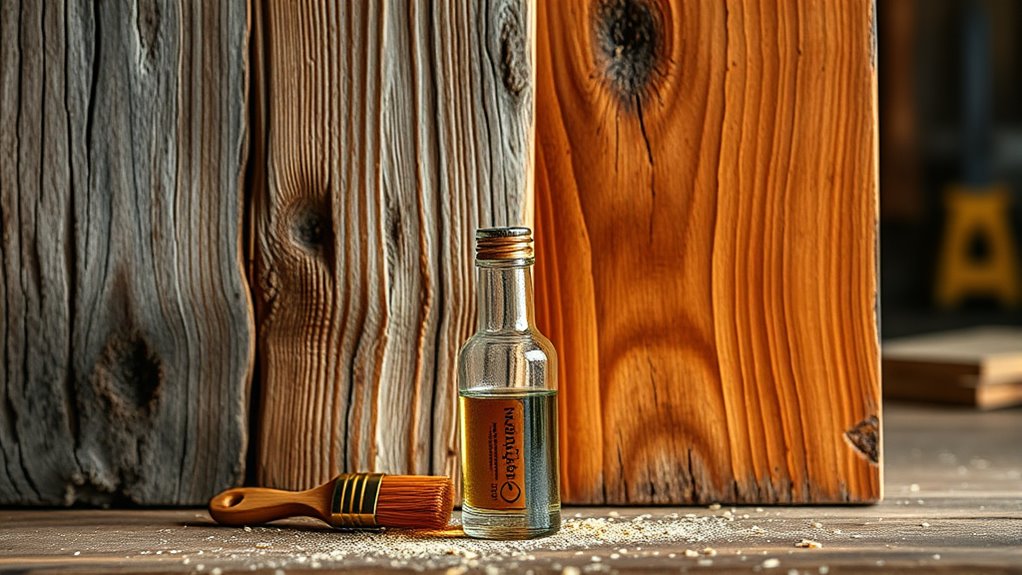
When you’re dealing with rotting or deteriorated wood, wood hardeners offer a practical solution that can save both time and money compared to complete replacement.
Think of them as liquid reinforcements—they penetrate deep into weakened wood fibers to restore structural integrity.
Wood hardeners act like liquid reinforcements, penetrating deep into damaged fibers to restore your wood’s structural strength and stability.
These products work by filling microscopic gaps and cracks within the wood.
Perhaps most importantly, they create a solid foundation for any subsequent repairs or finishes you’ll apply.
I think many people underestimate how effective they can be for addressing damage before it spreads further throughout your wooden structures.
Best Overall Wood Hardener for Comprehensive Restoration
After testing several products over the years, I keep coming back to the Abatron LiquidWood 2 Pint Kit as the most reliable choice for serious wood restoration projects.
You’ll find it penetrates deeply into deteriorated fibers, which I think makes all the difference for structural repairs.
The 30-45 minute working time gives you enough flexibility without rushing, though perhaps it’s still challenging on vertical surfaces.
It’s Greenguard certified with low VOCs, so you won’t deal with overwhelming fumes.
The shrink-free formula creates permanent repairs that actually strengthen the wood rather than just filling gaps temporarily.
Budget-Friendly Options That Deliver Results
Not everyone needs to spend top dollar on wood hardener, and I’ve been pleasantly surprised by how well some budget options perform.
The PC Products PC-Petrifier consistently delivers solid results without breaking the bank. I think what makes it appealing is its versatility—you can brush, spray, or inject it depending on your situation.
PC Products PC-Petrifier delivers reliable performance at an affordable price with impressive application versatility for brush, spray, or injection methods.
Its thick consistency actually works in your favor, giving you better control during application.
Sure, it won’t handle major structural repairs, but for typical rotting issues, it gets the job done.
Perhaps most importantly, it’s environmentally friendlier than many alternatives while maintaining effectiveness.
Professional Grade Solutions for Demanding Projects
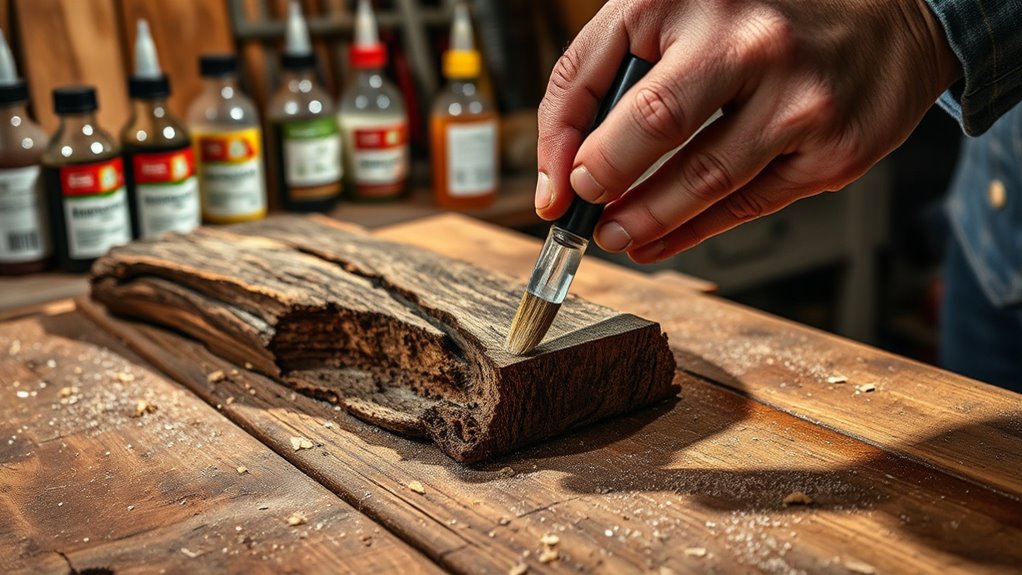
For projects where failure isn’t an option, you’ll want to contemplate professional-grade hardeners that can handle serious structural challenges.
These solutions typically cost more, but they’re engineered for durability and reliability.
Minwax 41700000 High-Performance Wood Hardener stands out as a professional choice. It penetrates deeply while providing that rock-hard finish you need.
Perhaps most importantly, it’s compatible with nearly all wood fillers.
Key professional features include:
- Fast-drying formula that reinforces decayed wood effectively
- Superior moisture sealing capabilities
- Deep penetration for structural integrity
The downside? It contains harsh chemicals, so you’ll need proper safety gear during application.
Specialized Hardeners for Outdoor Applications
When you’re dealing with outdoor wood restoration, the stakes get considerably higher since your repairs need to withstand whatever nature throws at them.
System Three RotFix stands out here – it’s a clear epoxy resin that doesn’t require precise mixing ratios, which honestly makes your life easier when you’re working outside.
What I find impressive is how it handles moisture resistance. Unlike some indoor hardeners that might struggle with constant weather exposure, RotFix seems built for this environment.
Perhaps it’s overkill for simple projects, but outdoor wood faces UV rays, temperature swings, and moisture cycles that’ll test any repair.
Quick-Drying Formulas for Time-Sensitive Repairs
Sometimes you’re working against the clock – maybe you’ve got a weekend project that needs to wrap up before Monday, or perhaps weather’s rolling in and you need that repair sealed fast.
Quick-drying wood hardeners can be absolute lifesavers in these situations.
Bondo Rotted Wood Restorer stands out here, starting to cure in just five minutes and fully hardening within two hours. That’s remarkably fast, though I think the speed means you’ll need to work efficiently.
With five-minute cure time and two-hour full hardening, Bondo delivers emergency-speed repairs when you’re racing against deadlines.
- Minwax High-Performance: Dries quickly while providing deep penetration
- J-B Weld Wood Restore: No mixing required, speeds up application considerably
- Bondo: Fastest option available, perfect for emergency repairs
Key Factors to Consider When Choosing Wood Hardener
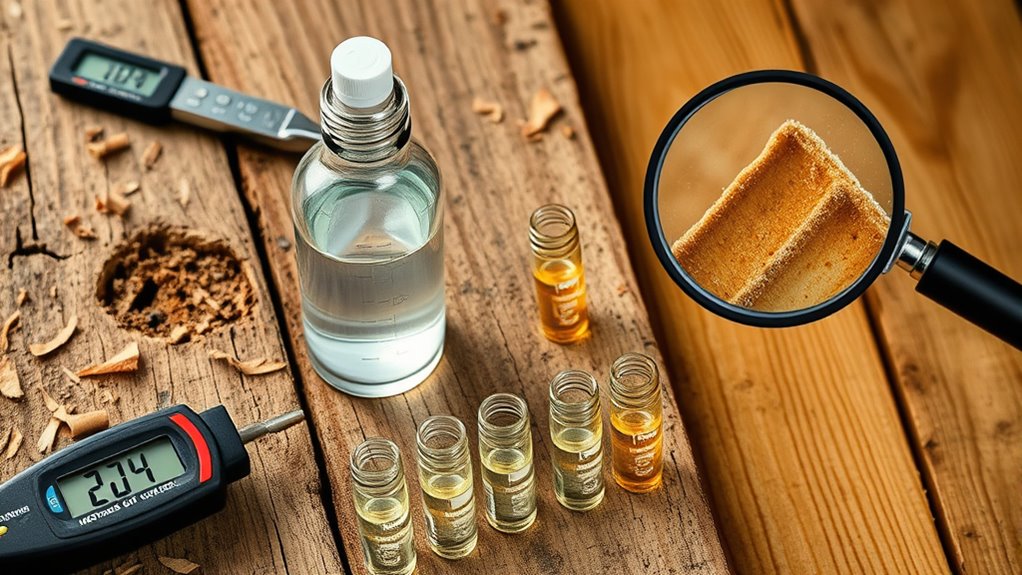
Which wood hardener will actually work for your specific project? I think the most important factor is matching the product to your damage severity.
Surface rot needs different treatment than deep structural decay, perhaps obviously.
Consider your timeline too – some hardeners dry in minutes while others need hours. The application method matters as well; vertical surfaces can be tricky with runny formulas.
Price varies dramatically, though expensive doesn’t always mean better for your situation.
Don’t forget compatibility with wood fillers if you’re planning follow-up repairs. Indoor versus outdoor use affects your choices considerably.
Proper Application Techniques for Maximum Effectiveness
Although wood hardener seems straightforward to apply, I’ve seen too many failed repairs to believe it’s foolproof. You’ll get better results if you follow proper technique rather than just slathering it on.
Proper technique beats heavy application every time when it comes to wood hardener repairs that actually last.
Surface preparation makes or breaks your repair. Clean away loose debris and perhaps sand lightly to expose fresh wood fibers. I think many people skip this step, but it’s essential for penetration:
- Remove all dirt, paint flakes, and crumbling wood pieces first
- Work in temperatures between 50-90°F for best curing
- Apply thin, even coats rather than flooding the surface
Don’t rush the drying time either.
Frequently Asked Questions
Can Wood Hardener Be Used on Painted or Stained Wood Surfaces?
You can’t apply wood hardener directly over painted or stained surfaces. You’ll need to strip the existing finish first, allowing the hardener to penetrate the wood fibers effectively for proper restoration.
How Long Does Wood Hardener Last Once Applied to Treated Wood?
You’ll find wood hardener lasts decades once properly applied to treated wood. It penetrates deep into fibers, creating permanent structural reinforcement that won’t degrade over time, providing long-lasting protection against moisture and decay.
Is It Safe to Use Wood Hardener Indoors Without Ventilation?
Sure, you’ll love breathing chemical fumes like it’s aromatherapy! Don’t use wood hardener indoors without ventilation—many contain harsh chemicals and VOCs that can harm your health. Always guarantee proper airflow when applying.
Can Wood Hardener Prevent Future Insect Damage and Wood Rot?
Wood hardener can’t prevent future insect damage, but it does seal wood against moisture, reducing conditions that promote rot. You’ll still need separate pest control measures and regular maintenance to protect against insects.
What’s the Difference Between Wood Hardener and Wood Filler Products?
Wood hardener penetrates deep into damaged fibers to strengthen weakened wood, while wood filler fills gaps and holes. You’ll use hardener first to restore structural integrity, then apply filler for cosmetic repairs.