Barn wood brings a certain warmth to modern homes that’s hard to replicate with new materials. The weathered textures and rich history embedded in each plank tell stories of another era, connecting homeowners to a simpler past. DIY enthusiasts have embraced these reclaimed treasures for everything from accent walls to custom furniture pieces. Even skeptics might find themselves drawn to the sustainable aspect of repurposing these materials. Perhaps it’s the contrast between old and new that makes these projects so appealing to today’s homeowners looking for authenticity.
Some of the links in this article may be affiliate links. If you make a purchase through these links, we may earn a small commission at no extra cost to you. Thank you.
The Timeless Appeal of Reclaimed Barn Wood

While various interior design trends come and go, reclaimed barn wood has established itself as a timeless material that continues to captivate homeowners and designers alike.
Perhaps it’s the unique character each piece carries—the weathered textures, rich patinas, and visible history that simply can’t be replicated in new materials.
Beyond rustic aesthetics, reclaimed wood offers significant sustainability benefits. Each beam and plank represents a form of recycling that reduces demand for new timber harvesting.
I think this environmental consciousness, paired with the material’s authentic warmth, explains why barn wood remains so enduringly popular in our increasingly mass-produced world.
Essential Tools and Materials for DIY Barn Wood Projects

Every successful barn wood project begins with the right collection of tools and materials. A quality pry bar and hammer are essential for dismantling original structures while preserving the wood’s character.
The foundation of barn wood craftsmanship lies in proper tools—quality pry bars and hammers that salvage history without sacrificing character.
For preparation and finishing, invest in sandpaper of various grits, wood stain, and protective sealants.
Thorough project planning prevents costly mistakes with these limited resources. Perhaps sketch your design first, accounting for wood dimensions available?
Safety precautions cannot be overlooked—gloves, goggles, and masks protect against splinters, dust, and old nails that might remain in the reclaimed pieces.
I think measuring twice before cutting saves both material and frustration.
Weekend Barn Wood Projects for Beginners
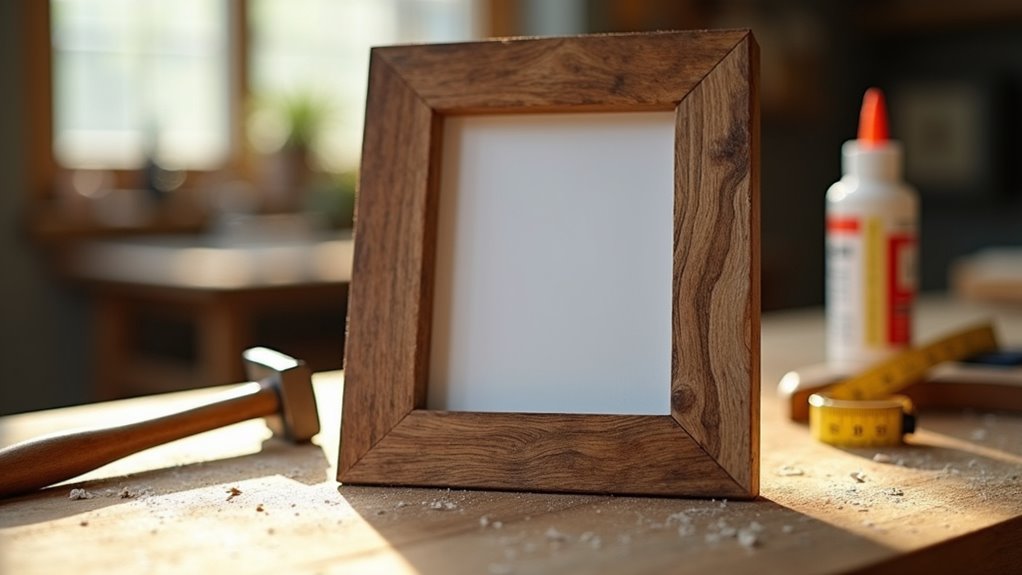
Three simple barn wood projects stand out as perfect starting points for beginners enthusiastic to work with this characterful material.
These DIY barn wood creations require minimal tools while delivering impressive rustic decor that transforms living spaces.
Perhaps what makes these projects so appealing is their forgiving nature—imperfections actually enhance the charm.
- Wall-mounted coat rack with vintage-style hooks – functional yet stylish for entryways
- Floating shelves displaying natural weathering and grain variations – perfect for showcasing treasured items
- Simple picture frames with distressed textures – an easy weekend project that highlights photos in rustic elegance
Easy furniture projects like these offer satisfying results without overwhelming complexity.
Creating Statement Pieces With Weathered Wood
Moving beyond beginner-friendly projects, barn wood truly shines when used to create statement pieces that command attention in any room. The rustic aesthetics of weathered planks transform ordinary furniture into conversation starters.
Perhaps the most impactful statement pieces are larger installations like sliding barn doors or accent walls. These showcase the wood’s natural character while serving as functional decor that defines spaces.
For something less architectural, consider a substantial farmhouse dining table or headboard. The varied tones and textures of reclaimed wood create visual interest that, I think, simply can’t be replicated with new materials.
Each piece tells a story through its imperfections.
Preserving and Finishing Techniques for Barn Wood
Preserving the rich history embedded in barn wood requires careful attention to maintain its character while ensuring longevity. The natural weathering that makes barn wood so desirable also leaves it vulnerable to further deterioration without proper barn wood protection.
Perhaps the most important step is cleaning the wood gently before any finish application.
- Light cleaning – Use a soft brush to remove surface dirt without disturbing the patina that gives each piece its unique story.
- Proper sealing – Apply penetrating oil finishes that protect while enhancing natural grain patterns.
- Maintenance plan – Regular light dust removal and occasional re-oiling to extend life.
Where to Source Quality Reclaimed Barn Wood
Finding quality reclaimed barn wood often presents the first major challenge for enthusiasts enthusiastic to commence on rustic projects.
Many simply don’t know where to look, though excellent sources exist in plain sight.
Excellent wood sources surround us – we need only train our eyes to recognize these hidden treasures.
Local barn wood suppliers typically offer the most reliable materials, perhaps with authentication of origin.
Online marketplaces have expanded options too, connecting buyers with reclaimed sources across regions.
Some folks have luck with demolition companies that salvage materials from old structures.
I think agricultural communities sometimes have informal networks where farmers share information about barns being dismantled – these connections might yield the most authentic pieces with genuine history and character.
Mixing Barn Wood With Modern Design Elements
The juxtaposition of weathered barn wood against sleek modern elements creates a striking balance in contemporary interior design.
This blend of old and new offers warmth within minimalist spaces, perhaps best showcased when mixing textures alongside clean lines. Modern contrasts emerge naturally when designers thoughtfully pair rustic beams with glass surfaces or metal fixtures.
- Reclaimed barn wood floating shelves mounted on a crisp white wall, displaying sleek metallic objects
- Industrial-style pendant lights hanging from exposed barn wood ceiling beams
- Sliding barn door with matte black hardware complementing polished concrete floors
Frequently Asked Questions
How Much Does Quality Reclaimed Barn Wood Typically Cost?
Quality reclaimed barn wood typically ranges from $5-20 per square foot, with pricing varying based on wood age, condition, and rarity. Barn wood sourcing directly affects price and authenticity considerations.
Are Barn Wood Projects Suitable for High-Moisture Areas Like Bathrooms?
While naturally rustic, barn wood requires specialized sealing for moisture resistance in bathrooms. Even properly treated pieces may warp over time, presenting both challenges and opportunities for innovative bathroom decor approaches.
How Heavy Are Barn Wood Furniture Pieces Compared to Regular Wood?
Barn wood furniture typically weighs more due to higher barn wood density. Aged timber becomes denser and heavier as moisture evaporates, resulting in substantially weightier pieces than conventional wood alternatives.
Can Barn Wood Be Safely Used Around Children and Pets?
Barn wood can be safely used with proper preparation. Modern safety standards guarantee splinter prevention, while child-friendly treatments eliminate harmful chemicals. Sealed surfaces protect against both curious kids and adventurous pets.
How Do You Fix Warping or Splitting in Older Barn Wood Projects?
Over 70% of barn wood projects can be salvaged with proper repair techniques. Warping issues require gradual flattening with weights, while splits need wood glue and clamps. Preventative wood preservation includes controlling humidity levels.
Conclusion
As the sawdust settles, barn wood stands as a silent storyteller, whispering tales of yesteryear while breathing new life into modern homes. Like a phoenix rising from forgotten barns, these weathered planks transform ordinary spaces into extraordinary sanctuaries. Perhaps it’s the imperfect knots and weather-beaten grain that speak most eloquently to us—reminding us, I think, that beauty often lurks within the broken and discarded corners of our world.