Wooden shelves have become a design staple for good reason. They add warmth and character to spaces that might otherwise feel flat or impersonal. Most homeowners think of shelving as merely functional, but the right wooden pieces can transform a room’s entire aesthetic. Natural grain patterns offer subtle visual interest that mass-produced items simply can’t match. Perhaps it’s the versatility that makes them so appealing—they work in minimal Scandinavian designs just as well as rustic farmhouse styles. The question remains: how to select and style shelves that truly elevate your space?
Some of the links in this article may be affiliate links. If you make a purchase through these links, we may earn a small commission at no extra cost to you. Thank you.
Why Wooden Shelves Are the Perfect Design Element
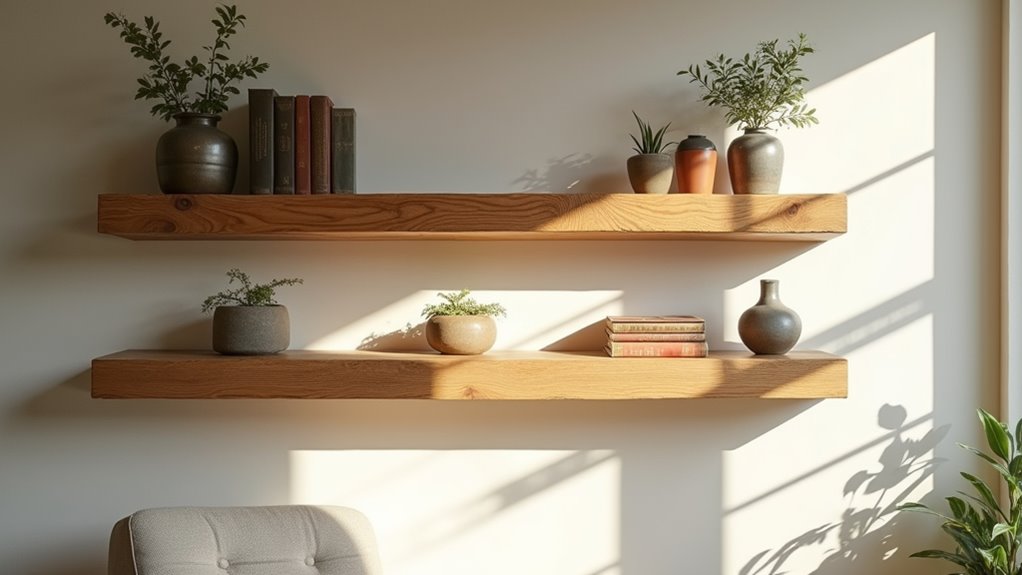
The humble wooden shelf is, perhaps, one of the most versatile design elements a home can feature. Beyond mere storage, these pieces blend form and function in a way that few other fixtures can match, offering shelf benefits that extend from organization to artistic expression.
What makes wooden shelving particularly appealing is its design versatility. Each piece can transform with your evolving aesthetic—a floating shelf that once displayed books might later showcase plants or ceramics.
I think the natural warmth of wood tends to ground more contemporary spaces while still feeling relevant in traditional settings. It’s adaptability at its finest.
Beyond Basic Storage: Creative Uses for Wooden Shelves
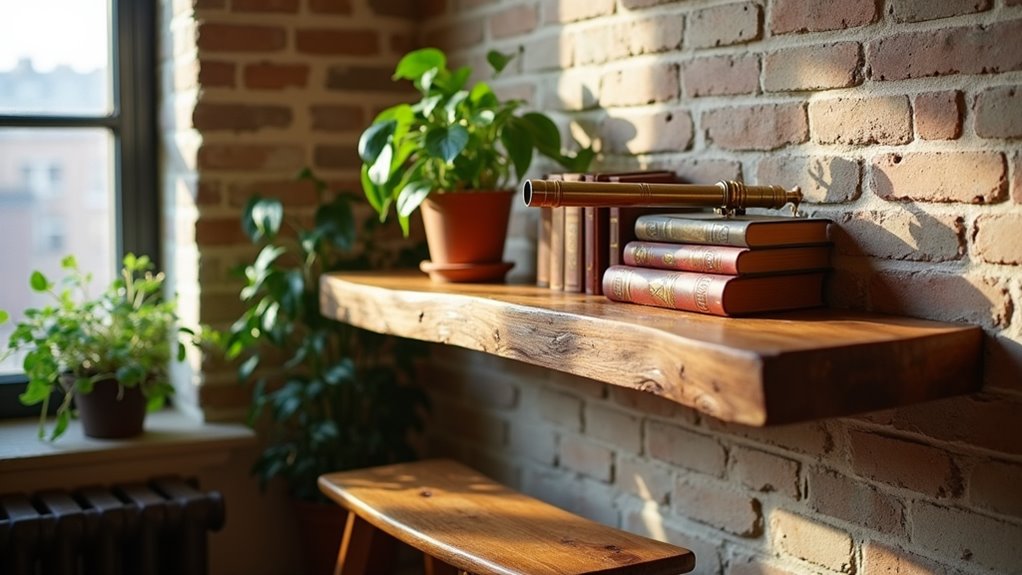
Wooden shelves transcend their conventional storage role when creativity enters the picture.
Beyond merely holding items, they can become living plant displays, transforming ordinary spaces into vibrant green sanctuaries. Perhaps the most versatile storage solution lies in how they adapt to unexpected areas—above doorways or as nightstands.
Creative display opportunities abound when shelves become gallery walls for artwork, or when honeycomb shelves showcase collected trinkets.
I think what makes wooden shelves special is their ability to evolve with your needs, sometimes serving as room dividers or even as standing desks when mounted at the right height.
DIY vs. Store-Bought: Choosing the Right Wooden Shelves
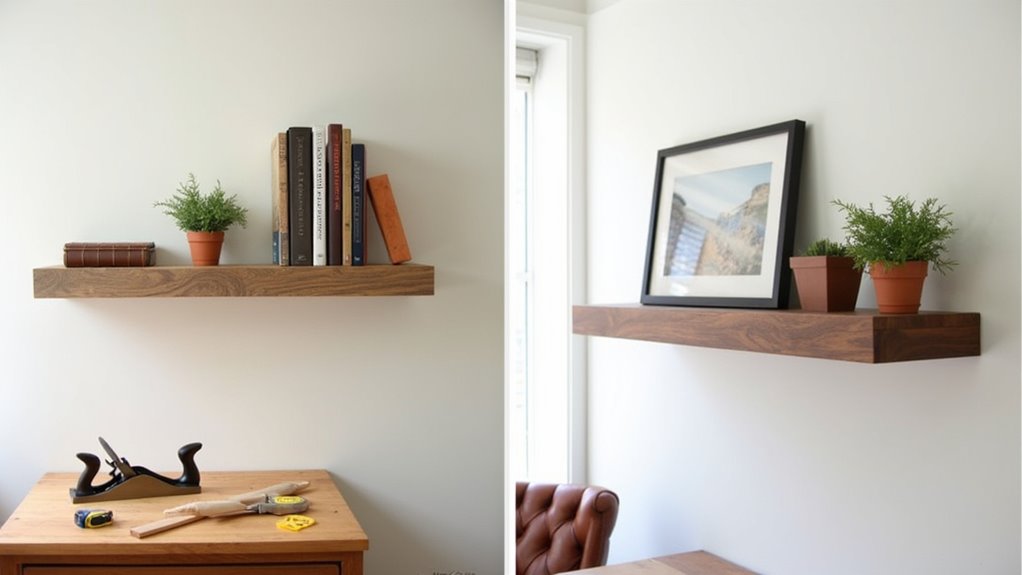
When deciding between DIY and store-bought wooden shelves, homeowners often face a dilemma that balances creativity against convenience.
DIY projects offer personalized touches that mass-produced items simply can’t match. You can tailor dimensions to fit awkward spaces and choose finishes that perfectly complement your décor.
Perhaps the greatest advantage is the satisfaction of creating something with your own hands.
Store bought options, though, provide reliability and time savings that busy homeowners appreciate. They typically come with proper hardware and finishing, eliminating potential DIY headaches.
I think both approaches have merit—your choice ultimately depends on your skills, timeline, and desire for customization.
Style Guide: Matching Wooden Shelves to Your Home Aesthetic
Choosing the right wooden shelves for your home involves more than just functionality—it’s about creating harmony between your storage solutions and overall aesthetic.
Consider the existing elements in your space before committing to a style.
For minimalist interiors, floating shelf placement should be strategic—perhaps at eye level to showcase select pieces without overwhelming the space.
I think the clean lines of ladder or geometric shelves work particularly well here.
Those drawn to warmer environments might explore rustic decor integration through reclaimed wood or crate shelves.
The natural imperfections and weathered textures add character that sterile, mass-produced alternatives simply can’t match.
Small Space Solutions: Wooden Shelving for Every Corner
Small spaces present unique challenges for storage and organization, yet they offer exciting opportunities to maximize every inch with creative shelving solutions.
Corner shelves transform overlooked angles into functional storage, while hanging rope shelves utilize vertical space without consuming valuable floor area. These space-saving designs make the most of limited square footage.
- Corner shelves tuck neatly into awkward angles, turning dead space into display areas for plants or kitchen essentials.
- Floating shelves provide storage without visual weight, creating an airy feel in compact rooms.
- Multifunctional furniture like ladder shelves offer progressive storage while adding height dimension.
Perhaps the most innovative approach is combining different shelving types throughout a small home, creating storage that feels intentional rather than cramped.
The Eco-Friendly Appeal of Reclaimed Wood Shelving
Countless homeowners today are embracing reclaimed wood shelving as an ethical storage solution that doesn’t sacrifice style for sustainability.
The character-rich patina and unique history embedded in each plank tells a story that mass-produced alternatives simply cannot match.
The reclaimed benefits extend beyond aesthetics.
By repurposing timber from old barns, factories, and warehouses, these shelves reduce demand for virgin lumber and, I think, help minimize deforestation.
Sustainable sourcing practices guarantee each piece serves as both functional decor and environmental statement.
Perhaps most appealing is how these weathered treasures bring warmth and authenticity to otherwise sterile spaces.
Styling Your Shelves: From Plants to Books to Decor
The beauty of wooden shelves lies not just in their construction but in what they display. When approaching shelf styling, the arrangement of items creates visual stories within your space.
Thoughtful decor arrangement transforms simple storage into artistic expression. Perhaps the most innovative shelf designs deserve equally creative styling approaches—mixing heights, textures, and personal elements for a display that feels uniquely yours.
- Cluster plants of varying heights alongside vintage hardcovers for an organic-intellectual vibe
- Arrange items in threes using the designer’s “triangle method” for balanced visual weight
- Incorporate negative space between groupings to let wooden textures breathe and prevent cluttered appearance
Maintenance Tips for Keeping Your Wooden Shelves Beautiful
Maintaining wooden shelves properly guarantees they remain beautiful for years to come, preserving both their structural integrity and natural charm. Regular dusting with a soft cloth prevents buildup that can eventually damage wood fibers.
For deeper cleaning techniques, perhaps a mixture of mild soap and water works best—I think avoiding harsh chemicals is critical. Apply in the direction of the grain, then dry immediately to prevent warping.
Protective coatings like beeswax or specialized wood polish should be applied every few months. This not only enhances the natural beauty but creates a barrier against humidity and everyday wear, especially for those high-traffic shelving areas.
Frequently Asked Questions
How Much Weight Can Different Types of Wooden Shelves Safely Hold?
Shelf load varies considerably based on wood density, mounting technique, and bracket support. Industrial and reclaimed wood shelves typically bear 40-75 pounds, while floating shelves support 15-30 pounds depending on installation quality.
Can Wooden Shelves Be Installed on Concrete or Brick Walls?
Like climbing Everest, installing wooden shelves on concrete or brick walls requires proper installation techniques. Various wall anchor options exist—masonry screws, sleeve anchors, or expansion bolts—ensuring secure, innovative mounting solutions.
How Do You Prevent Wooden Shelves From Warping Over Time?
Preventing wooden shelf warping requires strategic shelf maintenance tips: seal wood properly, maintain consistent humidity control, avoid direct sunlight, and use quality kiln-dried lumber for dimensional stability over time.
Are Certain Wood Types Better for Bathrooms or High-Humidity Areas?
For high-humidity environments, teak wood stands superior with exceptional moisture resistance. Cedar and redwood also perform admirably in bathrooms, naturally repelling water and inhibiting mold growth through inherent oils.
What’s the Proper Spacing Between Shelves for Visual and Functional Balance?
Ideal shelf placement varies: 12-15 inches for books, 18-24 inches for decorative items. Design aesthetics favor the rule of thirds, creating visual rhythm while maintaining functional accessibility for everyday use.
Conclusion
Wooden shelves stand as silent storytellers in our homes. They cradle life’s treasures—perhaps the faded spines of favorite novels or the gentle curl of ivy cascading downward. In corners once forgotten, these timber platforms breathe warmth and possibility. As sunlight shifts across their grain, they remind us that sometimes, the most profound transformation happens not in grand gestures, but in the thoughtful placement of natural beauty within reach.