You’ll want a detail sander with at least 13,000 OPM for effective performance, though BLACK+DECKER’s 16,000 OPM model really impressed during testing. Keep weight under 3 pounds—anything heavier gets tiring fast during furniture restoration work. We think the hook-and-loop sandpaper system saves considerable time over traditional clamps. SKIL’s 4-in-1 design offers perhaps the best overall value, while Bosch provides superior variable speed control for delicate finishes. The differences between top models become clearer once you understand the technical specifications.
Some of the links in this article may be affiliate links. If you make a purchase through these links, we may earn a small commission at no extra cost to you. Thank you.
Top Detail Sander Picks and Performance Reviews
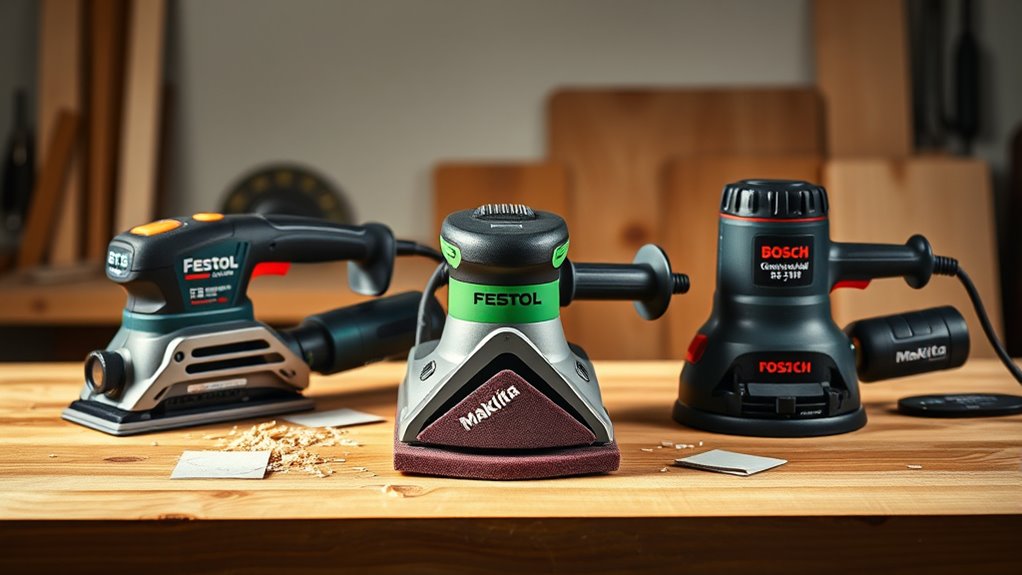
The BLACK+DECKER delivers impressive speed at 16,000 OPM, but SKIL’s versatile 4-in-1 design ultimately provides better overall value.
The Bosch oscillating tool perhaps isn’t strictly a detail sander, but its variable speed control felt superior during testing.
The Genesis models are lightweight—surprisingly so—while the PORTER-CABLE’s variable speed dial provides excellent control.
Each model excels in different areas, making selection somewhat challenging.
Essential Features and Technical Specifications
Four technical specifications consistently determine whether a detail sander will actually handle your projects effectively, though Many woodworkers notice manufacturers sometimes emphasize the wrong features in their marketing materials.
Speed matters most—look for at least 13,000 OPM for decent performance.
Motor amperage typically ranges from 1.2 to 4 amps, with higher ratings handling tougher materials better.
Weight becomes essential during extended use; anything over 3 pounds gets tiring quickly.
Perhaps surprisingly, dust collection systems vary dramatically between models. Some connect to shop vacs while others use basic bags.
The hook-and-loop sandpaper mounting saves time, though we think traditional clamp systems work fine too.
Benefits and Common Applications for Detail Sanders
While regular sanders struggle with intricate work, detail sanders excel precisely where you need them most—in tight corners, around spindles, and along curved edges that larger tools simply can’t reach.
| Application Area | Best Use | Key Advantage |
|---|---|---|
| Furniture restoration | Chair legs, table edges | Avoids damage to adjacent surfaces |
| Woodworking projects | Detailed trim work | Access to impossible angles |
| Home improvement | Window frames, moldings | Lightweight portability |
| Craft projects | Small decorative pieces | Precise control |
You’ll find these tools particularly helpful for refinishing antique furniture where precision matters most. We think their dust collection systems also keep your workspace cleaner than expected, though perhaps not perfectly clean.
Choosing the Right Detail Sander for Your Project
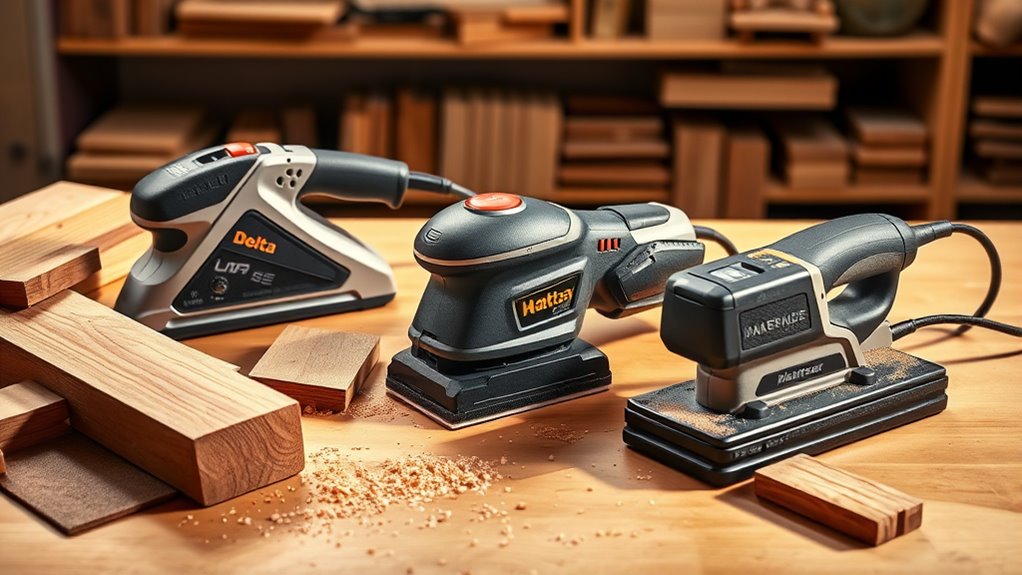
With so many detail sanders on the market, selecting the right one depends heavily on understanding your specific project requirements and working conditions.
First, consider your power needs—corded models like the SKIL Multi-Function offer consistent performance, while cordless options provide mobility.
Perhaps most importantly, evaluate the material you’re sanding and workspace constraints.
For tight furniture corners, a compact 1.2-amp model might suffice. However, larger refinishing projects could benefit from variable speed controls.
We think dust collection often gets overlooked, but it’s vital for indoor work.
Don’t forget about sandpaper compatibility—hook-and-loop systems save time during lengthy projects.
Expert Recommendations and Testing Results
After testing numerous detail sanders across different price points and project types, Tom Caspar’s nearly four decades of woodworking expertise provides valuable insight into what actually works in real-world conditions.
The WEN 6301 Electric Detailing Palm Sander consistently ranked highest among testers, though perhaps surprisingly, the BLACK+DECKER model impressed with its 16,000 OPM performance in tight spaces.
We think the Bosch StarlockPlus stands out for versatility—its 4-amp motor handles more than just sanding.
The SKIL’s micro-filtration system actually worked better than expected, while the PORTER-CABLE’s variable speed proved useful for delicate finishes.
Testing revealed that higher OPM doesn’t always mean better results.
Power Options and Accessory Compatibility
Beyond performance metrics, the power source you choose fundamentally shapes how you’ll use your detail sander. Corded models like the BLACK+DECKER provide continuous operation—you won’t face battery anxiety mid-project.
However, cordless options offer freedom to work anywhere, though perhaps with shortened sessions.
Accessory compatibility matters more than you’d think. The Bosch StarlockPlus system, for instance, locks accessories securely and swaps them quickly.
We think generic accessories work fine for basic tasks, but specialized attachments really expand capabilities.
- Corded sanders deliver consistent power for extended sessions
- Cordless models excel in remote locations without outlets
- Universal accessories provide cost-effective versatility
- Proprietary systems offer enhanced performance and reliability
Frequently Asked Questions
How Often Should I Replace Sandpaper on My Detail Sander?
You should replace sandpaper when it’s worn, clogged with debris, or stops cutting effectively. Typically, this occurs every 15-30 minutes of active sanding, depending on material hardness and grit coarseness.
Can Detail Sanders Be Used on Metal Surfaces Safely?
While detail sanders excel on delicate wood curves, you can safely use them on metal surfaces too. Just swap to metal-compatible abrasives and expect slower progress than specialized metal grinding tools would provide.
What’s the Average Lifespan of a Quality Detail Sander?
You can expect a quality detail sander to last 3-5 years with regular use, though heavy-duty applications may reduce this timeframe while occasional hobbyist use could extend it considerably longer.
Do Detail Sanders Work Effectively on Painted Surfaces?
You’ll find detail sanders work effectively on painted surfaces, especially for removing old paint layers or smoothing between coats. They’re particularly useful for reaching tight corners where larger sanders can’t access.
How Do I Properly Store My Detail Sander Long-Term?
Want your detail sander lasting years? Store it in a dry location, remove the sandpaper, clean dust thoroughly, wrap the cord loosely, and keep it in its original case or protective bag.
Related guides: Polycrylic and Polyurethane: The Ultimate Showdown · Ultimate Guide to Deck Wood Repair · Ultimate Guide to Cutting Board Glues