For your walnut table, you’ll want to take into account Rubio Monocoat Oil Plus 2C if budget isn’t a concern – it’s pricey at $80-120 but offers exceptional single-coat durability. Odies Oil provides excellent UV protection and zero VOCs, making it family-safe at a mid-range cost. I think Varathane Premium works fine for budget builds, though perhaps you’ll need touch-ups sooner. Surface prep through 220 grit is essential, and honestly, patience between coats makes all the difference in achieving that professional look you’re after.
Some of the links in this article may be affiliate links. If you make a purchase through these links, we may earn a small commission at no extra cost to you. Thank you.
Top-Rated Oil Finishes for Walnut Table Protection
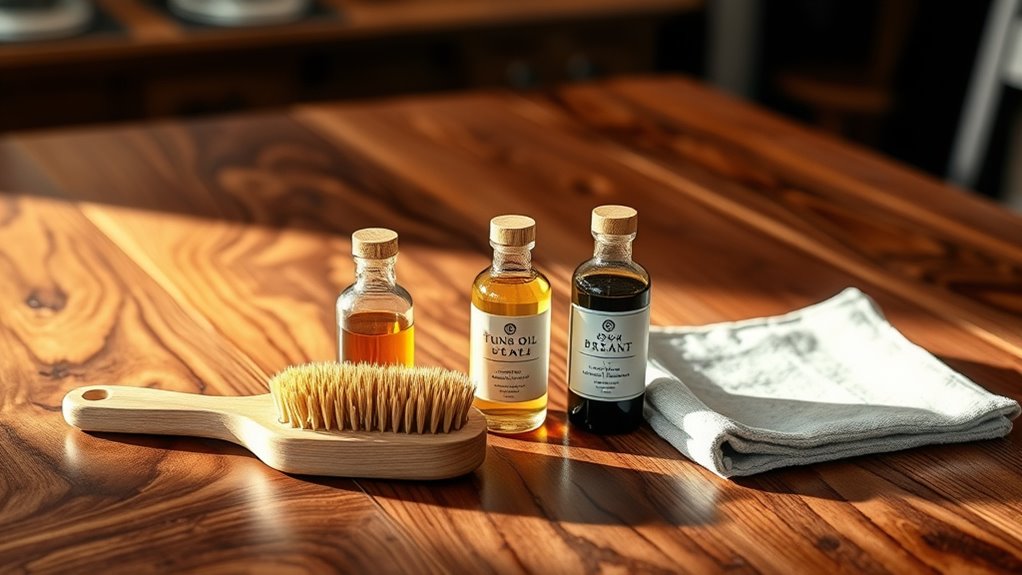
Three oil finishes consistently outperform the competition when it comes to protecting walnut tables, though I’ll admit the choice isn’t always straightforward.
Rubio Monocoat Oil Plus 2C stands out for its single-layer application and impressive durability.
You’ll appreciate how it resists water and heat while enhancing walnut’s natural grain. It’s pricier, but perhaps worth it for high-end projects.
Odies Oil Universal offers excellent UV protection and food-safe properties.
The application couldn’t be simpler – just wipe on and watch it improve over time.
Varathane Premium provides budget-friendly coverage that dries quickly, though you might need touch-ups later.
Application Techniques for Professional Results
Several critical steps can make the difference between an amateur-looking finish and something that rivals professional furniture work, though I’ll be honest – mastering these techniques takes some practice.
| Technique | Key Points |
|---|---|
| Surface Prep | Sand progressively through 220 grit, remove all dust |
| Application | Use high-quality brushes, work with the grain consistently |
| Timing | Follow manufacturer’s drying times exactly |
Perhaps the most overlooked aspect is temperature control – I think many DIYers underestimate how humidity affects results. You’ll want to apply thin, even coats rather than rushing with thick applications. The waiting between coats feels excessive, but patience truly pays off here.
Eco-Friendly Finish Options and Environmental Impact
While walnut naturally showcases stunning grain patterns that deserve preservation, I’ve become increasingly concerned about the environmental impact of traditional finishes – and honestly, you should be too.
Rubio Monocoat stands out here, promoting sustainability with minimal waste production. You’ll appreciate that Odies Oil contains zero VOCs, making it completely safe around children and pets.
I think these eco-friendly options actually perform better than many traditional alternatives, though perhaps I’m biased toward greener solutions.
The reality is, choosing environmentally conscious finishes reduces harmful emissions without sacrificing quality.
Your walnut table deserves protection that doesn’t compromise your family’s health or the planet’s future.
Cost Analysis and Value Comparison of Premium Finishes
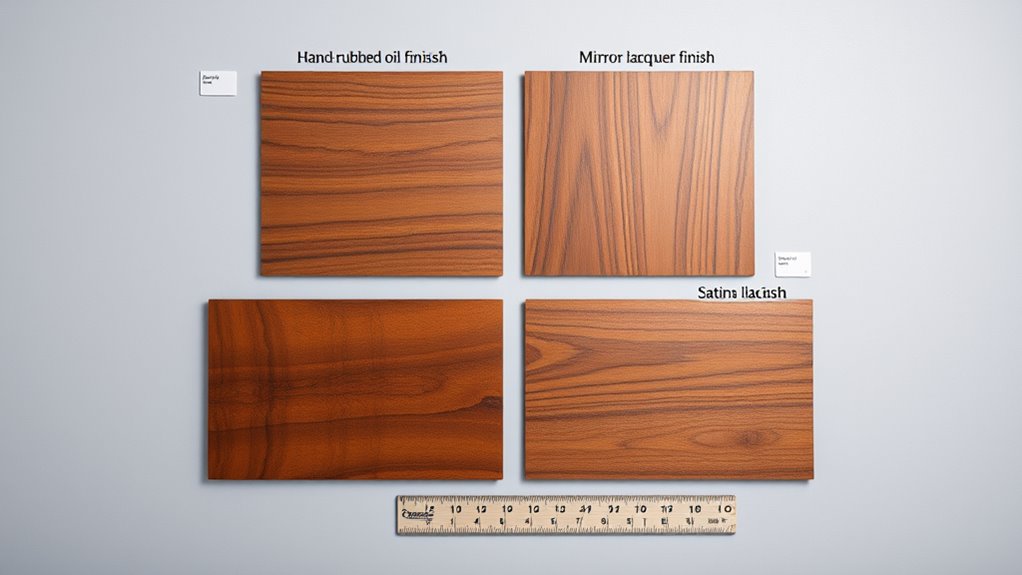
How much should you actually spend on finishing your walnut table? I think it depends on your specific situation, honestly.
Rubio Monocoat sits at the premium end – perhaps $80-120 per project – but you’re getting exceptional durability and that gorgeous single-coat application.
Varathane offers solid performance around $25-40, making it perfect for budget-conscious builders.
Odies Oil falls somewhere between at $50-70, though the food-safe benefits justify the cost for kitchen tables.
Here’s the thing: cheaper finishes often require recoating sooner. You might save initially with Varathane, but Rubio’s longevity could prove more economical long-term.
Staining Solutions for Enhanced Walnut Grain Beauty
Although many woodworkers think walnut’s natural beauty needs little enhancement, the right stain can transform an already stunning piece into something truly extraordinary.
| Stain Type | Best For | Drying Time |
|---|---|---|
| General Finishes Gel Stain | Heavy-bodied lustrous finish | 6-8 hours |
| Minwax Wood Finish | Rich penetrating color | 4-6 hours |
| LinSheen Boiled Linseed Oil | Quick projects | 2-4 hours |
| Howard Products Restor-A-Finish | Surface repairs | 1-2 hours |
| Watco Walnut Lacquer | Clear furniture protection | 30 minutes |
I think gel stains offer the most control, though they’re perhaps messier than traditional options. You’ll find multiple coats create depth that really brings out walnut’s grain patterns beautifully.
Maintenance Requirements and Long-Term Durability
Once you’ve invested time and money into the perfect walnut table finish, you’ll want to know how long it’s actually going to last.
Rubio Monocoat really shines here—it requires minimal upkeep while delivering exceptional durability. I think that’s why it’s worth the premium price.
Odies Oil actually improves with age, which is pretty remarkable.
Varathane might need re-coating sooner, perhaps every few years depending on usage.
Generally speaking, all finishes benefit from regular dusting and occasional conditioning. High-traffic tables will show wear faster, obviously.
The initial quality of your application matters more than you’d expect for longevity.
Frequently Asked Questions
Can I Use Walnut Table Finishes on Other Hardwood Species?
You can absolutely use walnut table finishes on other hardwood species. Most quality finishes like Rubio Monocoat, Varathane, and Odies Oil work effectively across maple, oak, cherry, and similar hardwoods.
How Long Should I Wait Between Coats When Applying Finish?
While rushing seems tempting, you’ll achieve better results by waiting according to manufacturer specifications. Most finishes require 4-24 hours between coats, though quick-dry options like Varathane may need only 2-4 hours.
What’s the Difference Between Oil-Based and Water-Based Walnut Finishes?
Oil-based finishes penetrate deeper into walnut, enhancing grain dramatically while taking longer to dry. Water-based finishes dry faster, stay clearer, but don’t penetrate as deeply, offering less grain enhancement.
Should I Sand Walnut Wood Before Applying the First Coat?
You should sand walnut wood before applying your first coat. Start with 120-grit, then progress to 220-grit sandpaper. This creates a smooth surface that’ll help your finish adhere properly and look professional.
Can Finished Walnut Tables Be Safely Used Outdoors?
Like leaving fine leather shoes in rain, you’ll watch your beautiful walnut table deteriorate outdoors. Standard indoor finishes can’t withstand UV rays and moisture. You’d need marine-grade protection for outdoor use.