Choosing the right wood for a console table can transform an ordinary entryway into a statement of personal style. The material selection goes beyond mere functionality—it affects the room’s ambiance, the furniture’s longevity, and sometimes, your wallet. Most homeowners probably haven’t considered how grain patterns, color variations, and sustainability factors might influence their decision. But these details matter. Perhaps it’s worth exploring both traditional favorites and unexpected alternatives before committing to that centerpiece that will greet guests for years to come.
Some of the links in this article may be affiliate links. If you make a purchase through these links, we may earn a small commission at no extra cost to you. Thank you.
The Appeal of Premium Hardwoods: Oak, Walnut, and Mahogany
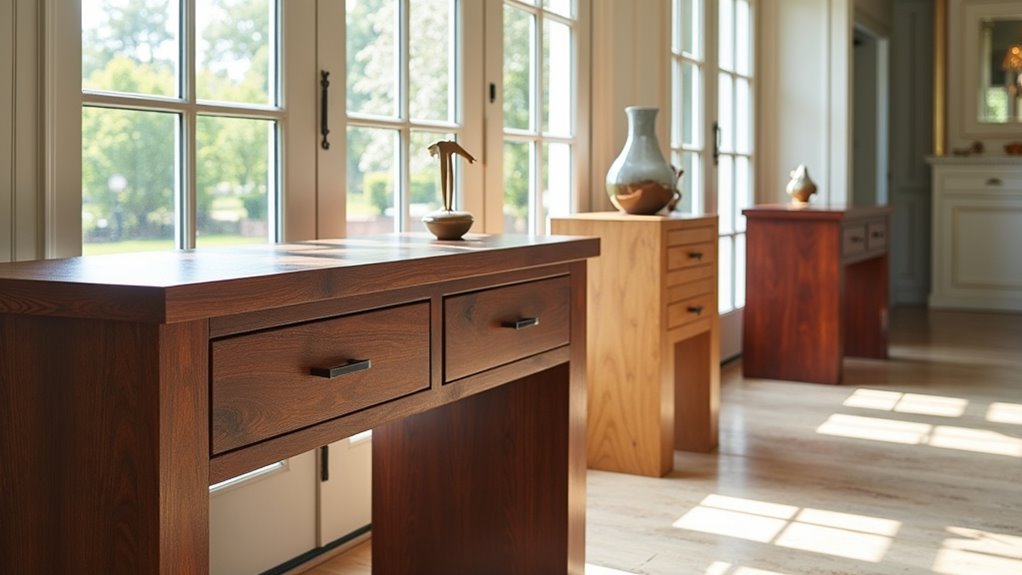
Elegance comes to life through the rich character of premium hardwoods. When comparing durability, these timeless classics each offer distinct advantages.
Oak stands out with its robust strength and pronounced grain variations that tell a story in every piece. Walnut, perhaps the most sophisticated option, brings dimensional stability and those deep, alluring brown tones that designers love.
Among premium hardwoods, oak speaks through its strength while walnut whispers sophistication with its rich, designer-worthy tones.
Mahogany deserves special mention for its remarkable aging process. Its reddish-brown hues actually improve over time, we think, making it an investment rather than just a purchase.
These woods aren’t merely functional—they’re conversation pieces that transform console tables into artistic statements.
Cherry and Maple: Balancing Beauty and Durability
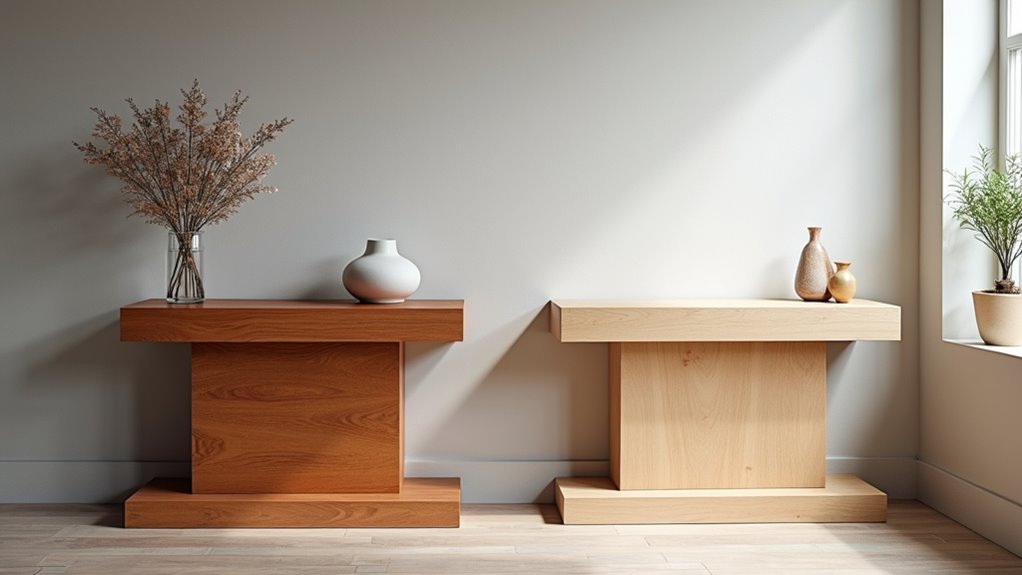
The rich character of cherry and maple provides a perfect counterpoint to the luxury of premium hardwoods. Each offers distinct qualities that make them ideal for console tables in contemporary spaces.
Cherry’s remarkable longevity is matched by its ability to develop deeper, more complex tones over time—perhaps even improving with age, much like fine wine. Meanwhile, maple versatility shines in both traditional and modern designs.
| Feature | Cherry | Maple |
|---|---|---|
| Color | Warm reddish | Light creamy |
| Aging | Darkens beautifully | Remains consistent |
| Hardness | Medium-hard | Extremely hard |
| Best finish | Oil-based | Clear coat or stain |
We think their balanced properties make them particularly suitable for households seeking furniture that feels both innovative and timeless.
Budget-Friendly Options Without Sacrificing Style

While luxury hardwoods often steal the spotlight, creating a stunning console table doesn’t necessarily require emptying one’s wallet.
Pine stands out as perhaps the most cost effective option, offering natural character through its distinctive knots and grain patterns that can be enhanced with stylish finishes.
Poplar and birch deliver exceptional value too. Poplar excels when painted, making it perfect for trendy, colorful designs. Birch, slightly more durable, maintains a clean aesthetic suitable for modern spaces.
Fir deserves consideration for rustic-inspired interiors, bringing warmth and charm at a fraction of premium hardwood prices.
Exotic Wood Choices for Statement Console Tables
For homeowners seeking truly exceptional console tables, exotic woods offer unparalleled visual impact and exclusivity. Teak and mahogany, perhaps the most recognized exotic hardwoods, bring warm tones and cultural significance from their tropical origins.
What truly sets these statement pieces apart are their unique grain patterns – sometimes swirling, sometimes striped – that simply can’t be replicated in domestic varieties. The striking colors, ranging from deep purplish-reds to rich honeys, create focal points that transform ordinary spaces.
We think the investment in exotic woods pays dividends beyond aesthetics; they tell stories of faraway places while establishing undeniable presence in your home.
How to Match Wood Types With Your Home’s Aesthetic
Selecting the right wood for a console table involves more than just personal preference; it requires careful consideration of your existing décor and overall home aesthetic. The perfect wood choice can either complement or create intentional wood texture contrasts within your space.
| Design Style | Ideal Woods | Color Palette |
|---|---|---|
| Modern | Maple, Ash | Light, neutral |
| Traditional | Oak, Cherry | Warm, rich |
| Rustic | Pine, Hickory | Natural, varied |
| Coastal | Birch, Teak | Weathered, light |
Perhaps the most innovative approach is exploring unexpected wood color combinations—like pairing a walnut console with ash accents—that challenge conventional design while still honoring your home’s character.
Maintenance Requirements for Different Wood Species
Maintaining the natural beauty of different wood species requires understanding their unique characteristics and care needs. Each wood type responds differently to environmental factors and handling over time.
Teak, for instance, needs minimal intervention thanks to its natural oils, while maple and cherry benefit from regular polishing to preserve their luster.
Perhaps the most demanding woods are lighter varieties like pine, which require vigilant protection against scratches.
Seasonal wood care is essential—humidity fluctuations can affect most species, especially oak and walnut. We think quarterly maintenance with appropriate conditioning products generally guarantees longevity, though tropical hardwoods might need less frequent attention compared to domestic varieties.
Environmental Considerations When Selecting Console Table Woods
The environmental impact of console table materials extends far beyond aesthetics and durability considerations. Today’s conscientious consumers are increasingly prioritizing sustainability practices when selecting wood for their homes.
Responsible sourcing has become a pivotal factor in furniture selection, perhaps even outweighing traditional concerns like grain pattern or color. We think the most innovative approach is selecting woods that balance beauty with ecological mindfulness.
| Wood Type | Sustainability Rating | Environmental Impact |
|---|---|---|
| Teak | Moderate (if plantation) | Forest preservation concerns |
| Maple | High | Low carbon footprint |
| Pine | Very High | Rapidly renewable |
| Oak | Medium | Slower growth cycle |
| Bamboo | Excellent | Highly regenerative |
DIY-Friendly Woods for Custom Console Table Projects
When starting on a DIY console table project, choosing the right wood can make the difference between frustration and satisfaction. Pine and Poplar plywood stand out as beginner-friendly options, offering workability without breaking the bank. They accept stains and paints readily, allowing for creative expression.
Birch appears attractive initially, but its disadvantages include potential blotching when stained. Perhaps maple offers a better alternative for DIYers wanting a light-colored wood with fewer finishing headaches.
We think most home craftspeople find that softer woods like pine forgive mistakes more easily, making them ideal first-time project materials.
Frequently Asked Questions
How Do Seasonal Humidity Changes Affect My Console Table?
Seasonal humidity fluctuations cause wood expansion and contraction, potentially leading to warping or cracking. Proper table maintenance includes humidity control and protective finishes to minimize these humidity effects.
Can I Mix Different Wood Species in One Console Table Design?
While traditionalists may hesitate, mixing wood species can create visual intrigue. Intentional combinations featuring matching wood undertones with contrasting finishes produce sophisticated, innovative console tables that showcase creative woodworking mastery and personal style.
What Wood Finishes Are Safest for Households With Young Children?
Non-toxic finishes like water-based polyurethane, shellac, and beeswax offer child-safe options for families. These innovative choices maintain wood’s beauty while eliminating harmful VOCs and chemicals during everyday contact.
How Can I Verify the Authenticity of Exotic Wood Varieties?
Like traversing a jungle of deception, consumers can verify exotic wood authenticity through reputable wood certification programs, documented exotic wood sourcing, and microscopic grain pattern examination by qualified experts.
Which Woods Develop the Most Character and Patina Over Time?
Woods developing character include walnut, cherry, and teak. Oak’s durability guarantees its grain deepens beautifully with use. Mahogany aging transforms wood into increasingly rich, sophisticated tones—ideal for innovative, evolving spaces.
Conclusion
Selecting the perfect wood for a console table ultimately comes down to personal preference and lifestyle needs. The Johnson family recently chose reclaimed oak for their entryway console, creating a conversation piece that honors environmental values while providing durability for their active household. Perhaps the most enduring console tables aren’t just beautiful furnishings, but reflections of our commitment to both aesthetics and sustainability.
Related guides: Essential Woods for Stunning Table Designs · Ultimate Guide to Ideal Workbench Woods · Top Woods for Stunning Painted Cabinets