You know, protecting your outdoor wood furniture isn’t something many of us think about until it’s too late. I’ve seen beautiful teak chairs warped beyond repair after just one harsh winter. It’s not just about avoiding rain—moisture seeps in from morning dew, while UV rays silently break down finishes. With the right approach, though, you’ll extend your furniture’s life by years, maybe even decades. Let’s talk about what really works.
Some of the links in this article may be affiliate links. If you make a purchase through these links, we may earn a small commission at no extra cost to you. Thank you.
The Hidden Enemies of Outdoor Wood Furniture
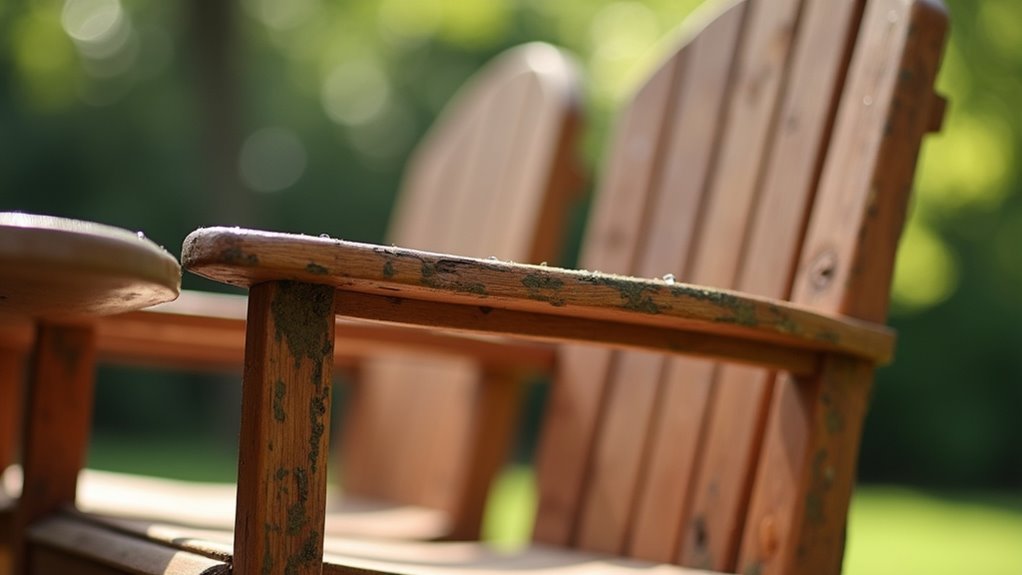
While you might assume that sun and rain are the only threats to your outdoor wooden furniture, there are actually several hidden enemies lurking that can greatly reduce its lifespan.
I think the most insidious is moisture damage that seeps deep into the wood fibers, causing warping and rot that’s often invisible until it’s too late.
UV exposure is another sneaky culprit. It doesn’t just fade your furniture—it actually breaks down lignin, the compound that gives wood its strength.
Perhaps what makes these enemies so dangerous is their constant, relentless nature. They’re working every day, even when you don’t notice.
Essential Steps for Proper Wood Seasoning

The proper seasoning of wood stands as the foundation of long-lasting outdoor furniture. Before construction even begins, you’ll want to ascertain your timber has undergone adequate wood drying—ideally reaching a moisture content below 15%.
I think this prevents those frustrating warps and cracks that emerge when improperly dried wood meets the elements. Consider investing in a moisture measurement tool to verify dryness.
Perhaps air-drying works for your project, though kiln-drying offers quicker, more controlled results. Remember, patience during this initial step ultimately saves you countless hours of repair work down the road.
Protective Coatings: Sealants, Varnishes, and Paints

Three primary coatings provide essential protection for your outdoor wooden furniture: sealants, varnishes, and paints. Each offers distinct benefits depending on your needs and the wood type you’re working with.
When selecting coating types, consider your local climate. Sealants work wonderfully in humid areas, while varnishes might be better for intense sun exposure.
I think application techniques matter just as much as the product itself—perhaps even more! Always apply with the grain using quality brushes and give ample drying time between coats.
You’ll need patience here, but trust me, rushing ruins results.
Smart Storage Solutions and Protective Covers
Smart protection during furniture downtime prevents significant damage and extends your outdoor wood pieces’ lifespan dramatically.
Protect idle outdoor furniture properly to maximize lifespan and prevent costly damage to your wooden investments.
I think investing in quality covers and storage solutions pays off tremendously when storms roll in or winter arrives.
For your innovative outdoor living space:
- Use breathable, weather-resistant covers that repel water while allowing moisture to escape – preventing that nasty mildew buildup.
- Consider smart storage benches that double as seating and protection for smaller items.
- Install rolling platforms under heavier pieces for quick relocation when weather threatens.
Perhaps the most important thing is consistency – even the best protective covers won’t help if you’re forgetting to use them!
Best Wood Types for Long-Lasting Outdoor Furniture
Selecting the right wood for outdoor furniture substantially impacts both durability and maintenance requirements. When investing in pieces that will withstand the elements, you’ll want to contemplate nature’s most resilient options.
Teak advantages are honestly unmatched—its natural oils repel moisture and insects, making it perhaps the gold standard for outdoor use.
I think it’s worth the higher price tag if you’re looking for furniture that’ll last decades with minimal upkeep.
Cedar benefits include its lightweight nature and pleasant aroma, plus it naturally resists rot.
It’s more affordable than teak, though you’ll need to seal it occasionally.
Strategic Positioning to Minimize Environmental Damage
Although many people focus on protective finishes, where you place your wooden furniture can dramatically impact its lifespan.
Thoughtful positioning of wooden furniture often protects against environmental damage better than any commercial finish could.
I’ve found that strategic positioning can be just as effective as expensive sealants, perhaps even more so in extreme climates.
Here are three game-changing placement strategies:
- Create shade placement zones that shift with seasonal sun patterns, using existing structures or portable canopies.
- Install wind barriers like decorative lattice screens or strategic plantings that buffer without blocking pleasant breezes.
- Establish furniture “rotation stations” around your outdoor space to distribute wear and environmental exposure evenly.
Think of your yard as a microclimate map—your furniture’s position within it matters tremendously.
Effective Pest Prevention and Management Strategies
Many homeowners overlook the fact that tiny invaders can cause massive damage to outdoor wooden furniture. I think what makes this particularly frustrating is how quickly these pests can turn beautiful furniture into sawdust before you’ve even noticed them.
| Pest Type | Identification Technique | Natural Repellent |
|---|---|---|
| Termites | Look for hollowed wood and tiny holes | Cedar oil spray |
| Carpenter Ants | Watch for wood shavings beneath furniture | White vinegar solution |
| Wood Borers | Small, round exit holes with sawdust | Neem oil treatment |
You’ll want to implement regular inspections using pest identification techniques. Perhaps once a month, check underneath and inside crevices where insects often hide. Natural repellents work surprisingly well when applied consistently.
Frequently Asked Questions
How Do I Restore Cracked or Split Outdoor Furniture?
Sand damaged areas, apply wood repair epoxy, then seal with waterproof finish. You’ll want to implement regular maintenance techniques like oiling to prevent future cracking in your outdoor pieces.
Can Outdoor Furniture Fabrics Be Protected From Fading?
Like Martha’s vibrant patio set that stayed bright for years, you’ll preserve your outdoor fabrics by applying specialized fabric treatments with UV inhibitors. They’ll block damaging rays and maintain your furniture’s color brilliance.
Is Pressure-Treated Lumber Safe for Household Furniture?
Pressure-treated lumber isn’t ideal for household furniture as it contains chemicals that may leach. You’ll want to choose alternatives like cedar or teak for safer, innovative indoor living solutions.
How Do Different Climates Affect Maintenance Schedules?
You’ll need more frequent maintenance in humid regions where moisture accelerates decay. Temperature fluctuations also demand attention—resealing quarterly in extreme climates versus annually in moderate ones.
What Eco-Friendly Protection Options Exist for Outdoor Wood?
Over 40% of consumers now prefer eco-friendly products. You’ll find natural oils like linseed or tung, and biodegradable sealants made from plant resins deliver effective protection without harming the environment.
Conclusion
You’ve learned to shield your wooden treasures from nature’s whims—like armor against time’s relentless march. With proper seasoning, protective coatings, and smart storage, your outdoor pieces won’t just survive but thrive. I think positioning and pest prevention are perhaps the unsung heroes in this battle. Remember, caring for wood furniture isn’t just maintenance—it’s extending an invitation for memories to bloom season after season.