Outdoor projects need tougher protection, so Cabot Australian Timber Oil penetrates deep while handling UV rays well. Perhaps Prestige Exterior Paint works too, offering decent coverage without separate priming steps. Don’t forget proper sanding first; it’s perhaps the most vital step people skip, and the techniques below guarantee lasting results.
Some of the links in this article may be affiliate links. If you make a purchase through these links, we may earn a small commission at no extra cost to you. Thank you.
Understanding Plywood as a Painting Surface
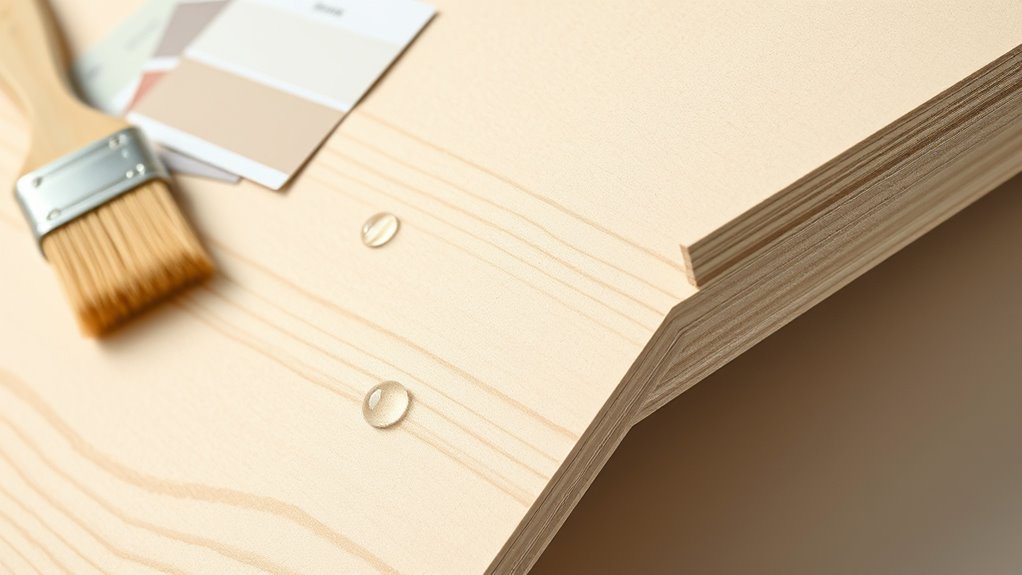
When you’re planning to paint plywood, it’s worth understanding what you’re actually working with.
Plywood consists of thin wood layers glued together, creating a surprisingly strong and stable material that resists warping better than solid wood.
You’ll find different grades and thicknesses available, though honestly, any defect-free plywood can work for painting projects.
We think the affordability makes it particularly appealing for furniture and construction work.
Perhaps the biggest advantage is its user-friendly nature.
Plywood’s user-friendly characteristics make it an ideal choice for painters of all skill levels.
Even lower-grade plywood can achieve excellent results with proper sanding and preparation, making it accessible for most DIY projects.
Essential Surface Preparation Techniques for Plywood
Now that you understand what plywood brings to the table, proper preparation becomes the difference between a paint job that lasts and one that disappoints.
Light sanding is perhaps your best friend here—it enhances paint adherence considerably. You’ll want to focus on those edges especially, since they can be rougher than the flat surfaces.
We think many people skip the cleaning step, but it’s essential. Remove any dust or debris before you even think about primer.
Speaking of primer, a quality one really does enhance your final results, even though some paints claim they don’t need it.
Top Paint Types and Formulations for Plywood Applications
With your surface properly prepped, choosing the right paint type becomes essential—and honestly, the options can feel overwhelming at first.
Water-based acrylic latex paint stands out as the most user-friendly choice for most plywood projects. It dries faster than oil-based alternatives and cleans up easily with soap and water.
Water-based acrylic latex paint offers the perfect balance of quick drying time and effortless cleanup for most plywood applications.
For high-durability needs, epoxy paints offer superior toughness, though they’re perhaps overkill for basic furniture projects.
We think primer-and-paint combinations work well if you’re looking to streamline the process—they eliminate that extra priming step while still delivering solid coverage on plywood’s sometimes tricky grain patterns.
Best Paint Products for Indoor Plywood Projects
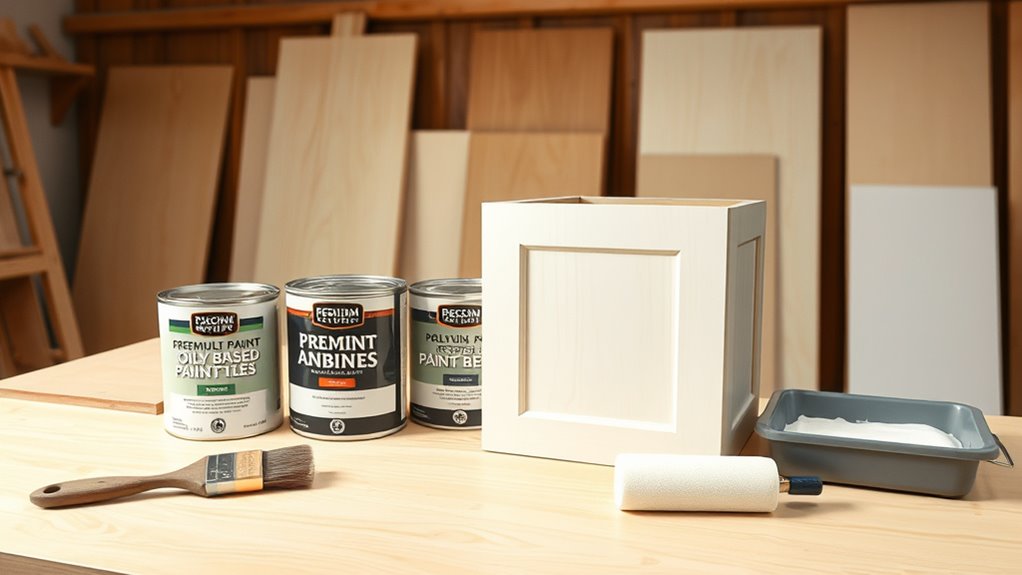
Three standout products dominate the indoor plywood painting scene, and each serves different project needs better than generic wall paints.
For furniture makeovers, FolkArt Home Decor Chalk Paint delivers exceptional results with minimal prep work. Its matte finish conceals imperfections naturally, though we think the coverage could be slightly better on rougher surfaces.
Zinsser Blanco Cabinet Paint works perfectly for built-ins and storage projects. The high adhesion properties eliminate priming steps, which saves considerable time.
Perhaps it’s the quick-drying formula, but you can apply multiple coats in one day.
Optimal Paint Choices for Outdoor Plywood Installations
Because outdoor plywood faces relentless weather conditions, your paint selection becomes critical for project longevity.
We think Cabot Australian Timber Oil stands out here—it penetrates deep while protecting against harsh UV rays and moisture. Perhaps you’re hesitant about oils versus traditional paint, but this product enhances wood grain beautifully.
For those preferring conventional paint, Prestige Exterior Paint and Primer offers excellent coverage without separate priming.
It’s stain-resistant and handles multiple surfaces well. Ready Seal 520 Exterior Stain might work too, though it’s pricier.
The key is choosing products specifically designed for outdoor exposure—indoor paints simply won’t survive.
Professional Application Tips and Common Pitfalls to Avoid
Even the most skilled DIYers can ruin great projects with simple oversights that could have been easily avoided.
You’ll want to sand those edges thoroughly before applying anything. We think this step gets rushed most often. Light sanding enhances paint adherence greatly, though perhaps it’s tedious work that tempts shortcuts.
Don’t skip primer, even with self-priming paints. The extra layer provides better coverage consistency.
Temperature matters more than you’d expect. Avoid painting in direct sunlight or extreme humidity.
Frequently Asked Questions
How Long Should I Wait Between Coats When Painting Plywood?
You’ll typically wait 2-4 hours between coats when painting plywood, though drying times vary by paint type. Check your paint’s label for specific recommendations, as some quick-dry formulas allow recoating within one hour.
Can I Paint Over Previously Stained Plywood Without Stripping It First?
You can paint over previously stained plywood, but you’ll need a high-quality primer first. The primer helps paint adhere properly and prevents the stain from bleeding through your new finish.
What’s the Average Cost per Square Foot for Painting Plywood Projects?
You’ll spend roughly $1-3 per square foot painting plywood, depending on paint quality and project complexity. Budget paints cost less, while premium options like Ready Seal or specialty primers increase costs but deliver better durability.
Do I Need Different Brushes or Rollers for Plywood Versus Other Surfaces?
You don’t need to reinvent the wheel—standard brushes and rollers work perfectly on plywood. However, use a foam roller or fine-nap roller to avoid catching on plywood’s grain and achieve smoother coverage.
How Do I Fix Paint Drips or Runs on Plywood Surfaces?
Let drips dry completely, then sand smooth with fine-grit sandpaper. Apply light coat of matching paint using proper brush technique. Work slowly and maintain wet edges to prevent future runs.
Related guides: Top Picks for Outdoor Furniture Paint · Wood Stain Vs Paint · Polyurethane Over Paint