Yes, you can apply water-based polyurethane over oil-based poly, but we’re not sugarcoating this—it demands patience and precision. Wait a full 30 days for complete oil-based curing, then lightly sand with 320-grit paper to create mechanical adhesion. Clean thoroughly and consider a shellac sealer as insurance between incompatible chemistries. Rush this process and you’ll get peeling nightmares. Master these fundamentals and you’ll reveal professional-grade results.
Some of the links in this article may be affiliate links. If you make a purchase through these links, we may earn a small commission at no extra cost to you. Thank you.
Understanding Polyurethane Compatibility and Application Requirements
While mixing polyurethane types sounds like a recipe for disaster, we can absolutely apply water-based poly over oil-based—if we follow the rules.
The key lies in understanding polyurethane chemistry: oil and water don’t naturally bond. Period. Without proper preparation, your water-based topcoat will peel, flake, or create a cloudy mess that ruins finish durability.
Here’s what makes it work: complete curing time, surface preparation, and barrier coats. Oil-based finishes need 72 hours minimum to cure completely—no shortcuts.
Light sanding creates mechanical adhesion. A shellac sealer acts as a diplomatic translator between incompatible chemistries.
Skip any step, and you’re gambling with expensive materials and time. Follow them all, and you’ll achieve professional results.
Proper Surface Preparation Techniques for Mixed Finish Systems
Now that we’ve established the chemistry behind successful polyurethane layering, let’s get our hands dirty with the prep work that makes or breaks this entire operation.
First rule: patience. That oil-based finish needs thirty full days to cure completely. No shortcuts. Period.
Next comes the critical step—proper sanding methods. Grab 320-grit sandpaper and lightly scuff the entire surface. You’re not removing the finish; you’re creating microscopic teeth for adhesion. Think gentle massage, not aggressive assault.
Surface cleaning techniques matter enormously here. Vacuum every speck of dust, then follow with a damp cloth. Any debris left behind becomes a permanent blemish under your new finish.
Consider applying de-waxed shellac as your insurance policy—it creates the perfect bridge between incompatible chemistries.
Timing and Curing Considerations for Successful Application
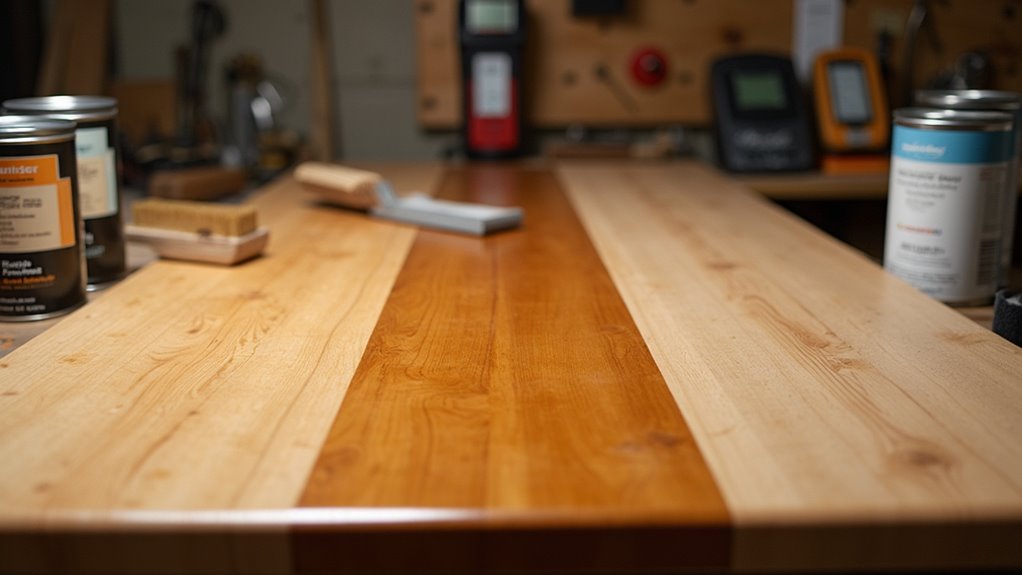
When oil meets water in the polyurethane world, timing isn’t just important—it’s everything. Rush this process, and you’ll face adhesion issues that’ll make you wish you’d never started.
We’re talking about a minimum 72-hour cure time for your oil-based foundation—no exceptions, no shortcuts.
Here’s your timing roadmap for success:
- Wait the full 72 hours – Your patience now prevents heartbreak later
- Check manufacturer guidelines – Some products demand even longer curing periods
- Test compatibility first – A small sample area saves massive headaches
Water-based finishes dry faster, but don’t let that fool you into thinking you can speed up the oil-based cure time.
The chemistry doesn’t negotiate. Respect the process, and your finish will reward you.
Benefits and Drawbacks of Combining Oil-Based and Water-Based Finishes
Before you commit to this finish marriage, let’s cut through the marketing hype and examine what you’re actually signing up for.
The upside? You’ll get serious visual appeal. Oil penetrates deep, giving wood that rich, warm glow we all crave.
Water-based poly then locks it down without yellowing—preserving your color investment for years.
Durability enhancement comes from layering these complementary strengths. Oil feeds the wood while poly creates an armor-like surface that laughs at daily abuse.
The downside? You’re doubling your work time and complexity. More coats mean more opportunities for failure.
Plus, you’re betting on manufacturer compatibility—a gamble that doesn’t always pay off, regardless of what the internet forums promise.
Common Mistakes to Avoid When Layering Different Polyurethane Types
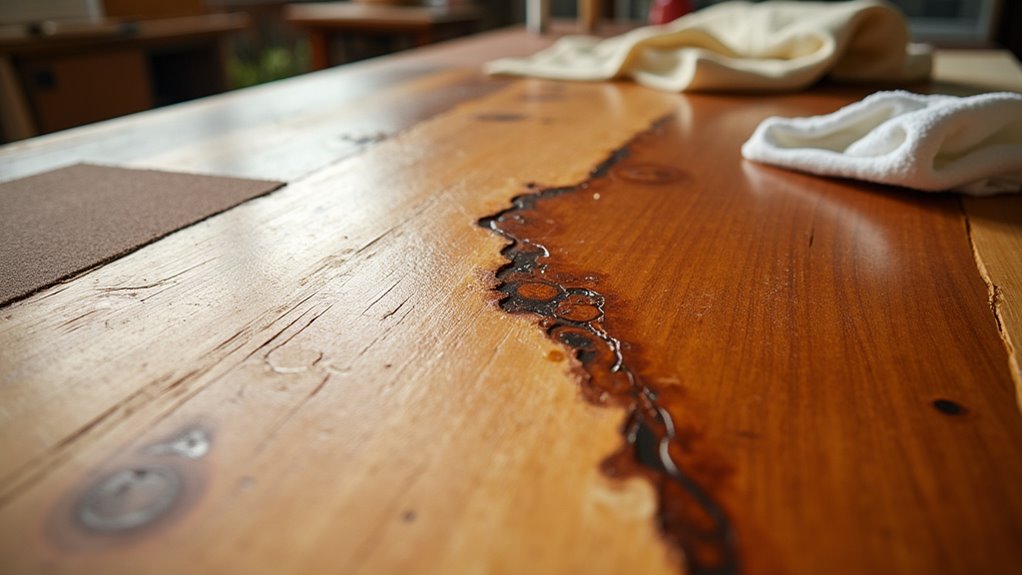
Since most finish failures happen in predictable ways, we can bulletproof your project by avoiding the landmines that trap amateur finishers.
Common myths about polyurethane compatibility create expensive disasters that destroy finish durability overnight.
Here’s your survival guide:
1. Never rush the cure time – Oil-based poly needs 24-48 hours minimum before accepting water-based topcoats.
Skip this step and watch your finish peel like sunburned skin.
2. Sand between coats religiously – That glass-smooth oil finish won’t bond with anything.
Light scuff sanding with 220-grit creates the mechanical tooth your water-based coat desperately needs.
3. Clean obsessively after sanding – Dust particles become permanent finish defects that’ll haunt you forever.
Tack cloth or microfiber removal isn’t optional.
Follow manufacturer timing guidelines exactly. Your impatience costs money.
Frequently Asked Questions
What Is the Main Disadvantage of Using Water-Based Polyurethane?
Like tortoise versus hare, we’d say water-based polyurethane’s main disadvantage is requiring more coats for durability. Its faster drying time demands careful application technique, making achieving that perfect, smooth finish more challenging than oil-based alternatives.
Can You Put New Polyurethane Over Old Polyurethane?
Yes, we can apply new polyurethane over old polyurethane with proper polyurethane compatibility considerations. We’ll need correct application techniques including light sanding, ensuring complete curing, and using sealers when mixing different formulations.
Can You Put Water-Based Clear Coat Over Oil-Based Clear Coat?
Yes, we can apply water-based clear coat over oil-based clear coat. Proper surface preparation through light sanding and correct application techniques guarantee good adhesion between the different finish types.
Can You Put Water-Based Varathane Over Oil-Based Varathane?
Yes, we can apply water-based Varathane over oil-based Varathane with proper preparation. Oil based compatibility requires full curing and light sanding, while water based adhesion improves with a sealer coat between finishes.
Related guides: Top Picks for Water-Based Floor Polyurethane · Water vs. Oil Polyurethane: The Ultimate Showdown · Can You Polyurethane Over Varnish