When choosing axe handle wood, you’ll want hickory as your top choice—it’s the gold standard with an 1820 lbf Janka hardness rating and excellent shock absorption. Ash comes in second, offering similar benefits but lighter weight, though it needs more maintenance. Yellow birch matches hickory’s strength but costs considerably more. Perhaps avoid walnut despite its beautiful grain since it’s too brittle for heavy work. Understanding these trade-offs between strength, durability, and cost will help you make the right decision for your specific needs.
Some of the links in this article may be affiliate links. If you make a purchase through these links, we may earn a small commission at no extra cost to you. Thank you.
Essential Qualities for Superior Axe Handle Performance
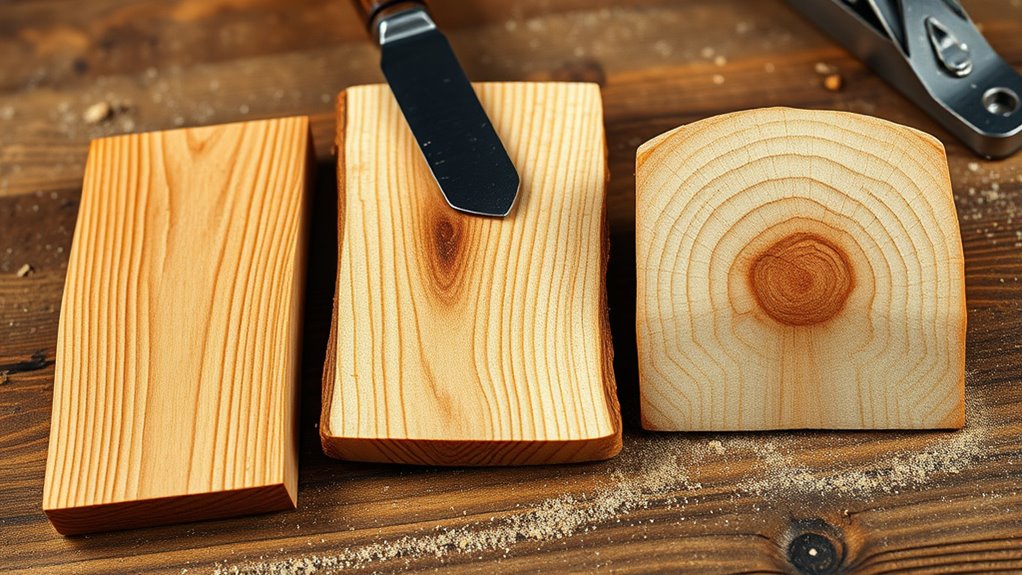
When you’re selecting wood for an axe handle, we think the most essential factor to take into consideration is strength—though it’s not the only thing that matters.
You’ll want to evaluate the Janka hardness scale, which measures how well wood resists denting and wear.
Shock absorption is perhaps equally important. Without it, your handle might crack or split during heavy use.
Flexibility matters too—you need wood that’s stiff enough for control but flexible enough to absorb impact.
Durability against weather elements will determine how long your handle lasts, especially if you’re working outdoors frequently.
Top Wood Species and Their Characteristics
Now that you understand what makes a handle perform well, let’s look at the specific woods that deliver these qualities.
Hickory remains the gold standard—perhaps because it’s been around forever. With a Janka rating of 1820 lbf, it absorbs shock beautifully and rarely lets you down.
Ash offers similar benefits but feels lighter in your hands. We think it’s actually more flexible than hickory, though some argue that makes it less durable.
Yellow birch matches hickory’s strength but costs considerably more. Walnut looks stunning with its rich grain, but honestly, it’s too brittle for serious work.
Comparing Strength, Durability, and Shock Absorption
While aesthetics matter, the real test of any axe handle comes down to three core performance factors that’ll make or break your experience in the field.
Performance trumps beauty when your axe handle faces real field conditions that demand strength, durability, and shock absorption.
When you’re comparing woods, we think these metrics tell the whole story:
- Strength (Janka Rating) – Hickory leads at 1820 lbf, while walnut sits lower at 1010 lbf.
- Durability Against Elements – Ash requires constant oiling, but ironwood resists everything naturally.
- Shock Absorption – Yellow birch excels here, though it’s expensive and hard to find.
Perhaps the tricky part is that no single wood dominates all categories.
Hickory’s strong but weather-sensitive, while ash flexes beautifully yet needs maintenance.
Handle Design Options and Their Benefits
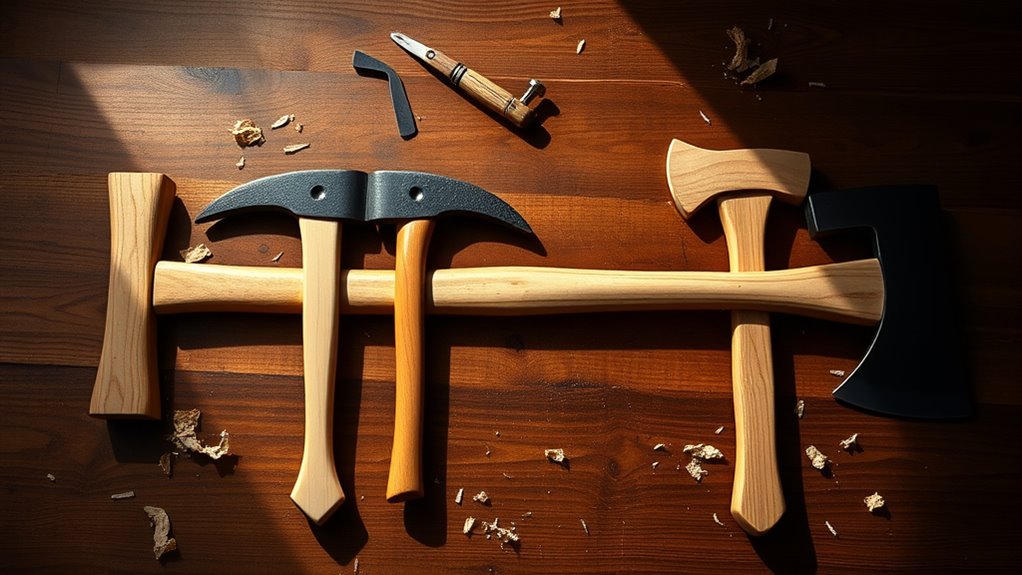
Once you’ve settled on your wood choice, the handle design becomes just as essential for how that axe will actually feel in your hands.
Straight handles are simple but honestly get uncomfortable during longer sessions. We think curved handles make a noticeable difference—they absorb shock better and reduce hand fatigue.
Ergonomic designs follow your grip’s natural contours, though they’re perhaps overkill for occasional use.
Tapered handles offer better balance since they’re wider at the top. Flared bottoms prevent slipping, which matters more than you’d expect when your hands get sweaty or wet during work.
Regional Availability and Cost Considerations
Where you live dramatically affects both what wood species you can actually find and how much you’ll pay for them.
If you’re in the southeastern U.S., hickory’s probably your best bet – it’s abundant and reasonably priced.
Up north, you might find better deals on ash or birch, though yellow birch can be surprisingly expensive even in its native range.
Here’s what we think affects your options most:
- Local sawmills often carry regional species at lower prices than specialty retailers
- Shipping costs can double the price of exotic woods from distant suppliers
- Seasonal availability means some woods are harder to find during certain months
Perhaps checking with local woodworkers first makes sense.
Crafting Your Own Custom Axe Handle
After considering your local options and budget, making your own handle becomes more attractive than ever.
You’ll need a wooden blank—hickory’s probably your best bet, though ash works well too. We think the process is more forgiving than you’d expect.
Start with basic tools: a drawknife, spokeshave, and sandpaper.
Shape the handle gradually, testing the grip frequently. Perhaps the most satisfying part is watching it take form in your hands.
The thickness should range between 18mm to 21mm traditionally.
Once shaped, attach your axe head with screws and finish with protective oil for longevity.
Frequently Asked Questions
How Often Should I Oil or Maintain My Wooden Axe Handle?
You should oil your wooden axe handle every three to six months, depending on usage and weather exposure. Apply a thin coat of linseed oil, letting it penetrate completely before wiping excess.
Can I Repair a Cracked Axe Handle Instead of Replacing It?
80% of cracked handles fail catastrophically during use. You can’t safely repair significant cracks in axe handles. Small surface cracks might accept wood glue, but you’ll compromise the handle’s structural integrity and shock absorption capabilities permanently.
What’s the Difference Between Straight Grain and Cross Grain Wood Handles?
Straight grain wood runs parallel along the handle’s length, providing maximum strength and flexibility. Cross grain wood has fibers running perpendicular, making your handle weaker and more prone to breaking under stress.
How Do I Properly Store My Axe to Prevent Handle Damage?
Store securely in stable, dry destinations. You’ll prevent handle damage by avoiding extreme temperatures, maintaining moderate moisture levels, and keeping your axe away from direct sunlight. Oil wooden handles regularly to maintain flexibility and strength.
Are There Any Safety Concerns With Specific Wood Types for Handles?
Yes, you’ll face safety concerns with certain woods. Yew’s toxic and can cause skin irritation. Ironwood’s extremely hard, making it difficult to work safely. Softer woods like pine increase breakage risks during use.
Related guides: Top Primers to Perfect Your Bare Wood · Unleash the Perfect Bond for Glass and Wood · Mastering Perfect 45-Degree Wood Joints