You’ll want to choose between shellac, latex, or oil-based primers depending on your project timeline and conditions. KILZ L211101 provides solid coverage at 300 square feet per gallon on a budget. Perhaps consider water-based options like Zinsser 123 for quick projects, or oil-based primers when you need maximum durability. Proper surface prep with 220-grit sandpaper remains essential regardless of primer choice, and there’s much more to achieving professional-grade results.
Some of the links in this article may be affiliate links. If you make a purchase through these links, we may earn a small commission at no extra cost to you. Thank you.
Understanding the Different Types of Primers for Wood Projects
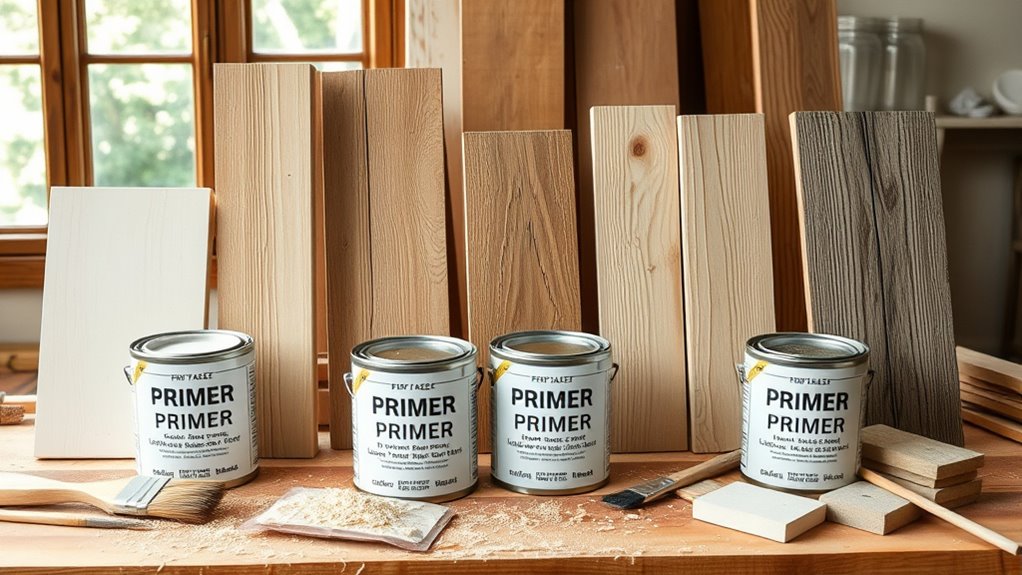
When you’re standing in the paint aisle staring at rows of primer options, it’s easy to feel overwhelmed by the sheer variety available for wood projects.
There are three main types you’ll encounter. Shellac primers dry incredibly fast—under 30 minutes—and excel at blocking stains, though the fumes can be intense.
Latex primers are perhaps the most user-friendly option, drying within an hour with easy water cleanup.
Oil-based primers provide that traditional hard finish but require longer drying times.
Each type serves different purposes, and honestly, choosing depends on your specific project needs and timeline constraints.
Oil-Based Vs Water-Based Primers: Making the Right Choice
Since you’ve probably heard both oil-based and water-based primers mentioned countless times, let’s actually break down what this means for your wood project.
Oil-based primers create that hard, durable finish you’re after, though we think the drying time might drive you crazy—we’re talking hours, not minutes. The fumes are pretty intense too, so ventilation becomes essential.
Water-based primers dry fast and clean up easily with soap and water. They’re less toxic, which is nice if you’re working indoors.
However, they might struggle in high-moisture areas where bleeding could become an issue. Perhaps consider your project’s location first.
Essential Features to Look for When Selecting Wood Primers
Four key features can make or break your primer choice, though Many woodworkers notice most people focus on the wrong ones first.
You’ll want to think beyond just price and brand recognition.
Perhaps the most overlooked aspect is drying time—especially if you’re working on a weekend project. We think many DIYers underestimate how this affects their timeline.
Weekend warriors often crash into Monday deadlines because they picked a slow-drying primer on Friday night.
- Adhesion quality without requiring extensive sanding prep work
- Stain-blocking capabilities to prevent wood tannins from bleeding through
- Coverage area per gallon to match your project’s square footage
- Compatibility with your chosen topcoat paint type
Top-Rated Primers for Interior Bare Wood Applications
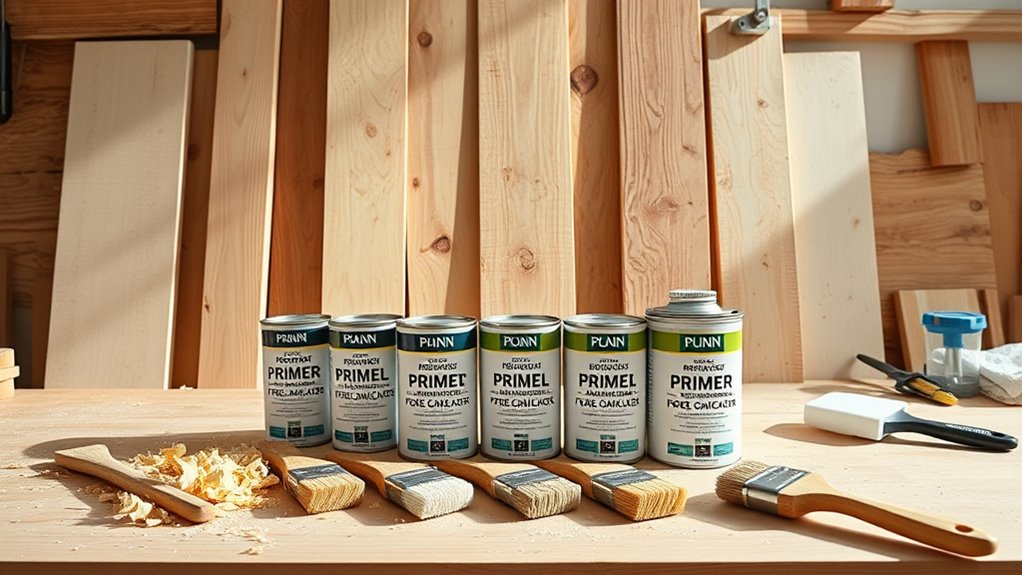
Its 45-minute dry time and knot-sealing properties make it worth considering.
For budget-conscious projects, KILZ L211101 covers roughly 300 square feet per gallon—decent value.
If you’re sensitive to odors, KILZ Premium High-Hide offers low-fume application, which we think matters more than people realize.
The Zinsser 123 Water-Base dries fastest, making it practical for quick turnarounds, though perhaps less forgiving on challenging wood surfaces.
Best Exterior Wood Primers for Weather Protection
When you’re dealing with exterior wood projects, the stakes feel higher—maybe because you know that primer failure means scraping and starting over in a year or two.
Benjamin Moore Fresh Start stands out here, though we think it’s important to note that weather resistance varies by climate. It handles moisture and UV damage well, which matters more than you’d expect.
Weather resistance isn’t one-size-fits-all—what works in desert heat might fail in coastal humidity, making primer selection crucial.
Key factors for exterior primers:
- Fast-drying formulas prevent weather interference during application
- UV protection stops wood degradation and paint fading
- Moisture barriers block water penetration that causes rot
- Temperature flexibility accommodates seasonal expansion
Perhaps oil-based options like Rust-Oleum Zinsser Cover Stain offer superior durability, even with longer drying times.
Specialty Primers for Challenging Wood Surfaces and Stains
Although standard primers work fine for most wood surfaces, some projects throw curveballs that’ll make you question everything you thought you knew about priming.
Perhaps you’re dealing with knotty pine bleeding tannins everywhere, or maybe there’s stubborn water stains that keep showing through.
Stix Water-Based Primer handles the really tough stuff—we think it’s actually designed for surfaces like tile and glass, but it grips challenging wood surprisingly well.
Rust-Oleum Bulls Eye targets those persistent stains and odors that regular primers can’t touch.
These specialty options cost more, but sometimes you need that extra muscle.
Fast-Drying and Low-Odor Options for Quick Projects
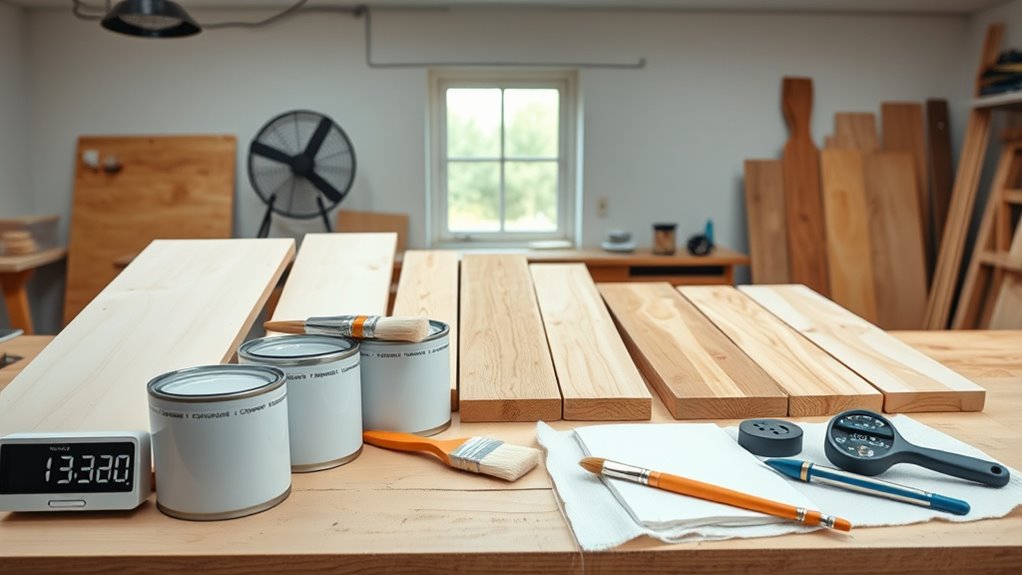
If you’re working on a weekend project or need to get a room back in service quickly, fast-drying primers become absolute lifesavers. We think the Zinsser 123 Water-Base Primer stands out here – it dries remarkably fast and cleans up with just soap and water.
For low-odor situations, perhaps when you’re working in occupied spaces, KILZ Premium High-Hide offers excellent performance without overwhelming fumes.
These options work well for:
- Kids’ bedrooms that need quick turnarounds
- Office spaces where strong odors disrupt work
- Weekend projects with tight deadlines
- Areas with poor ventilation
Both dry within an hour, though ventilation still helps.
Application Tips for Achieving Professional Results on Bare Wood
Getting the application right makes the difference between a professional-looking finish and something that screams “DIY disaster.” Many woodworkers notice too many weekend warriors rush through this step only to watch their topcoat peel or look blotchy months later.
| Step | Tool | Technique |
|---|---|---|
| Surface prep | 220-grit sandpaper | Light sanding with grain |
| Cleaning | Tack cloth | Remove all dust particles |
| First coat | Quality brush | Thin, even strokes |
| Between coats | Fine sanding block | Light scuff if needed |
| Final prep | Clean cloth | Dust removal before topcoat |
Perhaps the most overlooked aspect is temperature control—we think many folks don’t realize humidity affects drying times considerably.
Frequently Asked Questions
How Much Primer Do I Need per Square Foot of Bare Wood?
You’ll need approximately one quart of primer for every 87-112 square feet of bare wood. Coverage varies by wood type and porosity, so you might require more primer for highly absorbent surfaces.
Can I Skip Primer if Using Primer-Paint Combination Products?
Why complicate your project with extra steps? You can’t skip primer when using primer-paint combinations because they’re designed to prime and paint simultaneously, eliminating the need for separate priming steps entirely.
What’s the Shelf Life of Opened Primer Containers?
You’ll typically get one to two years from opened primer containers if you store them properly in cool, dry conditions with tightly sealed lids to prevent contamination and evaporation.
Should I Sand Bare Wood Before Applying Primer?
Smooth sailing starts with proper prep work. You should lightly sand bare wood with 120-220 grit sandpaper to remove roughness and create better adhesion, though some high-quality primers don’t require extensive sanding.
Can Primer Be Tinted to Match My Final Paint Color?
Yes, you can tint most primers to match your final paint color. This helps achieve better coverage and color accuracy, especially when shifting from dark wood to lighter paint colors or vice versa.
Related guides: Unleash the Perfect Bond for Glass and Wood · Choosing the Perfect Axe Handle Wood · Mastering Perfect 45-Degree Wood Joints