Your deck stain applicator choice can make or break your project, honestly. The Wagner FLEXiO 5000 sprayer cuts work time in half but costs more upfront, while deck pads like the Cabot Stain Pad offer solid middle-ground efficiency. Brushes give you control but they’re painfully slow—we think most people underestimate how exhausting hand brushing becomes. The Deck BOSS combines loading and brushing, which sounds genius in theory. Each tool has trade-offs that’ll impact your final results and experience.
Some of the links in this article may be affiliate links. If you make a purchase through these links, we may earn a small commission at no extra cost to you. Thank you.
Top-Rated Deck Stain Applicators for Every Project
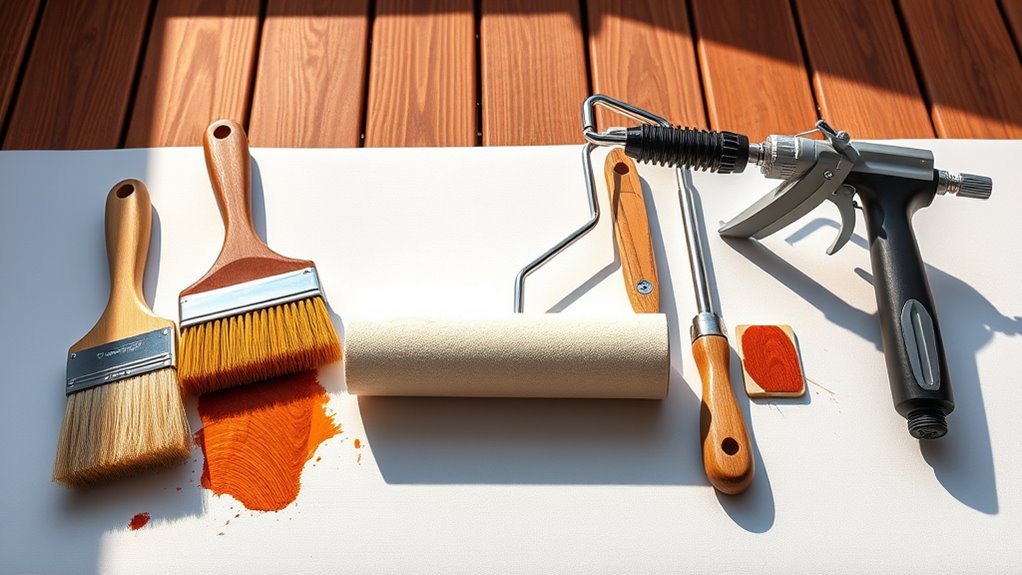
When you’re standing in the home improvement aisle staring at dozens of deck stain applicators, the choice can feel overwhelming – though we think that’s actually a good problem to have.
The Wagner FLEXiO 5000 sprayer stands out for larger projects. Its turbine design reduces fatigue, and honestly, the three spray patterns make it versatile beyond just deck work.
The turbine design really cuts down on arm fatigue during those marathon staining sessions – a game-changer for big decks.
Perhaps the most interesting option is the Deck BOSS by Perdura. It combines loading and back brushing in one motion, which sounds almost too convenient.
Essential Features That Make the Difference
The difference between a frustrating weekend project and a smooth staining experience often comes down to features you mightn’t even notice until you’re halfway through the job.
Adjustable handles matter more than you’d think – your back will thank you later.
Look for applicators with replaceable pads since you’ll probably want to tackle another project eventually. The Wagner FLEXiO’s turbine feature actually reduces hand fatigue, which sounds minor until you’re three hours in.
Perhaps most importantly, consider how much stain the applicator holds.
The Woodmates system lets you cover two boards at once, though it might feel unwieldy at first.
Brush Vs Roller Vs Sprayer: Performance Breakdown
After testing dozens of applicators over the years, Many woodworkers notice that each method has its own personality – and honestly, picking the wrong one can turn your weekend project into a week-long ordeal.
Brushes give you control but they’re slow – perhaps too slow for larger decks. You’ll get excellent penetration on rough surfaces, though your knees might disagree.
Rollers work fast but require back brushing, which feels redundant.
- Hand brushing uses minimal stain but causes serious fatigue
- Rollers need two people for best results
- Sprayers require careful overspray management
- Deck condition heavily influences which method works
- Your skill level determines how effectively you’ll handle each tool
Professional-Grade Tools for Maximum Efficiency

Professional contractors don’t mess around with basic applicators – they need tools that can handle back-to-back jobs without breaking down.
The Wagner FLEXiO 5000 sprayer stands out here with its turbine system that reduces hand fatigue during those marathon staining sessions.
The Deck BOSS by Perdura might be the real game-changer though. It combines loading, back brushing, and coating in one motion – which honestly sounds almost too good to be true.
For larger projects, perhaps the Mr. Long Arm Woodmates makes more sense with its 12-inch coverage.
These tools cost more upfront, but they’re built to last through countless projects.
Choosing the Perfect Applicator for Your Deck
The key factors you’ll want to take into account include:
- Deck size – larger surfaces benefit from sprayers or pads
- Surface condition – rough boards need brushes, smooth ones accommodate anything
- Your skill level – beginners should perhaps start with pads
- Budget constraints – reusable tools cost more upfront but save money
- Time available – sprayers work fastest, though they might need back brushing
We think deck condition matters most, honestly.
Cost-Benefit Analysis of Different Application Methods
While everyone focuses on which brush or pad works best, we think the real question you should be asking is whether you’re actually saving money with your choice.
Hand brushing might seem cheapest upfront, but you’ll spend hours on your knees. That’s time you could’ve used elsewhere, perhaps earning money.
Sprayers cost more initially, yet they’ll cut your project time in half—though they do waste more stain through overspray.
Deck pads offer a decent middle ground. They’re reasonably priced and work efficiently on larger surfaces.
we’d say consider your hourly rate when calculating true costs.
Frequently Asked Questions
How Often Should I Replace My Deck Stain Applicator Pads?
You should replace your deck stain applicator pads when they become worn, frayed, or heavily clogged with dried stain. With proper cleaning, quality pads can last several staining projects.
Can I Use the Same Applicator for Different Stain Colors?
You can reuse applicators for different stain colors, but you’ll need to clean them thoroughly between applications. For drastically different colors, consider using separate applicators to prevent any color contamination.
What’s the Best Way to Clean Applicators After Staining?
Professional contractors spend 30% more time on projects when they skip proper cleaning. You’ll want to rinse applicators immediately with mineral spirits for oil-based stains or warm soapy water for water-based products.
Do Weather Conditions Affect Which Applicator I Should Choose?
Yes, weather conditions greatly impact your applicator choice. Windy conditions make sprayers problematic due to overspray, while high temperatures cause stain to dry quickly, making brushes and pads more controllable than sprayers.
Can I Store Used Applicators for Future Deck Projects?
You can store some used applicators for future projects. Clean brushes and rollers thoroughly with appropriate solvents, then dry completely. Disposable pads aren’t reusable, but quality brushes last years with proper care.
Related guides: Polycrylic and Polyurethane: The Ultimate Showdown · Ultimate Guide to Deck Wood Repair · Water vs. Oil Polyurethane: The Ultimate Showdown