Tung oil doesn’t just sit on wood—it chemically bonds with fibers, creating an irreversible transformation into waterproof, flexible material. We’re talking pure penetration that moves with your lumber, not against it. It’s completely food-safe, handles outdoor conditions like a champ, and repairs are stupidly simple—just reapply where needed. Pure oil takes patience; blends cure faster but sacrifice authenticity. Master the thin-coat technique and you’ll reveal wood finishing secrets most woodworkers never discover.
Some of the links in this article may be affiliate links. If you make a purchase through these links, we may earn a small commission at no extra cost to you. Thank you.
Understanding Tung Oil and Its Unique Properties
When most finishes sit on wood like makeup, tung oil actually marries the fibers—and we’re talking about a relationship that’ll outlast your mortgage.
This isn’t your typical coating. Tung oil comes from tung tree seeds and packs a unique fatty acid profile that fundamentally changes how wood behaves.
While other finishes create surface films, tung oil penetrates deep and forms irreversible chemical bonds with wood fibers. The result? A waterproof, flexible solid that moves with your wood instead of cracking against it.
Yes, it takes longer to cure than quick-fix alternatives. But here’s the thing: that extended curing time allows complete fiber saturation.
You’re not just protecting wood—you’re transforming it into something better.
Benefits of Choosing Tung Oil for Wood Projects
Five compelling reasons make tung oil the smart choice for serious woodworkers who refuse to compromise on quality.
First, it’s completely food-safe—perfect for cutting boards and utensils without toxic worries.
Second, the water-resistant properties handle both indoor and outdoor projects like a champ.
Third, you’ll get unmatched durability thanks to unique fatty acids that resist mold and rancidity better than competing finishes.
Fourth, maintenance stays stupid-simple: scratches disappear with quick reapplication, no stripping required.
Fifth, the environmental impact remains minimal—this finish has centuries of historical usage proving its sustainable nature.
Your wood’s natural grain patterns get enhanced beautifully while staying protected long-term.
That’s efficiency without compromise.
Types of Tung Oil Products Available
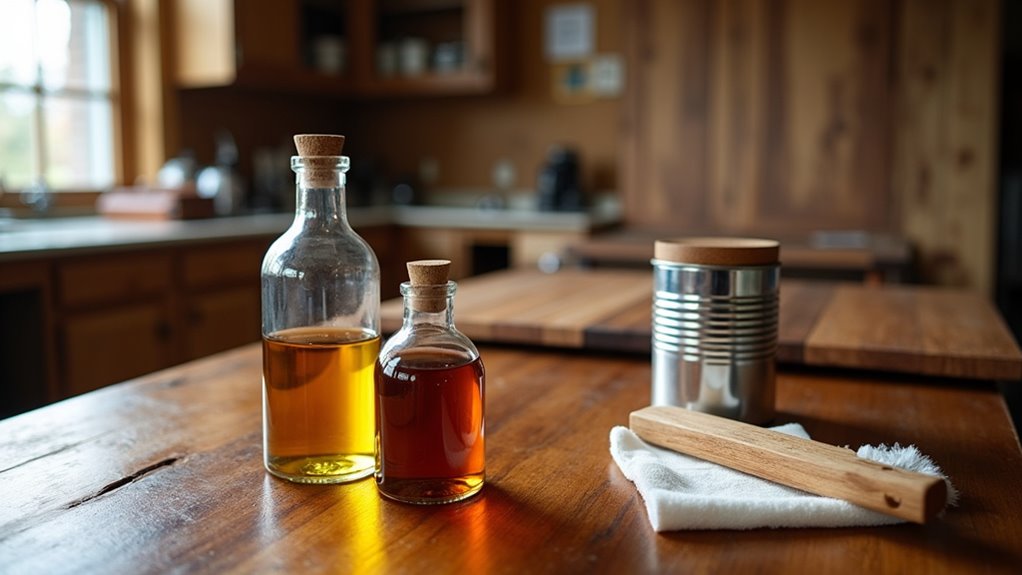
Understanding these benefits means nothing if you’re grabbing the wrong product off the shelf.
We’ve seen too many projects ruined by poor product selection, so let’s cut through the marketing nonsense.
Here’s your essential breakdown of alternative finishes:
- Pure Tung Oil – 100% natural, multiple thin coats, longest cure times
- Oil/Varnish Blends – Faster drying, easier application, contains solvents and resins
- Polymerized Tung Oil – Heat-treated for faster cure, more durable than pure oil
Product comparisons reveal stark differences.
Wiping varnishes offer convenience but sacrifice authenticity.
Specialty products like Odie’s Oil blend tung oil with wax for quicker results and enhanced protection.
Your choice depends on project demands, not marketing claims.
Selecting the Right Tung Oil for Your Needs
Although product knowledge matters, choosing the wrong tung oil for your specific project will torpedo your results faster than moisture hitting fresh pine.
Start with your wood type—some species react poorly to certain formulations. We recommend 100% pure tung oil for natural finishes, but oil/varnish blends work better for quick jobs requiring enhanced durability.
Time constraints matter. Pure tung oil demands multiple thin coats and extended drying periods. Wiping varnishes cut application time considerably.
Outdoor projects need UV and moisture protection—verify the product specifically mentions these qualities.
Food contact surfaces require food-safe certifications once cured.
Smart product comparison starts with matching formulation to intended use, not price points.
Proper Surface Preparation Techniques
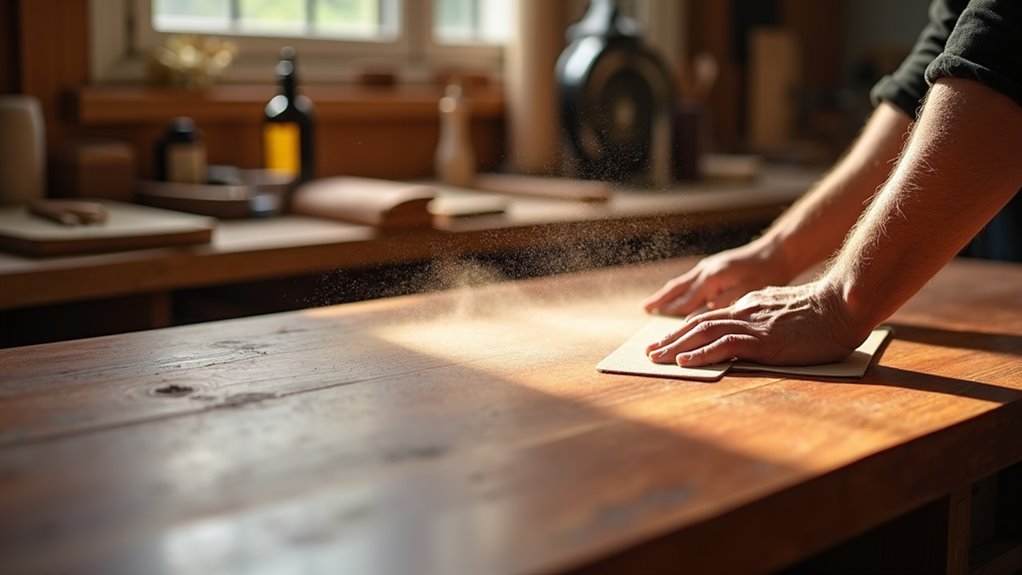
Surface prep separates amateur results from professional-grade finishes—skip this step and you’ll curse yourself later.
We’re talking about creating the foundation that determines whether your tung oil penetrates properly or sits on top like disappointed expectations.
Your surface preparation checklist:
- Strip existing finishes completely—surface contaminants block oil penetration like a bouncer at an exclusive club.
- Progress through sanding techniques systematically—start coarse, end fine, but don’t obsess over perfection.
- Remove every speck of dust and debris—compressed air works wonders here.
Clean wood accepts tung oil like a thirsty sponge. Contaminated surfaces reject it entirely.
We’re creating pathways for deep penetration, not pretty surfaces. The oil needs direct contact with wood fibers.
No shortcuts exist—proper preparation guarantees professional results.
Application Methods and Curing Process
When your surface screams perfection, we’re ready for the make-or-break moment—application determines everything. Grab a small rag and apply tung oil in razor-thin coats. Wipe on, wipe off—excess oil is your enemy. One ounce covers multiple applications, so don’t be heavy-handed.
Our application techniques demand precision. Thin coats absorb evenly and cure faster than thick, gloppy disasters. Heat, UV light, and oxygen trigger the magic—irreversible bonds form within wood fibers.
Curing conditions matter brutally. Target 50–75°F with low humidity. These parameters aren’t suggestions—they’re requirements for durability.
Five to six hours between coats keeps momentum rolling. Multiple thin applications beat single thick ones every time. We’re building layers, not drowning wood.
Follow this protocol religiously, and tung oil delivers professional-grade results consistently.
Maintenance and Repair of Tung Oil Finishes
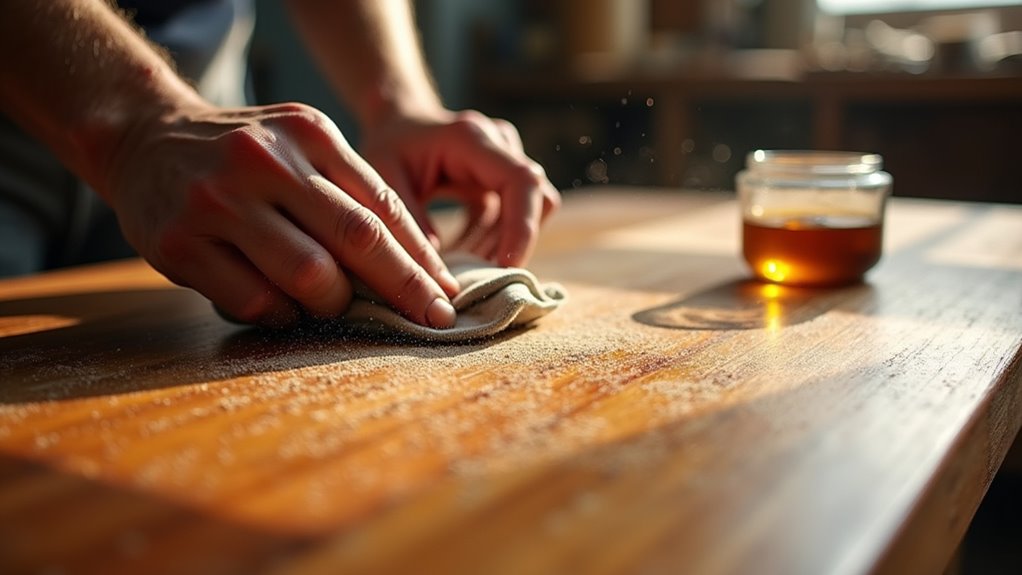
Unless you’ve made catastrophic mistakes, maintaining tung oil finishes is ridiculously simple. We’re talking about the most forgiving finish you’ll ever work with. Minor scratches? Gone with a simple oil application. No sanding, no stripping, no drama.
Here’s your maintenance schedule breakdown:
- Monthly inspection – Check for dry spots or wear patterns
- Quarterly touch-ups – Reapply oil where wood looks thirsty
- Annual deep treatment – Full surface refresh for high-traffic pieces
The repair techniques couldn’t be more straightforward. Tung oil’s irreversible curing bonds mean your foundation stays solid while surface imperfections disappear with fresh coats.
The clarity maintains itself without sanding nightmares. Proper maintenance extends lifespan indefinitely, keeping your wood gorgeous while you focus on actual woodworking instead of finish babysitting.
Frequently Asked Questions
What Are the Disadvantages of Tung Oil?
Ever wondered why tung oil frustrates beginners? Many woodworkers find its disadvantages include demanding precise application methods, unpredictable curing conditions, extended drying time between coats, and potential glossy spots from thick applications.
What Is Tung Oil Finish Good For?
We’d recommend tung oil for wood protection on cutting boards, butcher blocks, and wooden utensils. This natural finish enhances grain patterns, resists moisture and wear, while remaining food-safe and durable.
Does Tung Oil Finish Need to Be Sealed?
Ironically, we don’t need to seal something that’s already perfectly sealed! Tung oil benefits include natural waterproofing once cured. Proper tung oil application creates its own protective barrier, eliminating additional sealing requirements.
How Long Does It Take for Tung Oil to Cure?
We’ll see tung oil’s curing time typically takes five to six hours between coats. The drying process depends on temperature and humidity conditions, with thin applications accelerating cure times for better results.
Related guides: When To Use Oil-Based Primer · Water vs. Oil Polyurethane: The Ultimate Showdown · 4 Best Finish Nailer Cordless Models That Professionals Trust